

Paris is known for its grand boulevards and iconic monuments, but if you venture off the main roads, you’ll stumble into neighborhoods that feel more like tranquil villages than parts of a bustling city. Neighborhoods like Montmartre, Butte aux Cailles, and the cobblestone corners of the 13th and 20th arrondissements offer up ivy-draped houses, winding alleys, and local cafes that create a small-town vibe right in the heart of Paris.
These hidden Parisian neighborhoods feel totally different from the touristy areas around the Eiffel Tower. Expect quiet lanes with barely a car in sight, cheerful houses that could belong in the French countryside, and locals who actually recognize each other. Some of these places are so tucked away, even longtime Parisians are surprised when they find them.
If you’re hoping for a break from the crowds or want to see another side of the city, wandering these village-like quarters might just change your whole perspective on Paris. The city becomes less overwhelming and way more approachable when you’re sitting in a peaceful square full of flowers or sipping coffee at a neighborhood spot where everyone seems to nod hello.
Key Takeaways
- Paris hides several village-like neighborhoods in the 13th, 18th, and 20th arrondissements that feel like small towns
- Cobblestone lanes, ivy-covered houses, and pedestrian passages offer calm escapes from the city’s busiest areas
- Day trips to nearby villages add even more countryside flavor without straying far from Paris
Most Authentic Village-Like Neighborhoods in Paris
Paris has corners where cobblestone lanes twist past leafy houses and neighbors greet each other by name. These neighborhoods are a world apart from the big avenues, with quiet squares, street art, and a slower rhythm that locals really cherish.
Butte-aux-Cailles: A Slice of Provence in the 13th

Step into the Butte-aux-Cailles, and suddenly you’re in a provincial French town. This little hill in the 13th is crisscrossed with narrow cobblestone streets, all lined with colorful houses and splashed with street art.
Passage Sigaud, Passage Barrault, and Rue de l’Espérance branch off into tinier alleys, some leading to secret courtyards. Street artists have made the facades their playground, so the neighborhood feels creative and lived-in, not like it’s put on for tourists.
What makes it special:
- Family-run bistros packed with regulars
- Bright murals everywhere you turn
- Easy stroll to Petite Alsace and Villa Daviel, two more hidden gems
The Butte has hung onto its real character, even though it’s not much of a secret anymore. You’re close to Tolbiac and Place d’Italie metro stops, but once you climb the butte, city noise just melts away.
Montmartre: Hilltop Village Ambience and Art

Montmartre crowns Paris’s highest hill and still has that separate-village feeling. Sure, Sacré-Coeur draws crowds, but just wander a few streets away and it’s easy to see why artists like Van Gogh and Picasso settled here.
Rue de l’Abreuvoir, with its pink Maison Rose cafe, oozes charm, and steep streets like rue Saint-Vincent and rue des Saules really do feel rustic. You’ll spot small vine-covered houses, the peaceful Montmartre Cemetery, and even a vineyard—yes, they still harvest grapes every fall.
The Jardin des Abbesses, hidden in Passage des Abbesses, is a quiet spot, and Rue Lepic is where you’ll find real local shopping instead of souvenir stands. Early mornings are the best—before the tourist rush, Montmartre’s village side comes alive.
And don’t skip Cité Véron, just steps from the Moulin Rouge. This 19th-century passage offers a peaceful stroll along ivy-draped buildings, a nice break from the busy cafe scene.
Cité Florale: Floral Streets and Secret Corners
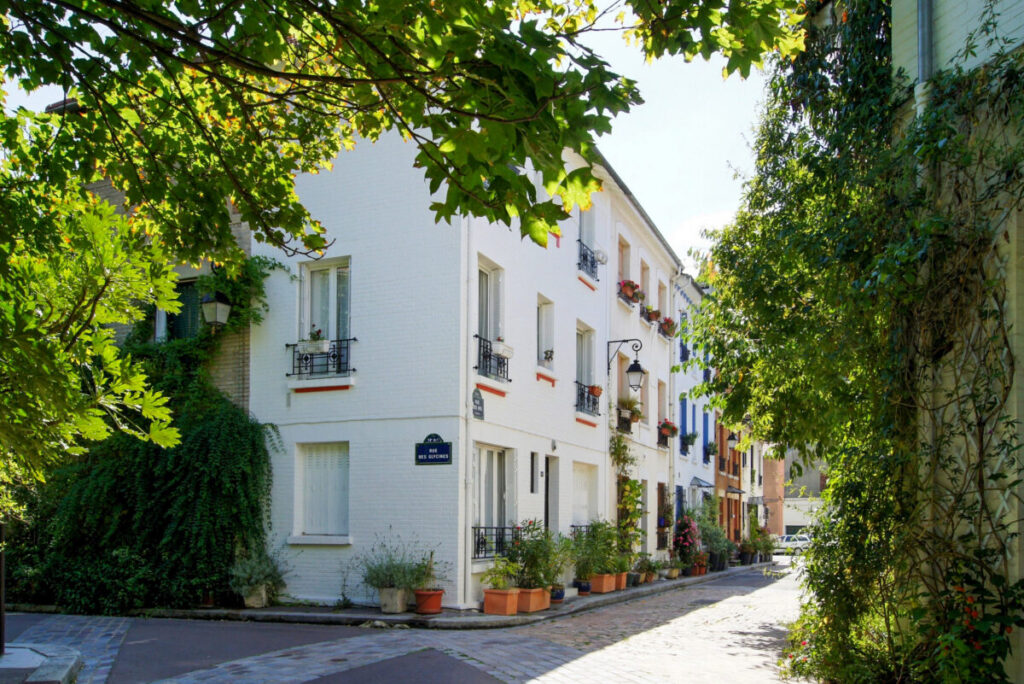
The Cité Florale in the 13th is probably one of Paris’s most delightful secrets. The street names sound like they’re straight from a garden—Rue des Iris, Rue des Glycines, Rue des Lisserons.
Walking here feels like you’ve wandered onto a film set. Colorful houses crowd the narrow lanes, and front gardens spill over onto the pavement. The area’s tiny—just a few blocks—but you can easily lose an hour snapping photos and soaking up the calm.
You’re only a stone’s throw from the busy Asian quarter near Olympiades, which makes the contrast even more striking. Cité Florale is close to other villagey spots like Square des Peupliers, where cobbled paths wind between charming early-20th-century homes.
If you’re after a place to stay in the 13th, this corner gives you a real neighborhood feel with quick metro access.
Batignolles: Bohemian Calm in the 17th

Batignolles in the 17th brings village vibes without the crowds you’ll find in Montmartre or Butte-aux-Cailles. The heart of the area is Square des Batignolles, a gorgeous old park with a little waterfall and stream.
On Rue Legendre and nearby streets, you’ll find indie shops, friendly bistros, and cafes where French is definitely the main language. Young Parisians and artists flock here for the bohemian mood and, well, slightly more reasonable rents—at least by Paris standards.
Why locals love it:
- Weekend market at Marché des Batignolles
- Blend of old architecture and modern hangouts
- Close to Parc Monceau but much quieter
Batignolles feels truly residential. There aren’t big monuments here, and honestly, that’s the appeal. This is daily Paris—grabbing bread at the boulangerie, browsing the Saturday market, or reading in the park on a lazy Sunday.
Hidden Parisian Villages and Secret Areas
Some neighborhoods in Paris feel like peaceful villages, where cobblestone streets curve past leafy homes and neighbors still wave hello. These little pockets have kept their village soul, even after Baron Haussmann’s sweeping changes in the 1800s.
Square de Montsouris: Artistic Haven in the 14th

Look for a tiny “privé” sign in the 14th, and you’ll find this hidden spot. There’s no actual square—just a winding lane lined with art deco houses that artists snapped up in the early 1900s.
The architecture here breaks all the Parisian rules. Forget those classic cream facades—these homes have bold shapes, round windows, and so much greenery it almost feels wild. On quiet mornings, when sunlight filters through the leaves, the place is magic. It’s a dead-end, so you won’t get any through traffic or commuters in a rush. Many residents are still artists, musicians, and writers who’ve managed to hang onto these rare homes. Parc Montsouris and the Catacombs are nearby, but this street is a world apart.
Charonne: Timeless Charm in the 20th
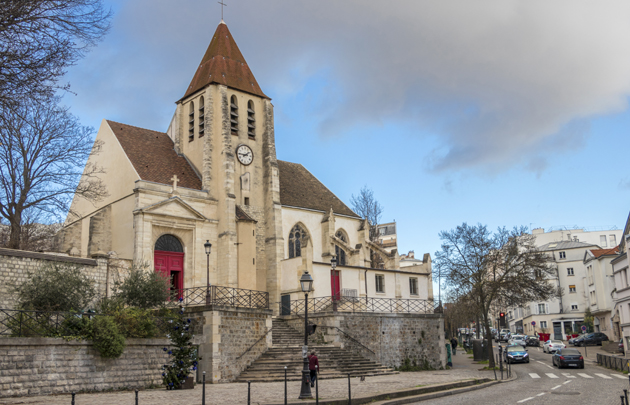
The 20th arrondissement is full of surprises, and Charonne might be its best-kept secret. Once a separate village, it joined Paris in 1860 but never really lost its independent vibe.
You’ll find narrow dead-end lanes that feel a bit like London mews. Hidden behind plain facades, these passages reveal gardens and cottages that somehow dodged urban development. The 12th-century church of Saint-Germain-de-Charonne still has its own tiny cemetery.
Stroll Rue Saint-Blaise and you’ll spot cafes where the same folks sit every afternoon. The street market on Wednesdays and Saturdays is a real meeting point for neighbors. And if you wander toward Parc de Belleville, you’ll catch some of the best city views—reminding you just how high up this “village” really is.
Village Saint-Paul: Medieval Gem in Le Marais

Behind Saint-Paul church in Le Marais sits my favorite antique shopping spot in Paris. Slip through narrow passages on Rue Saint-Paul, and suddenly you’re in a maze of medieval courtyards.
Dealers have set up shop in old workshops and homes, turning the place into a quirky collective of antiques and art. You’ll find everything from vintage posters and retro furniture to rare books and oddball collectibles. There’s something for every budget here.
This place mixes old-world charm with the chic side of the 4th arrondissement. You’re steps from the Seine and some of Paris’s fanciest streets, but it really feels like you’ve wandered into a craftsman’s quarter from another era. The courtyards twist and connect in unexpected ways, so don’t be afraid to get a little lost.
Leafy Streets and Quaint Lanes: Micro-Neighborhoods With Village Ambience
Some of Paris’s most charming village-like spots hide in tiny corners you’d never spot on a tourist map. These micro-neighborhoods have Alsatian-inspired houses, forgotten railway paths, and cobblestone passages that make you forget you’re in a big city at all.
Petite Alsace & Villa Daviel: Alsatian Vibes in Paris
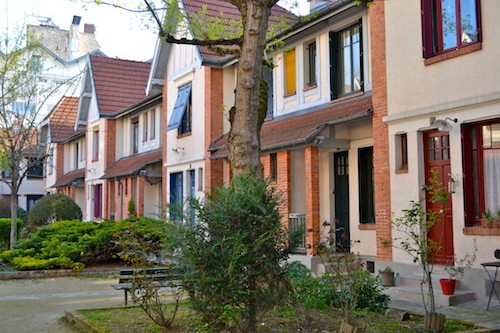
In the 13th, not far from Butte aux Cailles, Petite Alsace looks like a street straight out of Strasbourg. You’ll see half-timbered houses with steep roofs and flower boxes bursting with geraniums.
The houses date from the 1910s, and the whole lane is car-free. Details here—and in nearby Villa Daviel—wouldn’t look out of place in the Alsace wine country.
Villa Daviel, just around the corner, is another villagey escape. This private street is lined with low brick houses and gardens (a rare sight in Paris). The cobblestones are original, and ivy creeps up the walls.
Both hideouts are close to Square de Montsouris, a leafy park where locals gather. The whole area just feels peaceful and neighborly—like the kind of place where people actually know each other’s names.
Passage des Soupirs and Petite Ceinture: Quiet Urban Retreats

Passage des Soupirs, tucked in the 20th arrondissement, is one of those blink-and-you’ll-miss-it alleyways. This narrow passageway winds between old workshops and artist studios, with vines creeping over weathered walls. It’s the kind of spot where you actually hear birds instead of car horns—a rare treat in Paris.
The Petite Ceinture—Paris’s abandoned railway line—offers something completely different. This 19-mile belt once circled the city, and now sections have turned into peaceful green corridors. You can get onto it in the 12th, 15th, and 16th arrondissements.
Wild plants have taken over the old tracks, turning them into an urban nature trail. Community gardens pop up here and there, with locals growing tomatoes and herbs. Walking along the Petite Ceinture, it’s easy to forget you’re in one of Europe’s most crowded cities—it’s just you, the greenery, and maybe a curious cat or two.
Other Parisian Quarters With a Village Feel
Outside the famous village neighborhoods, Paris hides plenty of quarters where life slows down. These areas blend artistic communities with a dose of historic charm—think cobblestone streets, secret courtyards, and cafés where the regulars nod hello.
Latin Quarter: Bohemian Spirit and History

The 5th arrondissement’s Latin Quarter brings together students, bookshops, and centuries-old streets into one lively neighborhood. One minute you’re wandering past the Panthéon, the next you’re ducking into a cramped bistro with steamed-up windows.
Rue Mouffetard slices through the heart of the area like an old trading route. The cobblestone market street comes alive every morning with cheese, fish, and veggie vendors. It’s been around since the 13th century, and honestly, it feels like it—in the best way.
The tight streets and steady rhythm give the neighborhood its village vibe. Students grab coffee at the same corner café every morning. Locals line up at their favorite boulangerie. There’s this sense everyone knows each other, even if they don’t.
Canal Saint-Martin: Relaxed Waterside Living

This eastern Paris neighborhood almost feels like a different city. The tree-lined canal stretches through the 10th arrondissement, iron footbridges crisscrossing the water every few blocks.
On Sundays, locals spread out picnic blankets along the quays and share bottles of wine. It’s become one of those spots where Parisians really hang out, not just tourists with cameras. Though, yeah, the Instagram crowd is here too.
What makes it village-like:
- Small independent shops on Rue de Marseille
- Neighbors chatting outside corner bakeries
- The same boats drifting through the locks each day
- People actually walk slower here
Cafés spill onto the sidewalks, and you see the same faces over and over. There’s a vintage shop I always stop by—the owner remembers me, even if it’s been months. That’s the vibe here.
Belleville: Artistic Energy and Secret Courtyards
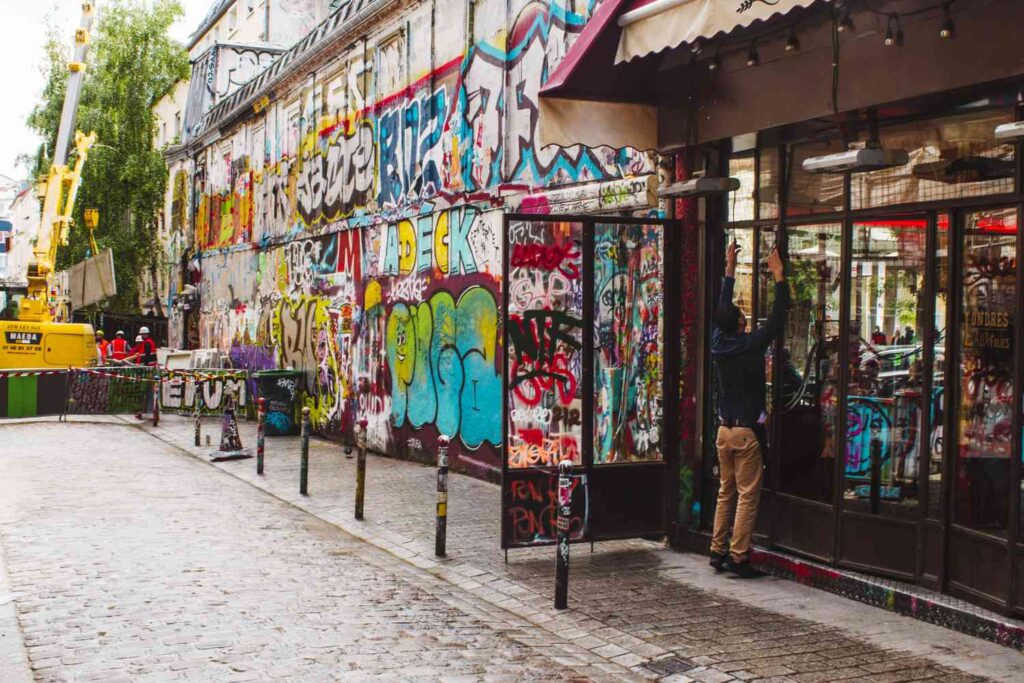
Belleville sprawls across the 19th and 20th arrondissements with a gritty, creative spirit you just don’t get in central Paris. Street art covers the walls, and tiny ateliers hide behind unmarked doors.
The real magic happens in Belleville’s hidden courtyards and passages. One minute you’re walking through an ordinary doorway, and suddenly you’re in a cobblestoned courtyard ringed by artists’ studios and quirky shops. These secret spaces feel like you’ve stumbled into a private garden.
The market on Boulevard de Belleville runs twice a week, mixing North African vendors, Chinese merchants, and old-school French fromagers. It’s chaotic, wonderful, and nothing like the polished markets in richer arrondissements.
Belleville’s changing fast. New wine bars pop up next to old hardware stores, and property prices keep climbing. If you want that authentic village feel, you might want to go soon.
Oberkampf: Creative Village Vibes
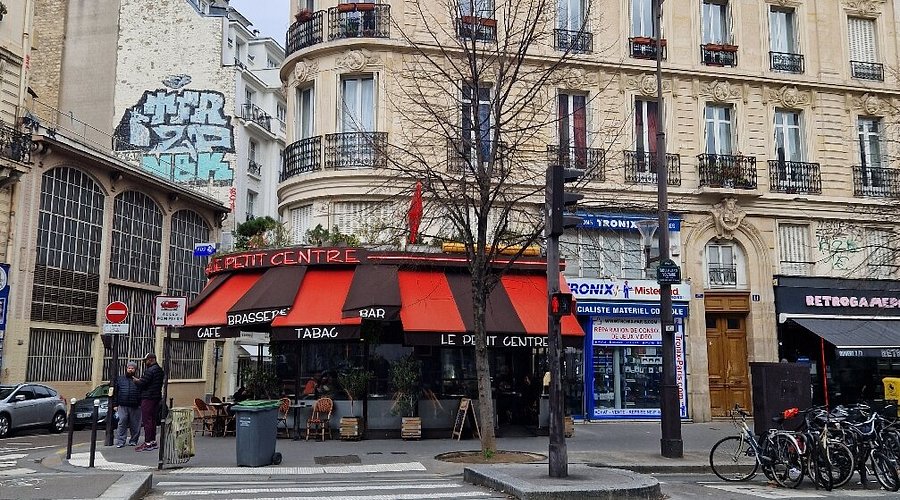
Oberkampf captures Paris’s youthful, artistic energy in one concentrated neighborhood. The streets around Rue Oberkampf buzz with record shops, small galleries, and bars that don’t really get going until midnight.
During the day, though, it softens into something more village-like. You’ll spot artists at work in studios, locals shopping at the market, and that same comfortable rhythm that defines Parisian village life.
The side streets hold the real charm. Rue Saint-Maur and Rue Jean-Pierre Timbaud feel almost residential, with cafés where you can actually snag a table. I’ve spent whole afternoons reading in these spots, watching the same dog-walkers pass by again and again.
Young creatives have made Oberkampf their home, which gives it this interesting mix of old-school Paris and something new. Your neighbor might be a graphic designer, a chef, or someone restoring vintage furniture. Everyone’s got a project.
Tranquil Green Spaces and Parks That Evoke a Countryside Setting
Paris hides pockets of countryside calm within its bustling neighborhoods, where sprawling parks feel more like rural escapes than city gardens. The 14th arrondissement offers peaceful retreats that locals favor over tourist hotspots, while the eastern edges of the city transport you to woodland settings complete with lakes and hidden villages.
Parc de Montsouris and the 14th Arrondissement: Urban Oasis

You’ll find a genuine village atmosphere in the 14th, where Parc Montsouris sprawls across nearly 40 acres of rolling lawns and winding paths. The park opened in 1875 and still keeps that 19th-century charm—rock formations, a tiny waterfall, and all.
The neighborhood around the park feels more Parisian than touristy. Locals bring their kids to the puppet theater or lay out picnics on the grass. You can actually stretch out here, unlike in those formal city gardens.
What makes it feel like countryside:
- Tree-lined paths that curve naturally, not in rigid lines
- A lake with ducks and swans gliding by
- Sections of the old Petite Ceinture railway nearby
- Low-rise residential streets and quiet cafés
The park connects to streets like Rue Daguerre, where market stalls and bakeries draw a local crowd. It’s where Parisians actually go about their daily lives.
Bois de Vincennes and Its Village Nooks

The largest green space in Paris stretches across 2,300 acres on the eastern edge. Bois de Vincennes isn’t just big—it’s genuinely rural, with four lakes, an English-style garden, and even a working farm.
You can rent rowboats on Lac Daumesnil when the weather’s good. The medieval Château de Vincennes sits right at the park’s edge, moat and towers included. Hop on the yellow metro line and you’re there in about ten minutes from central Paris.
The park hides actual villages inside its boundaries. You’ll stumble upon quiet neighborhoods that feel totally separate from the city. Locals bike through tree-covered paths that could just as easily be in Normandy or Brittany.
Enchanting Villages Near Paris for a Day Trip or Getaway
The countryside around Paris holds real treasures: Giverny’s famous gardens where Monet painted, Provins’ medieval towers and tunnels, and the artistic villages of Barbizon and Moret-sur-Loing tucked beside Fontainebleau forest.
Giverny: Monet’s Home and Water-Lily Gardens

You’ll find Giverny tucked into the Normandy countryside, about 75 kilometers from Paris. This is where Claude Monet lived for 43 years and created his most iconic paintings.
The main draw is Monet’s house and gardens. You can walk through the rooms where he lived and worked—his Japanese print collection still hangs on the walls. But honestly, the gardens are what make this place unforgettable.
The water lily pond and Japanese bridge from his paintings are right there. Stand on that green bridge and you see exactly what inspired those dreamy canvases. The colors shift with the light all day long.
Spring and early summer are pure magic here, with wisteria blooming over the bridge and the gardens bursting with flowers. The village itself has art galleries and cafés where you can grab lunch after wandering the gardens.
Getting there’s pretty straightforward: about 45 minutes by train from Gare Saint-Lazare to Vernon, then a quick 10-minute shuttle bus to the village.
Provins: Medieval History and Cobblestone Streets

Provins sits about 90 kilometers southeast of Paris and feels like you just stepped into the 13th century. UNESCO named it a World Heritage Site for its remarkably preserved medieval buildings.
The Caesar Tower dominates the skyline. Climb up and you get sweeping views of the old town and countryside. Below ground, Les Grands Souterrains leads you through vast tunnels merchants once used during medieval fairs.
Cobblestone streets wind past half-timbered houses and ancient stone walls. I love wandering through the upper town where the medieval vibe remains almost untouched. The ramparts still wrap around much of the old city.
Visit in summer and you might catch medieval reenactments and jousting tournaments. Knights in armor, falconry shows, and period costumes bring the town’s trading history to life. The Tithe Barn hosts a museum showing how Provins became a major medieval trade center.
You can reach Provins in about an hour and a half by train from Gare de l’Est.
Barbizon & Moret-sur-Loing: Artists’ Havens by the Forest
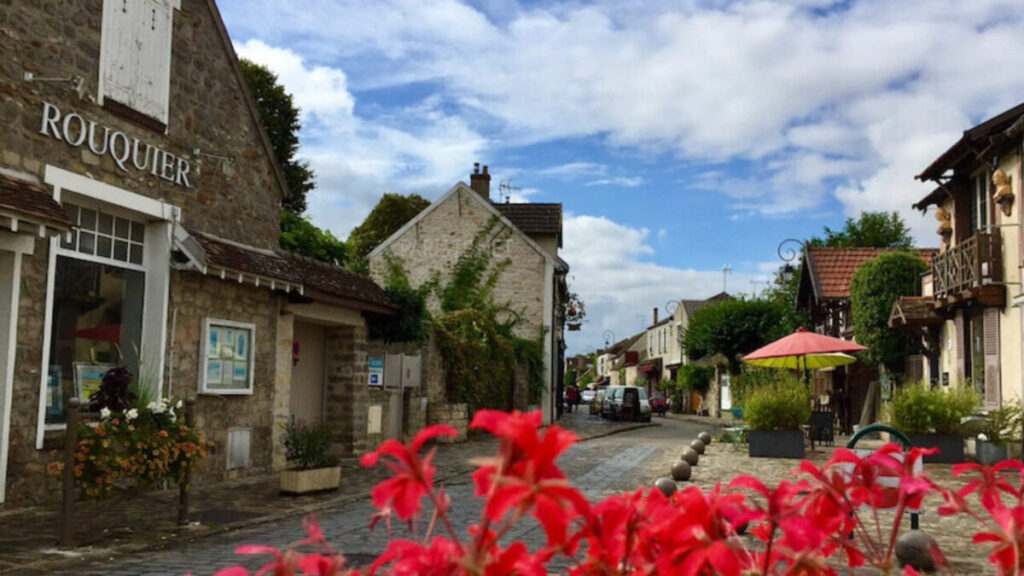
These two villages sit on opposite sides of Fontainebleau forest, each with its own artistic legacy. Barbizon drew painters in the 1800s who wanted to capture nature directly, away from studio conventions. Rousseau and Millet called this place home.
The forest is huge and ideal for hiking between villages. You’ll find easy trails and some spots for bouldering if that’s your thing.
Moret-sur-Loing captured Alfred Sisley’s heart in his later years. He painted the medieval gateways and the Loing River again and again. The Gothic Church of Notre-Dame and old bridges look just like his canvases.
Walk along the riverbank and you’ll understand why the impressionists loved this spot. The light on the water is always changing. Medieval gates like Porte de Bourgogne still stand guard at the old town entrances.
Both villages keep their small-town character—local cafés, little galleries, no rush. From Paris, you can get to Moret-sur-Loing in about an hour by train from Gare de Lyon to Moret-Veneux-les-Sablons.
Charming Small Towns and Residential Retreats Around Paris
Just outside Paris, you’ll find peaceful towns with royal gardens, medieval streets, and river views that inspired famous painters. These spots offer that village charm, and honestly, they’re a lot closer to the city than you’d expect.
Saint-Germain-en-Laye: Forests and Royal Heritage

Saint-Germain-en-Laye perches on a hillside just west of Paris, where a sprawling forest stretches out for miles. The town grew up around a royal château—Louis XIV was born here—and honestly, you can still sense that regal vibe as you wander the Renaissance castle grounds.
The town center weaves together elegant streets, local bakeries, and boutiques that seem to care more about regulars than tourists. Take a stroll along the Grande Terrasse, a nearly two-mile walkway André Le Nôtre designed, and soak up those views over the Seine valley.
Hop on the RER A and you’ll be in central Paris in about 20 minutes. It’s a practical spot if you want forest trails and historic architecture without ditching city life. On weekends, locals bike through the woods, and the neighborhood cafés actually fill up with folks reading newspapers and catching up—no Instagram crowds in sight.
Vincennes & Rambouillet: Green Towns Close to the City
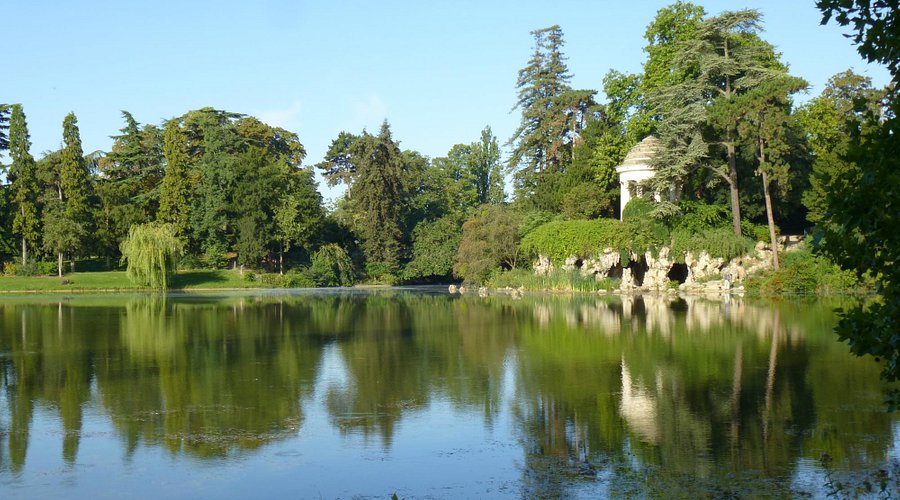
Vincennes hugs Paris on the east, right up against the Bois de Vincennes—2,500 acres of parkland, lakes, and even a Buddhist temple. The medieval Château de Vincennes claims the tallest keep in Europe, and the town itself feels pleasantly residential with market streets and family-run shops.
Rambouillet sits about 30 miles southwest, roughly an hour by train. The town surrounds a working presidential residence with formal gardens open to visitors when the President’s away. The Rambouillet Forest nearby has quiet hiking trails—sometimes you’ll spot deer if you’re lucky.
Both towns offer that peaceful small town vibe while keeping Paris close. You’ll find real grocery stores, schools, and the kind of daily rhythms that make these places feel like true communities, not tourist showcases.
Montfort-l’Amaury, Auvers-sur-Oise & Vétheuil: Fairytale Villages

Montfort-l’Amaury twists up a hillside with cobbled lanes past half-timbered houses and the ruins of an old castle tower. The medieval church rises over the village, and artists’ studios hide in stone buildings. It’s about an hour’s drive from Paris.
Auvers-sur-Oise draws people because Vincent van Gogh spent his last weeks here and painted over 70 works. You can follow the trail past the scenes he painted, visit the inn where he lived, and see the simple graves of Vincent and his brother Theo. The village hugs the Oise River, and its narrow, flower-lined streets still echo the world van Gogh painted.
Vétheuil sits on a scenic bend of the Seine where Claude Monet lived before heading to Giverny. The church here stars in dozens of his paintings, and you can wander down to the riverbank where he set up his easel. It’s quieter than La Roche-Guyon nearby but has that same kind of riverside charm.
Frequently Asked Questions
Paris hides dozens of peaceful spots where cobblestone lanes and ivy-covered houses replace the usual tourist crowds. The 13th, 14th, and 20th arrondissements have most of these village-like corners, though honestly, you’ll stumble on surprises all over the city.
Some of the most charming secret villages hide out in the 20th arrondissement, like Cité Leroy near Pyrénées metro. This little pocket has colorful villas—yellow, blue, white—that feel miles from the busy Ménilmontant streets.
The Passage des Soupirs is another sweet find in the same area. It’s a pedestrian alley with cobblestones and climbing ivy, and honestly, you’d probably walk right past if you didn’t know to look for it.
Over in the 13th, the Cité Florale offers dreamy photo ops along streets named things like Rue des Iris and Rue des Glycines. And if I’m being honest, Petite Alsace nearby might be my top pick—those timber-framed houses from 1912 really do transport you somewhere else.
Don’t overlook Cité Véron either, just steps from the Moulin Rouge. Most tourists breeze past this 19th-century passage and never notice the peaceful, ivy-draped buildings tucked away inside.
Which arrondissement in Paris offers an authentic village-like charm?
The 13th arrondissement is the clear winner for village vibes. There’s the Square des Peupliers, Petite Alsace, and the Butte-aux-Cailles neighborhood all clustered near Tolbiac and Place d’Italie.
Butte-aux-Cailles stands out—it’s famous, but still feels lived-in and local. The alleys are full of street art, there are tiny cafés, and cobblestone passages like Passage Sigaud and Passage Barrault really give you that tucked-away village feeling.
The 20th arrondissement is a close second. With Cité Leroy, Passage des Soupirs, and the colorful Rue du Retrait, you could easily spend a whole day exploring and barely see another tourist.
The 14th has its own thing going too, especially around Square de Montsouris behind Parc de Montsouris. The Art Deco and Modernist houses lining that cobblestone street look incredible in autumn when the ivy goes orange.
Where should a family stay in Paris to enjoy a quiet, village-like environment?
Try looking for a place near Butte-aux-Cailles in the 13th. The neighborhood’s packed with family-friendly restaurants, little parks, and calm streets where kids can actually run around a bit.
The area around Parc de Montsouris in the 14th is another great pick. You’re right next to one of Paris’s biggest parks, and the nearby Square de Montsouris has peaceful residential streets with lovely old houses.
Montmartre can work too if you steer clear of Sacré-Coeur and Place du Tertre. The quieter streets around Rue Lepic and near Montmartre Cemetery feel much more like a real neighborhood than a tourist magnet.
Les Batignolles in the 17th is underrated but perfect for families. It’s got a relaxed vibe, solid bakeries, and the kind of authentic Parisian atmosphere where locals actually do their daily shopping.
Which areas are best for experiencing traditional Parisian life akin to village culture?
The Village Saint-Paul in the 4th arrondissement drops you right into medieval Paris. There are artisan shops, tiny cafés, and picturesque courtyards filled with independent boutiques instead of chains.
Square des Peupliers in the 13th lets you glimpse traditional Parisian life from the early 20th century. The buildings date back to that era, and honestly, you’ll mostly hear French spoken here.
Around rue Saint-Vincent and rue des Saules in Montmartre, you’ll find little houses wrapped in greenery, a hilly old cemetery, and even a vineyard that still produces grapes every October. Hard to get more traditional than that.
The Jardin des Abbesses tucked in Passage des Abbesses is another spot where locals hang out. And for genuine French shopping, Maison Charroux nearby sells affordable scented candles that Parisians actually buy for themselves.
What are the top neighborhoods in Paris for a couple seeking a romantic and village-style ambiance?
Cité Florale in the 13th feels like it was made for couples. The colorful alleys and flower-named streets set a storybook scene that’s perfect for a quiet morning stroll—honestly, it’s almost too cute.
The area around Square de Montsouris really shines in fall, with leaves turning and those washed-out facades in yellow and blue popping against the orange trees. Most of the time, you’ll have the cobblestone streets to yourselves, which is rare in Paris.
Montmartre’s quieter corners—especially near Rue de l’Abreuvoir and Maison Rose—bring that classic Parisian romance, minus the crowds. If you go early, before the tour groups roll in, it’s almost like having the whole place to yourselves.
Villa Daviel near Petite Alsace gives off a bit of a Notting Hill vibe and stays super peaceful. If you walk through there at sunset, it’s easy to see why Paris gets its romantic reputation.
The Passage des Soupirs, which literally means Passage of Sighs, totally lives up to its name. It’s intimate, charming, and honestly, just the sort of spot to wander hand-in-hand with no real plan.
Find Things to Do in Paris
Find Accommodation

Continue Planning Your Paris Trip
Paris Fashion Week Travel Guide: Ultimate Insider Tips and Hotspots
You don't need a runway seat to experience Paris Fashion Week. Catch street style, designer boutiques, pop-up installations,…
Read Guide →
Travel Agencies in Paris: 10 Current Agencies and Tour Operators for 2026
Planning a Paris trip and want local expertise? Ten travel agencies for 2026, from boutique luxury specialists to…
Read Guide →
Driving in Paris: Rules, Practice Tips and Scenic Road Trips
Driving in Paris is manageable when you understand the licence rules, 30 km/h streets, Crit’Air restrictions, the Paris…
Read Guide →