
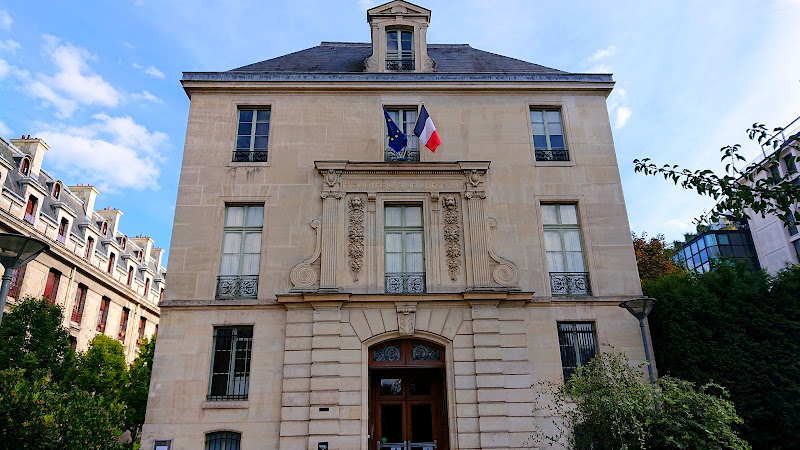
From artillery arsenal to literary treasure house
In the heart of the Bastille district at the former Arsenal of Paris, the Bibliothèque de l’Arsenal stands as one of France’s most remarkable cultural transformations, where military might became scholarly pursuit. Founded in 1757 by the Marquis de Paulmy in the residence of the Grand Master of Artillery, this extraordinary library demonstrates how Enlightenment ideals of universal knowledge could transform spaces of war into temples of learning, creating one of Europe’s most significant manuscript and literary collections.
Marquis de Paulmy’s encyclopedic vision
Marc-René, 3rd Marquis d’Argenson (1722-1787), began assembling his magnificent encyclopedic collection in 1756, driven by Enlightenment beliefs that knowledge should be comprehensive and accessible. His passion for collecting created a private library that rivaled royal collections in scope and quality, demonstrating how individual scholarship could contribute to the broader project of human intellectual advancement.
Paulmy’s travels throughout Europe enabled him to acquire remarkable series from Italian, German, and English schools, while his family connections provided access to military reconnaissance plans created for his uncle, the comte d’Argenson, who served as Minister of War. This combination of cultural and military documentation created a unique collection that reflected both scholarly interest and political access.
Revolutionary transformation and public access
Though Paulmy sold his collection to the comte d’Artois in 1786, the French Revolution sequestered the library and transformed it into a public institution in 1797. This revolutionary democratization of aristocratic learning demonstrated the Republic’s commitment to making knowledge available to all citizens rather than preserving it as private privilege.
The library’s integration into the Bibliothèque nationale de France in 1934 ensured its preservation while maintaining its distinctive character as a specialized research institution focused on French literature, manuscripts, and the history of the book.
Treasures of medieval and Renaissance manuscript art
Today’s collection spans over one million volumes including 150,000 pre-1880 books, 12,000 manuscripts (including the magnificent “Martyrdom of Saint Maurice and his Comrades”), 100,000 prints, and 3,000 charts and plans. The medieval manuscript collection, particularly rich due to Paulmy’s passionate collecting, provides invaluable insight into medieval book production and artistic achievement.
The illuminated manuscripts represent some of the most beautiful and historically significant artistic works from the Middle Ages and Renaissance, demonstrating the highest levels of medieval craftsmanship in book decoration, calligraphy, and miniature painting that made books objects of beauty as well as repositories of knowledge.
Contemporary cultural mission
The library’s collections extend beyond manuscripts to include revolutionary and Restoration-era caricatures, topographic plans, 18th-century music manuscripts assembled by Paulmy, and even occult documents that reflect the period’s interest in esoteric knowledge. This diversity demonstrates the Enlightenment’s comprehensive approach to human intellectual activity.
Contemporary cultural programming includes conferences, exhibitions, and concerts that bring the collections to life for contemporary audiences, proving that historic libraries can serve both scholarly research and public cultural education. The 2012 “Maison des illustres” designation recognizes the library’s continuing role in French cultural life.
Essential information
- Foundation: 1757 (Marquis de Paulmy’s private collection)
- Public library: 1797 (revolutionary transformation)
- BnF integration: 1934
- Location: Former Arsenal of Paris, 4th arrondissement
- Collections: 1 million volumes, 12,000 manuscripts, 100,000 prints
- Specialization: French literature 16th-19th centuries, medieval manuscripts
- Recognition: “Maison des illustres” label (2012)
Collections and access
- Notable manuscripts: “Martyrdom of Saint Maurice,” medieval illuminated works
- Prints collection: Revolutionary caricatures, topographic plans, European schools
- Music manuscripts: 18th-century collection assembled by Paulmy
- Research access: BnF reading rooms with scholarly justification
- Public programming: Conferences, exhibitions, concerts
Enlightenment legacy
The Bibliothèque de l’Arsenal embodies the Enlightenment transformation of private scholarship into public cultural resource, where the Marquis de Paulmy’s encyclopedic collecting vision became the foundation for democratic access to rare books and manuscripts. This remarkable institution demonstrates how great libraries can honor their aristocratic origins while serving contemporary scholarly and cultural missions that extend far beyond their founders’ original intentions. For manuscript enthusiasts, French literature scholars, or anyone interested in how private collections become public treasures, the Arsenal offers an extraordinary encounter with bibliographic heritage, where Paulmy’s 18th-century passion for comprehensive knowledge continues to serve researchers and cultural visitors within the former military spaces that now celebrate the power of books rather than artillery.