Scientific dedication entrance where microbiologist genius receives metro tribute
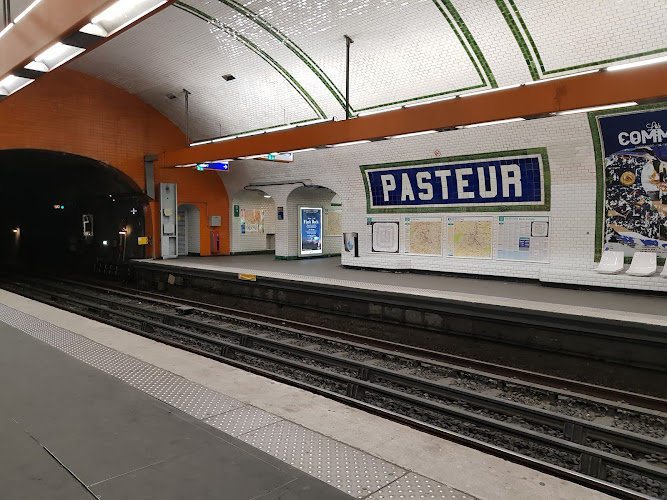
At Pasteur station in the 15th arrondissement, this Édicule Guimard stands as Hector Guimard’s Art Nouveau tribute to Louis Pasteur (1822-1895), opened in April 1906 to honor the microbiologist whose vaccination and pasteurization principles revolutionized global public health through scientific discoveries that created the first rabies and anthrax vaccines serving humanity’s ongoing disease prevention needs. This extraordinary entrance demonstrates how exceptional public art can serve both practical metropolitan transportation and cultural commemoration through design excellence that honors both scientific achievement and aesthetic innovation, proving that metro entrances can transcend mere transportation access to become memorials celebrating individual genius that continues benefiting humanity through scientific legacy worthy of both transportation infrastructure and cultural heritage preservation serving ongoing scientific appreciation and metropolitan mobility requirements.
Cast iron artistry and bronze patina aesthetics
The entrance’s cast iron construction painted in distinctive green emulating bronze patina, combined with Guimard’s custom MÉTROPOLITAIN lettering, creates unified aesthetic experience that transforms routine metro access into encounters with Art Nouveau excellence through materials and typography that prove exceptional public art can serve both practical urban infrastructure and cultural education about design innovation. This aesthetic integration demonstrated how successful transportation design can achieve both functional efficiency and artistic excellence through construction approaches that honor both practical metropolitan service requirements and innovative decorative arts principles worthy of ongoing heritage protection and international architectural appreciation.
The exploitation of cast iron’s “plastic qualities” that enabled “sinuous, naturalistic and slender curves that embody Art Nouveau” illustrates how material innovation could serve both aesthetic expression and practical transportation infrastructure through manufacturing techniques that supported organic design principles while maintaining structural integrity required for metropolitan transportation service. This material mastery proved that exceptional public art emerges when architects understand how industrial materials can serve aesthetic vision through construction techniques that honor both material properties and design philosophy serving both transportation functionality and cultural education about innovative construction approaches.
Modular design system and metropolitan coherence
The entrance’s creation through Guimard’s modular structural elements system that enabled five distinct entrance types demonstrates how systematic artistic vision can achieve both aesthetic variety and operational consistency across diverse urban contexts requiring both transportation functionality and design distinction. This modular approach proved that exceptional public art can serve both immediate practical requirements and comprehensive metropolitan aesthetic identity through design systems that maintain both individual station character and unified transportation network identity worthy of both functional effectiveness and cultural heritage preservation serving both metropolitan mobility and artistic appreciation requirements.
Historical protection and scientific neighborhood context
The entrance’s protection among the 86 surviving Guimard installations from the original 167 metro entrances demonstrates how cultural preservation requires ongoing vigilance to maintain innovative public art that serves both transportation functionality and cultural education about Art Nouveau excellence. The station’s naming for Louis Pasteur within the neighborhood of Institut Pasteur creates perfect cultural context that honors both scientific achievement and artistic innovation through transportation infrastructure that serves both practical metropolitan mobility and ongoing scientific heritage appreciation within contexts that prove exceptional public art can honor both individual genius and collective cultural heritage.
Essential information
- Designer: Hector Guimard (Art Nouveau master)
- Station opening: April 1906
- Namesake: Louis Pasteur (microbiologist, 1822-1895)
- Location: Pasteur station, 15th arrondissement
- Materials: Cast iron painted bronze patina green
- Design system: Modular elements creating aesthetic variety
- Protection status: One of 86 surviving protected entrances
- Scientific context: Near Institut Pasteur research facility
Design and cultural significance
- Material innovation: Cast iron enabling organic Art Nouveau curves
- Typography excellence: Custom MÉTROPOLITAIN lettering design
- Scientific commemoration: Transportation tribute to vaccination pioneer
- Systematic planning: Unified aesthetic across diverse metro network
- Cultural preservation: Protected status ensuring Art Nouveau heritage
Transportation art honors scientific genius through metropolitan memorial excellence
The Édicule Guimard at Pasteur station embodies the extraordinary convergence of artistic excellence and scientific commemoration, where Hector Guimard’s Art Nouveau transportation design created metro entrance that honors Louis Pasteur’s vaccination revolution while serving practical metropolitan mobility through cast iron construction that proved exceptional public art can achieve both immediate transportation functionality and lasting cultural tribute to individual scientific genius whose discoveries continue serving global public health advancement through medical innovations worthy of both transportation commemoration and ongoing scientific appreciation. This remarkable entrance demonstrates how exceptional public infrastructure can serve both practical urban service and cultural commemoration, creating transportation access that honors both immediate metropolitan mobility needs and enduring scientific achievement through design excellence that maintains both Art Nouveau aesthetic integrity and memorial dignity worthy of ongoing heritage protection and scientific commemoration. For Art Nouveau enthusiasts, scientific heritage admirers, or anyone interested in how transportation infrastructure can serve both practical mobility and cultural commemoration, this Pasteur entrance offers an extraordinary encounter with memorial transportation excellence, where cast iron organic forms and scientific neighborhood context demonstrate how exceptional public art can honor both aesthetic innovation and individual genius achievement, proving that the finest transportation design transcends purely functional requirements to serve ongoing cultural commemoration and scientific heritage appreciation through infrastructure that maintains both metropolitan service effectiveness and memorial dignity serving diverse transportation and cultural commemoration requirements within scientific neighborhood contexts that honor both practical mobility and ongoing appreciation for scientific achievement excellence worthy of both heritage protection and transportation service that continues honoring scientific legacy through metropolitan infrastructure serving both immediate mobility and lasting scientific commemoration.