
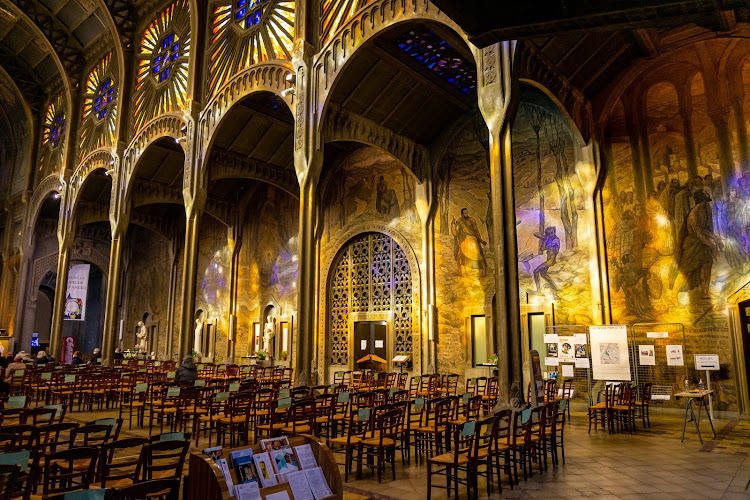
Concrete Gothic innovation where 13th-century vision meets industrial revolution worship
In the 15th arrondissement, Église Saint-Christophe-de-Javel stands as architect Charles-Henri Besnard’s 1926-1930 revolutionary achievement, where patented molded reinforced cement construction created “the kind of church that 13th-century architects would have built if they had possessed reinforced concrete,” serving the industrial Javel district where Citroën factories required patron saint of travelers protection through sacred architecture that honored both Gothic heritage and contemporary construction innovation. This extraordinary church demonstrates how exceptional ecclesiastical architecture can serve both immediate industrial community spiritual needs and long-term architectural influence through construction techniques that prove modern materials can achieve medieval aesthetic aspiration while serving contemporary liturgical requirements worthy of Historical Monument protection and ongoing parish service excellence.
Viollet-le-Duc discipleship and construction innovation
Industrial district context and patron saint dedication
Art Deco decoration and modernist artistic integration
Historic preservation and 20th-century architectural recognition
Essential information
- Architect: Charles-Henri Besnard (Viollet-le-Duc disciple)
- Construction: 1926-1930 (consecrated 1930)
- Location: 15th arrondissement, Javel district
- Innovation: First church built with molded reinforced cement
- Dedication: Saint Christopher (patron of travelers)
- Industrial context: Serving Citroën factory workers
- Artistic collaboration: Henri-Marcel Magne stained glass and frescoes
- Historic protection: Monument historique (1975)
Architectural and spiritual significance
- Construction innovation: Prefabricated concrete elements simulating Gothic stonework
- Aesthetic philosophy: Gothic inspiration through contemporary materials
- Community service: Industrial district spiritual center for automobile workers
- Artistic integration: Art Deco and modernist decorative arts
- Catholic development: Symbol of 20th-century church architectural evolution
Gothic vision meets industrial innovation creating spiritual sanctuary for modern workers
Église Saint-Christophe-de-Javel embodies the extraordinary synthesis of Gothic architectural wisdom and industrial construction innovation, where Charles-Henri Besnard’s vision of creating churches that “13th-century architects would have built with reinforced concrete” established new possibilities for ecclesiastical architecture that served both historical Catholic tradition and contemporary industrial community spiritual needs through construction innovation that proved modern materials could achieve medieval aesthetic aspiration while serving 20th-century liturgical requirements. This remarkable church demonstrates how exceptional ecclesiastical architecture emerges when architectural innovation meets spiritual mission requirements, creating sacred spaces that serve both immediate industrial community worship and long-term architectural influence on modern church development worthy of Historical Monument protection and ongoing parish service excellence. For ecclesiastical architecture enthusiasts, construction innovation admirers, or anyone interested in how Gothic inspiration can inform contemporary sacred building, this Javel district sanctuary offers an extraordinary encounter with spiritual construction excellence, where molded concrete Gothic elements and Art Deco artistic integration demonstrate the comprehensive vision required to create churches that maintain both spiritual dignity and architectural innovation, proving that the finest ecclesiastical architecture achieves lasting significance through ongoing spiritual service rather than mere architectural preservation, creating sacred spaces where Gothic heritage continues inspiring contemporary worship while serving practical parish needs through construction innovation that honors both medieval spiritual wisdom and modern technical capability serving diverse spiritual worship and cultural appreciation requirements within industrial community contexts that require both spiritual comfort and architectural distinction worthy of ongoing parish service and heritage protection.