
English philanthropy becomes Parisian icon
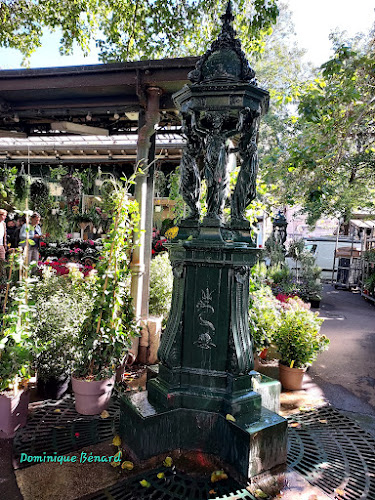
Throughout the streets of Paris, the elegant Fontaines Wallace stand as enduring symbols of international philanthropy and artistic excellence. Commissioned in 1872 by English philanthropist Sir Richard Wallace and sculpted by Charles-Auguste Lebourg, these magnificent cast-iron drinking fountains represent one of the most successful public art projects in urban history, transforming practical necessity into beloved cultural landmarks that have provided free water to Parisians for over 150 years.
Sir Richard Wallace’s philanthropic vision
Sir Richard Wallace (1818-1890), having inherited a vast fortune in August 1870, chose to remain in his Parisian villa during the devastating siege rather than retreat to his palatial estates, dedicating himself to helping the city during its darkest hour. The Franco-Prussian War and subsequent Commune destruction had devastated Paris’s water infrastructure, making clean drinking water expensive and inaccessible to the poor.
Wallace’s decision to donate 50 fountains reflected the English philanthropic movement’s belief that providing free water would encourage people to choose healthy beverages over alcohol while addressing the immediate humanitarian crisis facing post-war Paris. His generosity made him beloved by Parisians who recognized genuine concern for their welfare.
Charles-Auguste Lebourg’s artistic transformation
Wallace hired Charles-Auguste Lebourg, a highly regarded sculptor from Nantes, to transform his practical sketches into true works of art. Lebourg’s genius lay in creating fountains that were simultaneously useful, beautiful, and symbolic—embodying Wallace’s vision that public infrastructure should inspire through aesthetic excellence while serving essential needs.
The grand model fountains stand 2.71 meters high on octagonal pedestals topped with four unique caryatids representing kindness, simplicity, charity, and sobriety—virtues that reflect both Wallace’s philanthropic ideals and the moral aspirations of public health reformers. The dome decorated with dolphins adds classical elegance while the design draws inspiration from the Renaissance Fontaine des Innocents.
Immediate success and global influence
The first fountain, installed on Boulevard de la Villette in July 1872, achieved immediate success that exceeded all expectations. Parisians embraced both the practical function and artistic beauty, creating demand that led to rapid expansion throughout the city and eventual adoption worldwide.
Today, over 52 Wallace fountains serve the greater Paris region, with more than 75 throughout France and installations in South Africa, Brazil, Canada, Spain, Portugal, New Orleans, Los Angeles, Great Britain, Italy, Jordan, and numerous other locations, proving that great public art can transcend national boundaries to serve urban communities globally.
Artistic heritage and continuing service
The fountains’ 150th anniversary in 2022 celebrated not just historical significance but continuing function—these cast-iron sculptures continue to deliver quality drinking water while serving as beloved street furniture that defines Parisian urban character. The fountains demonstrate how great public art can maintain both aesthetic appeal and practical utility across multiple generations.
Each fountain bears the markings of its creators—”CH. LEBOURG SC 1872″ on one side and “VAL D’OSNE” (the foundry) on the opposite—ensuring that artistic and technical achievement receive permanent recognition while serving democratic access to clean water.
Symbol of public generosity
The Wallace fountains embody the principle that private wealth can serve public good through thoughtful philanthropy and artistic vision. Wallace’s gift demonstrates how individual generosity can create lasting urban improvements that serve communities far beyond the donor’s lifetime while beautifying city life through functional art.
Essential information
- Benefactor: Sir Richard Wallace (English philanthropist)
- Sculptor: Charles-Auguste Lebourg
- Installation: First fountain July 1872
- Motivation: Franco-Prussian War water crisis
- Design: Cast-iron with four caryatids (virtues)
- Height: 2.71 meters
- Current number: 52+ in Paris region, 75+ in France
- Global presence: Installations on five continents
Design and symbolism
- Caryatids: Kindness, simplicity, charity, sobriety
- Decorative elements: Dolphin-decorated dome, octagonal pedestal
- Artistic inspiration: Fontaine des Innocents, Germain Pilon’s Renaissance work
- Foundry markings: Lebourg signature, Val d’Osne foundry identification
- 150th anniversary: 2022 celebration of continuing service
Philanthropic legacy in cast iron
The Fontaines Wallace embody the finest traditions of philanthropic public art, where Sir Richard Wallace’s humanitarian vision and Charles-Auguste Lebourg’s artistic mastery combined to create functional sculptures that have served Parisian daily life for over 150 years. These remarkable fountains demonstrate how individual generosity can create lasting urban improvements that transcend their original context to become beloved cultural symbols recognized worldwide. For public art enthusiasts, urban planning historians, or anyone interested in how philanthropic vision shapes city life, the Wallace fountains offer an extraordinary example of functional beauty, where English compassion meets French artistic excellence to create cast-iron monuments to human generosity that continue to provide free water and aesthetic pleasure to millions of Parisians and visitors beneath caryatids that eternally represent the virtues that inspired their creation.