
<\!-- wp:heading -->
François Mansart\u2019s architectural masterpiece enhanced with Le Brun and Vouet decorations
<\!-- /wp:heading --><\!-- wp:paragraph -->
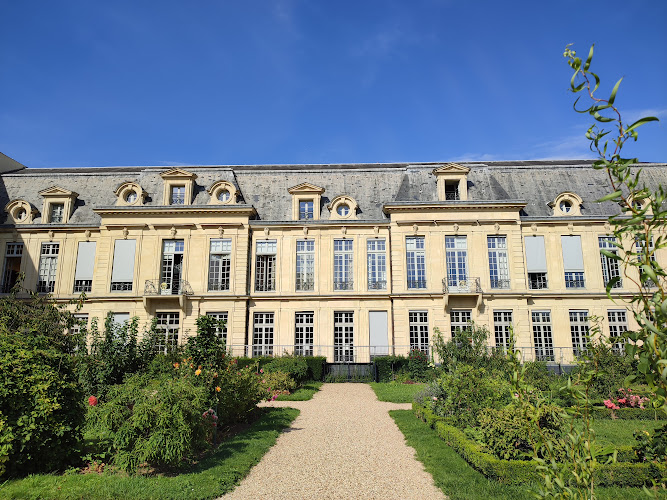
At 7 rue de Jouy in the 4th arrondissement, the Hôtel d\u2019Aumont stands as one of the Marais\u2019 most refined architectural achievements and a testament to 17th-century French aristocratic taste. Originally designed by Le Vau between 1644 and 1648 for Michel-Antoine Scarron, King\u2019s Councillor, this magnificent mansion achieved its greatest splendor when the Duc d\u2019Aumont commissioned François Mansart to enlarge and transform the building from 1656 onwards, creating one of Paris\u2019s finest examples of classical French residential architecture.
<\!-- /wp:paragraph --><\!-- wp:parameter --><\!-- wp:paragraph -->
Mansart\u2019s intervention, working with master mason Michel Villedo, inserted a grand new staircase in the right wing while replacing stairs in the corner pavilion, demonstrating his mastery of circulation design and spatial organization. The collaboration with leading artists Charles Le Brun and Simon Vouet for interior decorations created comprehensive artistic environments that elevated residential architecture to palace-like grandeur.
<\!-- /wp:paragraph --><\!-- wp:heading {"level":3} -->
Le Brun\u2019s Apotheosis of Romulus and aristocratic decoration
<\!-- /wp:heading --><\!-- wp:parameter --><\!-- wp:paragraph -->
Between 1656 and 1662, the grand salon received Charles Le Brun\u2019s masterpiece ceiling representing “The Apotheosis of Romulus,” demonstrating how aristocratic residences could serve as showcases for the finest artistic talent of the age. This monumental painting, combined with Simon Vouet\u2019s decorative work throughout the interior salons, created artistic environments that rivaled royal palaces in sophistication and cultural significance.
<\!-- /wp:paragraph --><\!-- wp:parameter --><\!-- wp:paragraph -->
The integration of mythological themes within aristocratic residential decoration reflects 17th-century understanding of how classical culture could enhance contemporary living while establishing cultural authority and intellectual sophistication through artistic patronage.
<\!-- /wp:paragraph --><\!-- wp:heading {"level":3} -->
Georges Maurissart\u2019s 18th-century expansion
<\!-- /wp:heading --><\!-- wp:parameter --><\!-- wp:paragraph -->
The major expansion campaign led by architect Georges Maurissart in 1703 extended the garden façade to 17 bays punctuated by two symmetrical projections, demonstrating how 17th-century architecture could be sensitively enlarged to meet 18th-century needs while maintaining essential character and architectural harmony.
<\!-- /wp:paragraph --><\!-- wp:parameter --><\!-- wp:paragraph -->
This expansion reflects the mansion\u2019s continued importance in Parisian aristocratic society and the owners\u2019 commitment to maintaining architectural excellence through changing architectural fashions and social requirements.
<\!-- /wp:paragraph --><\!-- wp:heading {"level":3} -->
Historic monument preservation and contemporary function
<\!-- /wp:heading --><\!-- wp:parameter --><\!-- wp:paragraph -->
The City of Paris\u2019s 1938 purchase and subsequent restoration led to the mansion\u2019s classification as a monument historique, ensuring preservation of Mansart\u2019s architectural achievement and Le Brun\u2019s artistic contributions for future generations. The installation of the Paris Administrative Court in 1959 demonstrates how historic residential architecture can be successfully adapted to serve contemporary institutional needs.
<\!-- /wp:paragraph --><\!-- wp:parameter --><\!-- wp:paragraph -->
This adaptive reuse proves how great architecture can transcend its original domestic purpose to serve broader public functions while maintaining the dignity and cultural significance that made the building historically important.
<\!-- /wp:paragraph --><\!-- wp:heading {"level":3} -->
Architectural legacy and Marais heritage
<\!-- /wp:heading --><\!-- wp:parameter --><\!-- wp:paragraph -->
The Hôtel d\u2019Aumont\u2019s survival as both architectural monument and functioning institutional building demonstrates how the finest aristocratic architecture can maintain relevance across centuries by adapting to serve new social purposes while preserving the aesthetic excellence and craftsmanship that made it culturally significant.
<\!-- /wp:paragraph --><\!-- wp:parameter --><\!-- wp:paragraph -->
For visitors to the Marais interested in François Mansart\u2019s architectural genius, 17th-century decorative arts, or the evolution of aristocratic residential architecture, the Hôtel d\u2019Aumont offers an exceptional encounter with French classical architecture at its finest. The mansion proves that great residential buildings achieve lasting cultural significance when architectural excellence meets artistic collaboration, creating environments that serve both practical domestic needs and broader cultural purposes while establishing models for architectural refinement that influence subsequent generations of builders and designers.
<\!-- /wp:paragraph -->