
<\!-- wp:heading -->
A commemorative site honoring France\u2019s greatest medieval merchant and royal treasurer
<\!-- /wp:heading --><\!-- wp:paragraph -->
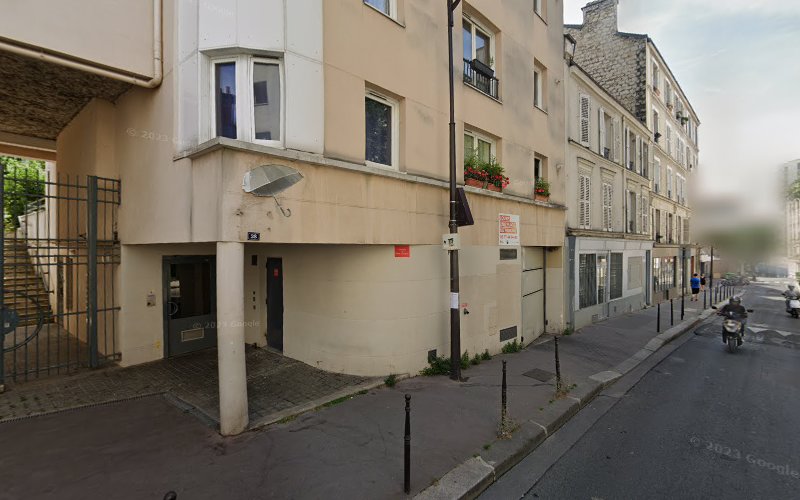
In the 4th arrondissement, this commemorative site honors Jacques Cœur (c. 1395-1456), one of medieval France\u2019s most extraordinary figures who rose from merchant origins to become treasurer to King Charles VII and one of Europe\u2019s wealthiest individuals. While Jacques Cœur\u2019s famous palace stands in Bourges—a magnificent example of Flamboyant Gothic civil architecture—this Parisian location provides opportunity to understand how his revolutionary approach to international commerce and royal finance transformed both French economic policy and architectural patronage.
<\!-- /wp:paragraph --><\!-- wp:paragraph -->
Jacques Cœur\u2019s life story embodies the medieval transition from feudal economy to mercantile capitalism, demonstrating how individual entrepreneurial vision could reshape national economic policy while creating unprecedented opportunities for architectural and artistic patronage that influenced French cultural development for centuries.
<\!-- /wp:paragraph --><\!-- wp:heading {"level":3} -->
From merchant to royal treasurer: economic revolution
<\!-- /wp:heading --><\!-- wp:paragraph -->
Cœur\u2019s appointment as Charles VII\u2019s steward of royal expenditure (essentially finance minister) in 1438 and his ennoblement in 1441 reflected his extraordinary success in establishing international trading networks that connected France to Mediterranean markets, Asian goods, and European financial systems. His merchant empire demonstrated how commercial innovation could serve royal policy while creating unprecedented personal wealth.
<\!-- /wp:paragraph --><\!-- wp:parameter --><\!-- wp:paragraph -->
His trading operations extended from France to Egypt, Syria, and Asia, establishing commercial networks that brought exotic goods, precious materials, and financial expertise to French markets while demonstrating how individual mercantile vision could advance national economic interests and cultural sophistication.
<\!-- /wp:paragraph --><\!-- wp:heading {"level":3} -->
Architectural patronage and Gothic innovation
<\!-- /wp:heading --><\!-- wp:parameter --><\!-- wp:paragraph -->
Cœur\u2019s construction of his “Grant\u2019Maison” in Bourges between 1443 and 1451 established new standards for French domestic architecture through its integration of Flamboyant Gothic style with unprecedented comfort and luxury that prefigured Renaissance residential design. The palace\u2019s 43 rooms, 8 staircases, and 4,000 square meters demonstrated how mercantile wealth could create architectural achievements that rivaled royal palaces.
<\!-- /wp:parameter --><\!-- wp:paragraph -->
His architectural vision—demanding buildings that were “beautiful, grand and magnificent”—established precedents for how successful merchants could use architectural patronage to demonstrate social status while contributing to broader cultural advancement through artistic innovation and technical excellence.
<\!-- /wp:paragraph --><\!-- wp:heading {"level":3} -->
Political downfall and enduring legacy
<\!-- /wp:heading --><\!-- wp:parameter --><\!-- wp:paragraph -->
Despite his crucial role in financing Charles VII\u2019s military campaigns and economic recovery, Cœur\u2019s political enemies ultimately engineered his downfall through charges of corruption and treason, leading to his exile and death in 1456. This tragic end demonstrates the precarious position of medieval merchants who achieved unprecedented wealth and political influence within aristocratic societies.
<\!-- /wp:paragraph --><\!-- wp:parameter --><\!-- wp:paragraph -->
His acquisition of approximately 40 seigneuries (manors) and his revolutionary business practices established models for French commercial and financial development that influenced royal economic policy long after his death, proving that individual innovation can create lasting institutional change even when political circumstances destroy the innovator.
<\!-- /wp:paragraph --><\!-- wp:heading {"level":3} -->
Economic innovation and cultural transformation
<\!-- /wp:heading --><\!-- wp:parameter --><\!-- wp:paragraph -->
Jacques Cœur\u2019s revolutionary integration of international commerce, royal finance, and architectural patronage established precedents for how economic success could serve broader cultural advancement while demonstrating the transformative power of individual vision applied to national economic development and artistic achievement.
<\!-- /wp:paragraph --><\!-- wp:parameter --><\!-- wp:paragraph -->
For visitors to Paris interested in medieval commerce, royal finance, or the relationship between economic innovation and cultural patronage, this commemorative site offers insight into how Jacques Cœur\u2019s legacy influenced French economic and cultural development. While his palace remains in Bourges as one of Franceu2019s finest Gothic monuments, his story demonstrates that great entrepreneurs achieve lasting significance by using economic success to advance broader cultural and architectural achievement that enriches civilization long after their individual careers end.
<\!-- /wp:paragraph -->