
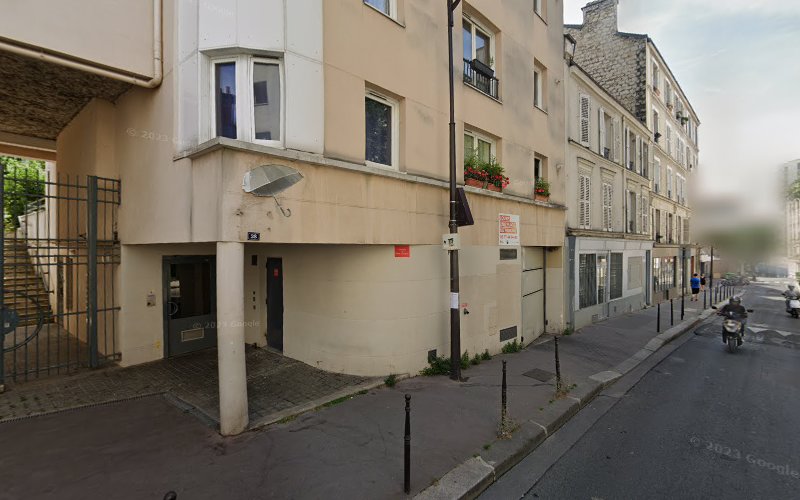
Manufacture de porcelaine de Clignancourt
Manufacture De Porcelaine De Clignancourt is a Paris historic landmark located in the 18 arrondissement. Royal patronage transforms porcelain into diplomatic art Near rue Marcadet in the 18th arrondissement, the former Manufacture de porcelaine de Clignancourt represents Pierre Deruelle’s 1767 architectural and entrepreneurial vision that created France’s most prestigious porcelain workshop outside Sèvres, where royal […]
Manufacture De Porcelaine De Clignancourt is a Paris historic landmark located in the 18 arrondissement.
Royal patronage transforms porcelain into diplomatic art
Near rue Marcadet in the 18th arrondissement, the former Manufacture de porcelaine de Clignancourt represents Pierre Deruelle’s 1767 architectural and entrepreneurial vision that created France’s most prestigious porcelain workshop outside Sèvres, where royal protection by Monsieur (future Louis XVIII) transformed utilitarian ceramics into “Porcelaine de Monsieur” that rivaled the finest European luxury goods. This extraordinary manufactory demonstrates how individual innovation combined with royal patronage can establish cultural industries that serve both artistic achievement and economic nationalism through luxury production that competes with foreign imports while developing domestic artisanal excellence.
Architectural entrepreneurship and industrial innovation
Pierre Deruelle’s 1771 acquisition of buildings from his mother-in-law in Clignancourt represented both architectural expertise and commercial vision, where his understanding of building design enabled him to create optimal production facilities that could accommodate the complex processes required for hard-paste porcelain manufacturing. This entrepreneurial approach proved that successful cultural industries require both artistic vision and practical engineering through facility design that supports technical excellence while maintaining economic viability.
Royal protection and market privileges
The 1787 granting of Sèvres-equivalent privileges, particularly the exclusive right to use polychromy and gold decoration, represented extraordinary recognition that placed Clignancourt among France’s most privileged cultural institutions. This achievement proved that private entrepreneurship could achieve royal-level recognition when artistic quality and commercial success demonstrated institutional excellence worthy of state protection through competitive advantages previously reserved for royal manufactures.
Artistic collaboration and technical mastery
The manufactory’s employment of up to 93 workers created a significant artisanal community that developed techniques rivaling Sèvres quality while maintaining distinctive stylistic identity through decorative approaches that combined royal elegance with bourgeois practicality. This workforce scale proved that successful luxury industries require extensive skilled labor supported by training systems that maintain quality standards across multiple production stages.
The 1792 succession to painter Alexandre Moitte, Deruelle’s son-in-law who directed operations until 1799, demonstrated how artistic families could maintain institutional continuity through shared aesthetic vision and technical knowledge, where creative succession ensured consistent quality standards while adapting to revolutionary political changes that challenged traditional royal patronage systems.
Revolutionary challenges and industrial evolution
The manufactory’s 1768-1799 operation period, spanning from Louis XV’s reign through revolutionary transformation to Napoleonic emergence, illustrates how luxury industries must navigate political upheaval while maintaining artistic standards that transcend changing patronage systems. The 1791 building sale and production cessation demonstrated how revolutionary equality could eliminate royal privileges that supported specialized cultural industries through market protection that private enterprise could not sustain independently.
Architectural preservation and cultural memory
The 1965 classification of building vestiges as historical monuments recognizes this site’s significance in documenting France’s luxury industry development during the transition from royal manufacture to modern industrial capitalism. This preservation status proves that seemingly commercial sites can achieve cultural importance through their role in demonstrating how artistic excellence and entrepreneurial innovation combine to create institutions that influence national cultural identity.
Today’s architectural remains serve as testimony to the sophisticated production facilities required for luxury porcelain manufacturing, where Deruelle’s building design enabled technical processes that created products rivaling the finest European ceramics while maintaining French stylistic identity through decorative approaches that combined royal tradition with emerging bourgeois taste preferences.
Essential information
- Founder: Pierre Deruelle (architect and entrepreneur)
- Establishment: 1767-1771 (sources vary)
- Operation period: 1768-1799 (31 years)
- Location: Near current rue Marcadet, 18th arrondissement
- Royal protection: 1775 by Monsieur (Count of Provence)
- Alternative name: “Porcelaine de Monsieur”
- Workforce: Up to 93 skilled artisans
- Historical status: Building vestiges classified 1965
Production and significance
- Product type: French hard-paste porcelain
- Quality standard: Rivaled Sèvres royal porcelain
- Royal mark: L.S.X. (Louis Stanislas Xavier)
- Privileges: Polychromy and gold decoration rights (1787)
- Succession: Alexandre Moitte (painter son-in-law, 1792-1799)
Royal patronage enables artistic excellence
The Manufacture de porcelaine de Clignancourt embodies the extraordinary potential of architectural expertise combined with royal patronage to create luxury industries that serve both cultural prestige and economic innovation, where Pierre Deruelle’s vision established a porcelain workshop that achieved Sèvres-level quality while maintaining distinctive stylistic identity through products worthy of court protection. This remarkable manufactory proves that entrepreneurial success in luxury industries requires technical mastery, artistic vision, and political connections that enable access to exclusive markets and production privileges, creating institutions that serve national cultural identity through beautiful objects that represent French artistic excellence to international audiences. For decorative arts enthusiasts, industrial history admirers, or anyone interested in how luxury industries contribute to national cultural prestige, this historic manufactory site offers a fascinating encounter with the intersection of art, commerce, and politics, where private enterprise achieved royal recognition through porcelain quality that rivaled Europe’s finest production centers, proving that authentic luxury emerges through technical mastery and artistic vision rather than marketing alone, creating cultural institutions that honor traditional craftsmanship while serving contemporary aesthetic needs through beauty that transcends commercial transaction to become expressions of national artistic identity.