
Passage Molière
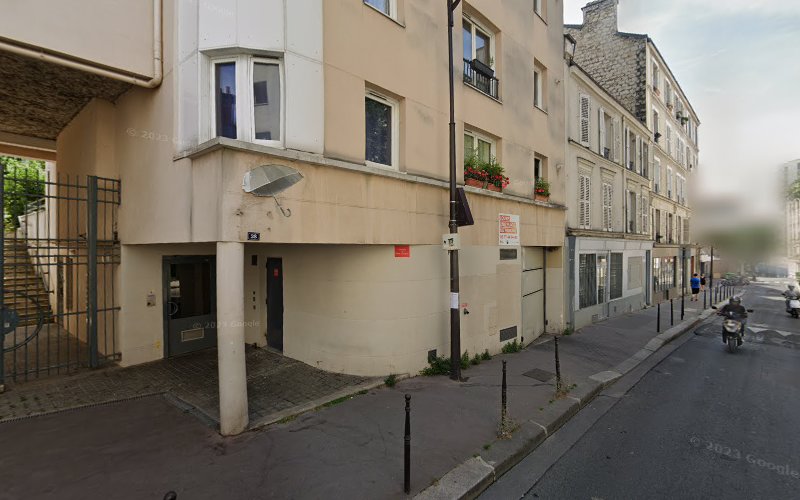
82 Pass. Molière is a Paris historic landmark located in the 3 arrondissement. An open-air theatrical passage born from revolutionary theater ambitions In the 3rd arrondissement, Passage Molière stands as a unique reminder of Paris\u2019s rich theatrical heritage and the revolutionary fervor that transformed French cultural life in the late 18th century. Unlike the typical […]
82 Pass. Molière is a Paris historic landmark located in the 3 arrondissement.
<\!-- wp:heading -->
An open-air theatrical passage born from revolutionary theater ambitions
<\!-- /wp:heading --><\!-- wp:paragraph -->
In the 3rd arrondissement, Passage Molière stands as a unique reminder of Paris\u2019s rich theatrical heritage and the revolutionary fervor that transformed French cultural life in the late 18th century. Unlike the typical covered galleries that characterize Parisian passages, this cobbled open-air lane preserves the distinctive character of late 18th-century urban planning while honoring one of France\u2019s greatest dramatic voices through its connection to the Théâtre Molière.
<\!-- /wp:paragraph --><\!-- wp:paragraph -->
The passage\u2019s origins trace back to 1791 when Boursault, former director of the Théâtre de Marseille, commissioned construction of the Théâtre Molière shortly after the French Revolution began. This timing reflects the period\u2019s cultural optimism and belief that revolutionary political change should be accompanied by innovative approaches to public entertainment and urban planning.
<\!-- /wp:paragraph --><\!-- wp:heading {"level":3} -->
Revolutionary theater vision and urban innovation
<\!-- /wp:heading --><\!-- wp:paragraph -->
Boursault\u2019s decision to create a passage connecting Rue Saint-Martin to the theater\u2019s rear entrance and stage door demonstrated innovative thinking about how theatrical architecture could integrate with urban circulation. This approach reflected revolutionary ideals about making cultural institutions more accessible to broader public audiences while creating new forms of urban space that served both practical and cultural functions.
<\!-- /wp:paragraph --><\!-- wp:paragraph -->
The theater\u2019s inauguration on June 4, 1791, under Molière\u2019s patronage, with “Le Misanthrope” as the opening production, established the passage\u2019s cultural significance while honoring France\u2019s greatest comic playwright. This tribute to Molière reflected revolutionary respect for artistic achievement and the belief that great literature should inspire contemporary cultural institutions.
<\!-- /wp:paragraph --><\!-- wp:heading {"level":3} -->
Architectural distinctiveness among Parisian passages
<\!-- /wp:heading --><\!-- wp:paragraph -->
The passage\u2019s open-air design distinguishes it from the glass-roofed covered passages that became characteristic of 19th-century Parisian commercial architecture. This architectural choice creates a different kind of urban experience, where visitors encounter historical atmosphere through direct contact with sky and weather rather than the protected environment typical of commercial galleries.
<\!-- /wp:paragraph --><\!-- wp:paragraph -->
The cobbled surface and intimate scale maintain the passageu2019s connection to 18th-century urban textures while creating an authentic historical environment that transports visitors to the revolutionary period when Paris was reimagining its cultural institutions and urban planning approaches.
<\!-- /wp:paragraph --><\!-- wp:heading {"level":3} -->
Cultural heritage and theatrical legacy
<\!-- /wp:heading --><\!-- wp:paragraph -->
As one of Paris\u2019s oldest passages, dating to the late 18th century, Passage Molière represents an important link to the city\u2019s pre-Haussmann urban fabric and the revolutionary period\u2019s cultural innovations. The passage demonstrates how theatrical institutions could inspire new forms of urban space that served both practical circulation needs and cultural celebration.
<\!-- /wp:paragraph --><\!-- wp:paragraph -->
The passage\u2019s survival through centuries of urban transformation shows how spaces connected to cultural institutions can maintain their essential character while adapting to changing neighborhood functions, preserving important connections to French dramatic tradition and revolutionary cultural ideals.
<\!-- /wp:paragraph --><\!-- wp:heading {"level":3} -->
Living connection to Molière\u2019s legacy
<\!-- /wp:heading --><\!-- wp:paragraph -->
Today, Passage Molière continues to honor its namesake\u2019s legacy as a space where French cultural tradition intersects with daily Parisian life. The passage\u2019s intimate scale and historical atmosphere create environments where visitors can experience authentic connections to French theatrical heritage while enjoying the neighborhood\u2019s contemporary cultural offerings.
<\!-- /wp:paragraph --><\!-- wp:paragraph -->
For visitors to Paris interested in French theater history, revolutionary period architecture, or the evolution of urban passages, Passage Molière offers a unique encounter with late 18th-century cultural innovation and urban planning. The passage demonstrates how spaces created for cultural purposes can achieve lasting significance by honoring artistic tradition while serving practical urban functions, creating environments that enrich both individual experience and broader neighborhood character.
<\!-- /wp:paragraph -->