
Montmartre’s temple of political irreverence and satirical rebellion
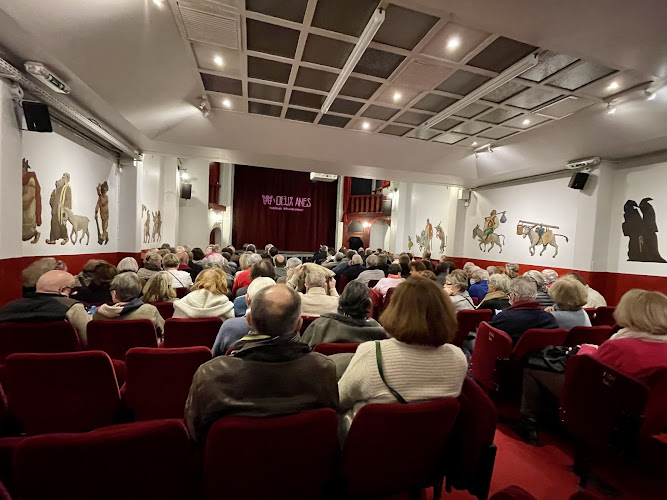
At 100 boulevard de Clichy in the 18th arrondissement, the Théâtre des Deux Ânes stands as Paris’s most enduring bastion of political satire, where over a century of “disobedient” humor has challenged authority while entertaining audiences through wit that transforms social criticism into theatrical art. Founded in 1922 by André Dahl and Roger Ferréol on an emblematic cabaret address, this 300-seat Italian-style theater demonstrates how satirical performance can serve both entertainment and democratic discourse through humor that deflates political pomposity while maintaining the French tradition of chansonnier cabaret that makes authority accountable through laughter.
Taverne origins and creative determination
The theater’s evolution from the failed 1905 Taverne des Truands through 1921 acquisition by revue artists Dahl and Ferréol illustrates how cultural persistence can transform unsuccessful ventures into enduring institutions when creative vision meets community need. The charming origin of its name—when frustrated founders declared “we must be two donkeys!” for failing to find a title—captures the self-deprecating humor that would define this venue’s identity through satirical traditions that embrace folly as the foundation of wisdom.
This naming story embodies the theater’s essential philosophy: that authentic intelligence often emerges through acknowledged ignorance, where satirical humor achieves social insight by admitting human limitations while creating spaces for collective laughter that transcends individual pretensions through shared recognition of universal folly.
Architectural renovation and village atmosphere
The 1928 complete renovation by architect Charles Million, transforming outdated stage elements into a Provençal or Basque village square atmosphere through dovecotes, rustic balconies, and provincial decorative elements, created an intimate setting that supports satirical performance through architectural informality. This design philosophy proves that political humor thrives in environments that suggest community gathering rather than formal theatrical hierarchy, where audience and performers share village-square equality.
The transformation from “mural paintings of a very old-fashioned genre” to charming provincial aesthetics demonstrates how successful satirical venues must balance traditional theatrical elements with contemporary relevance, creating spaces that honor performance history while serving current social commentary through environments that feel both timeless and immediate.
Legendary chansonniers and political discourse
The theater’s roster of legendary performers—Pierre Dac, Jean Rigaux, René Dorin, Jacques Bodoin, Jean Poiret—established the venue as France’s premier platform for chansonnier tradition, where political humor serves democratic health through satirical commentary that makes authority figures accountable to public ridicule. This performance lineage proves that sustained satirical tradition requires both institutional continuity and evolving talent that adapts timeless techniques to contemporary political circumstances.
The motto “Well bray and let laugh” captures the essential democratic function of political satire, where theatrical donkeys serve public wisdom through performances that transform political frustration into collective catharsis while maintaining social cohesion through humor that criticizes without destroying the fundamental structures that enable satirical freedom.
Republican tradition and democratic accountability
As a venue “anchored in the history of the Republic” for over 100 years, the Théâtre des Deux Ânes embodies the essential role of satirical discourse in democratic society, where political humor serves as a pressure valve that channels social tensions into harmless entertainment while maintaining critical examination of authority figures. This institutional longevity proves that satirical theaters serve democratic health by providing platforms for social criticism that strengthen rather than weaken republican institutions through accountability.
The theater’s survival through multiple political regimes—from Third Republic through contemporary Fifth Republic—demonstrates satirical humor’s capacity to transcend partisan divisions while serving essential democratic functions through laughter that unites citizens in recognition of political absurdity that transcends ideological boundaries.
Contemporary relevance and cultural continuity
The 2022 centennial celebration under current director Jacques Mailhot, maintaining the “still disobedient” spirit in the legendary Blanche-Pigalle district, proves that satirical tradition remains vital when institutions adapt performance techniques to contemporary media while preserving core functions of political accountability through humor. This ongoing relevance demonstrates how traditional entertainment forms can maintain cultural significance through evolutionary adaptation that honors historical methods while serving current social needs.
Today’s continued operation as a 300-seat intimate venue proves that satirical theater can compete with mass media entertainment when live performance offers irreplaceable human connection through shared laughter that creates temporary communities united in recognition of political absurdity, proving that democratic discourse benefits from spaces where citizens can collectively acknowledge societal limitations through humor rather than hostility.
Essential information
- Foundation: 1922 by André Dahl and Roger Ferréol
- Location: 100 boulevard de Clichy, 18th arrondissement
- Capacity: 300 seats (Italian-style theater)
- Architecture: 1928 renovation by Charles Million
- Origins: Evolved from 1905 Taverne des Truands
- Current director: Jacques Mailhot
- Motto: “Well bray and let laugh”
- Style: Political satire and chansonnier tradition
Cultural and satirical significance
- Performance tradition: Chansonnier cabaret and political humor
- Notable performers: Pierre Dac, Jean Poiret, Jacques Bodoin
- Theatrical design: Provençal village square atmosphere
- Democratic function: Political accountability through satirical criticism
- Historical continuity: “Disobedient since 1910” through multiple republics
Satirical wisdom serves democratic health
The Théâtre des Deux Ânes embodies the essential democratic principle that political authority requires satirical accountability, where over a century of “disobedient” humor has strengthened French republicanism through laughter that deflates pomposity while maintaining social cohesion through shared recognition of human folly. This extraordinary venue proves that satirical theaters serve democratic societies by providing platforms where citizens can collectively acknowledge political absurdity through humor rather than hostility, creating temporary communities united in recognition that authentic wisdom often emerges through admitted ignorance rather than proclaimed expertise. For political satire enthusiasts, democratic tradition admirers, or anyone interested in how humor can serve social criticism, this intimate Montmartre theater offers an unparalleled encounter with chansonnier tradition, where village-square atmosphere enables political commentary that transforms frustration into collective catharsis, proving that the finest satirical institutions achieve longevity through humor that criticizes authority while strengthening the democratic foundations that enable such criticism to flourish safely within republican traditions that value laughter as essential to political health.