
<\!-- wp:heading -->
An 18th-century royal foundation transformed into a cultural destination
<\!-- /wp:heading --><\!-- wp:paragraph -->
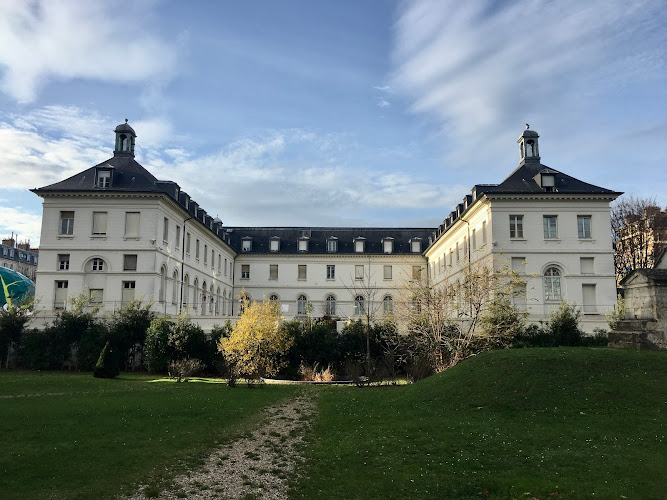
At 15 avenue du G\u00e9n\u00e9ral-Leclerc in the 14th arrondissement, the former H\u00f4pital La Rochefoucauld stands as a remarkable testament to 18th-century charitable institutions and neoclassical architecture. This historic medical complex, which served Parisians for over two centuries before closing in 2019, is now undergoing an extraordinary transformation into a cultural and educational landmark.
<\!-- /wp:paragraph --><\!-- wp:paragraph -->
Founded in 1780 as the "Maison royale de Sant\u00e9" under Louis XVI, the hospital emerged from the philanthropic vision of Father G\u00e9rard and the generous patronage of Madame de la Rochefoucauld-Doudeauville. Originally conceived to care for destitute military personnel and clergy, this institution represented the era\u2019s progressive approach to healthcare and social welfare.
<\!-- /wp:paragraph --><\!-- wp:heading {"level":3} -->
Architectural masterpiece by Jacques-Denis Antoine
<\!-- /wp:heading --><\!-- wp:paragraph -->
The hospital showcases the refined neoclassical style of architect Jacques-Denis Antoine, renowned for creating the H\u00f4tel de la Monnaie. The elegant U-shaped building, completed by Charles-Fran\u00e7ois Viel de Saint-Maux, features pristine white facades animated by simple horizontal bands and anchored by an entrance portico with Doric columns supporting a curved pediment.
<\!-- /wp:paragraph --><\!-- wp:paragraph -->
Classified as a historical monument since 1928, the complex represents one of Paris\u2019s finest examples of 18th-century institutional architecture. The original hygienic principles embedded in its design\u2014emphasizing light, air circulation, and garden access\u2014were revolutionary for their time and influenced hospital architecture throughout France.
<\!-- /wp:paragraph --><\!-- wp:heading {"level":3} -->
Gardens steeped in history
<\!-- /wp:heading --><\!-- wp:paragraph -->
The hospital\u2019s nearly one-hectare gardens offer a rare glimpse into 18th-century landscape design. These French-style gardens, conceived in a hygienist spirit, feature plane tree-lined avenues, symmetrical parterres, and staggered groves that provided therapeutic spaces for patients and staff.
<\!-- /wp:paragraph --><\!-- wp:paragraph -->
Hidden within these green spaces lies the "regard de Saux," a discreet 17th-century stone structure that once formed part of the M\u00e9dicis aqueduct. This remarkable vestige connects the site to an even older layer of Parisian history, when Queen Marie de M\u00e9dicis commissioned this aqueduct to supply water to the Luxembourg Palace.
<\!-- /wp:paragraph --><\!-- wp:heading {"level":3} -->
A cultural renaissance
<\!-- /wp:heading --><\!-- wp:paragraph -->
The former hospital\u2019s next chapter promises to be as significant as its medical legacy. The GIBOIRE & GALIA group\u2019s ambitious project will transform the complex into a multifaceted cultural destination by 2030, housing a cultural gallery, landscape school, urban agriculture center, and social housing.
<\!-- /wp:paragraph --><\!-- wp:paragraph -->
Beginning in summer 2025, visitors can experience an ephemeral cultural third-place in the historic gardens, open every afternoon and all day on Wednesdays and weekends. This transitional phase will allow the public to discover the site\u2019s exceptional heritage while witnessing its gradual transformation.
<\!-- /wp:paragraph --><\!-- wp:heading {"level":3} -->
From revolutionary healthcare to modern innovation
<\!-- /wp:heading --><\!-- wp:paragraph -->
Throughout its operational years, H\u00f4pital La Rochefoucauld evolved from the "hospice national de Montrouge" during the Revolution to a modern medical facility serving the community until 2019. This evolution mirrors Paris\u2019s own transformation, adapting historic structures to meet contemporary needs while preserving their essential character.
<\!-- /wp:paragraph --><\!-- wp:paragraph -->
Today, the site represents more than architectural preservation\u2014it embodies a vision of urban renewal that honors historical heritage while creating spaces for education, culture, and community engagement. For visitors interested in the intersection of history, architecture, and urban planning, this transformation offers a unique window into how Paris continues to evolve while maintaining its profound connection to the past.
<\!-- /wp:paragraph --><\!-- wp:heading {"level":3} -->
Planning your visit
<\!-- /wp:heading --><\!-- wp:paragraph -->
Beginning summer 2025, the gardens will be accessible to the public with regular opening hours. This represents a rare opportunity to explore both the architectural heritage of Jacques-Denis Antoine and experience an innovative cultural project in development.
<\!-- /wp:paragraph --><\!-- wp:paragraph -->
The site offers a peaceful retreat in the bustling 14th arrondissement, combining historical discovery with contemporary cultural programming. For those exploring Montparnasse and southern Paris, H\u00f4pital La Rochefoucauld provides a compelling glimpse into the area\u2019s layered history and promising future.
<\!-- /wp:paragraph -->