
Royal workshop where art serves French grandeur
At 42 avenue des Gobelins in the 13th arrondissement, the Manufacture des Gobelins stands as one of France’s most extraordinary cultural institutions, where over 350 years of royal patronage and artistic excellence have created tapestries that embody the pinnacle of French decorative arts. Established in 1662 by Louis XIV and Jean-Baptiste Colbert under Charles Le Brun’s artistic direction, this legendary workshop demonstrates how royal vision and master craftsmanship can create cultural institutions that serve both artistic achievement and national prestige through living traditions that continue inspiring contemporary creativity.
Colbert’s economic vision and cultural supremacy
Finance Minister Jean-Baptiste Colbert’s 1662 transformation of scattered weaving workshops into a unified royal manufactory represented both economic strategy and cultural ambition. By consolidating Parisian tapestry makers with workshops from Nicolas Fouquet’s Maincy estate, Colbert aimed to eliminate expensive art imports while asserting France’s supremacy in luxury products that would define European taste.
This economic nationalism through cultural excellence established the principle that artistic leadership could serve national power, where French decorative arts would become diplomatic tools that spread French cultural influence throughout European courts while supporting domestic artisan communities through royal patronage.
Charles Le Brun’s artistic direction and workshop integration
Charles Le Brun, First Painter to Louis XIV, served as the manufactory’s founding director from 1663 to 1690, establishing comprehensive artistic workshops that included not only tapestry makers but also goldsmiths, metal casters, engravers, and cabinetmakers. This integration created a complete decorative arts center that could furnish royal residences while training French artisans in the finest techniques.
Under Le Brun’s supervision, the extraordinary tapestries designed for French royalty and diplomatic gifts earned international renown that has survived for over three centuries, proving that great artistic institutions can achieve both immediate political purposes and lasting cultural influence through excellence that transcends its original context.
Louis XIV’s collecting passion and European leadership
The Sun King’s 72-year reign enabled him to amass the largest tapestry collection in European history—an unbelievable 2,650 pieces that demonstrated both personal aesthetic passion and state commitment to artistic patronage. This royal collecting established France as the arbiter of European decorative arts taste while supporting the workshop’s continuous production and artistic innovation.
The tapestries served multiple purposes: royal residence decoration, diplomatic gifts that spread French cultural influence, and artistic laboratories where the finest weavers developed techniques that influenced European decorative arts while establishing French supremacy in luxury textile production.
Traditional techniques and contemporary relevance
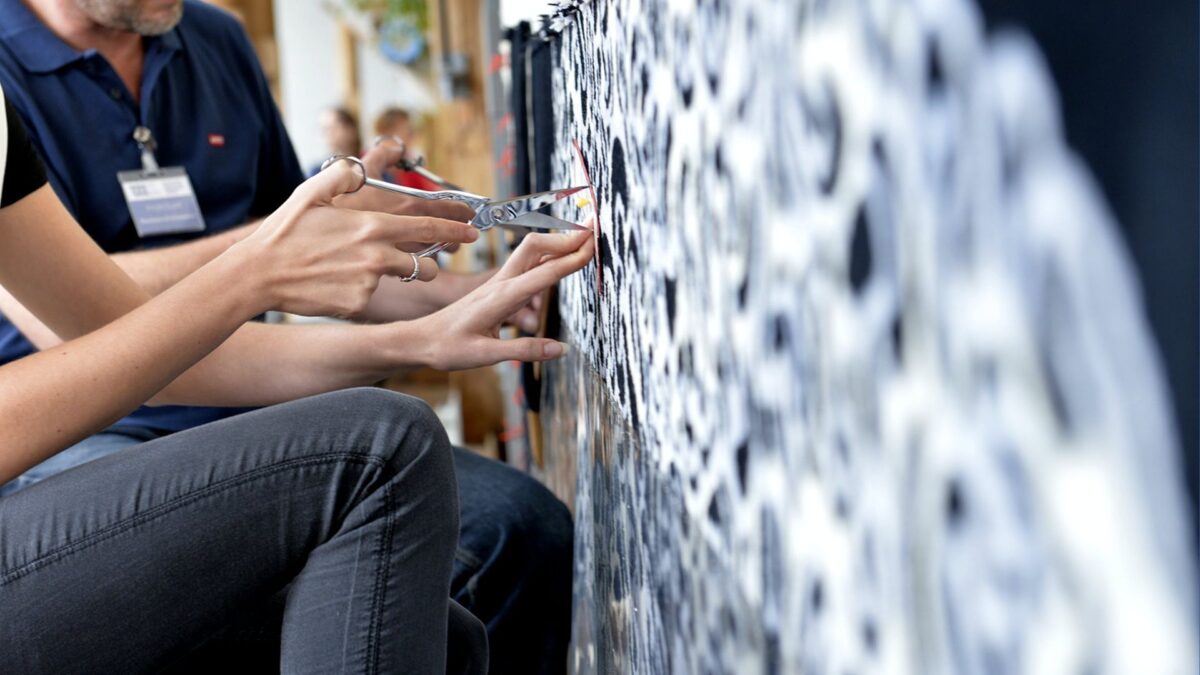
Today’s Manufacture des Gobelins continues operating under the Ministry of Culture, where master weavers use century-old wooden looms and traditional techniques to create tapestries for French governmental institutions with contemporary subjects. This continuity demonstrates how great cultural institutions can honor traditional methods while serving modern needs.
Guided tours allow visitors to observe craftspeople maintaining skills passed down through generations, proving that the finest artisanal traditions remain relevant when supported by institutional commitment and public appreciation for exceptional craftsmanship that connects contemporary France to its cultural heritage.
Living heritage and cultural education
The workshop’s dual role as active production facility and cultural institution ensures that traditional techniques remain vital rather than museumified, where contemporary tapestries continue the artistic tradition while educational programming introduces new generations to the cultural heritage that defines French decorative arts excellence.
Essential information
- Royal foundation: 1662 (Louis XIV and Colbert)
- First director: Charles Le Brun (1663-1690)
- Original purpose: Crown furniture and diplomatic tapestries
- Location: 42 avenue des Gobelins, 13th arrondissement
- Historical name: Named after 15th-century Gobelins dye workers
- Current oversight: Ministry of Culture
- Royal collection: Louis XIV amassed 2,650 tapestries
- Continuing production: Contemporary tapestries for government institutions
Artistic and cultural significance
- Workshop integration: Tapestry, goldsmithing, metalwork, cabinetmaking
- Diplomatic function: Tapestries as French cultural ambassadors
- Traditional methods: Century-old wooden looms and ancient techniques
- Educational mission: Guided tours and cultural programming
- Living heritage: Active production maintaining traditional skills
Royal patronage creates cultural legacy
Manufacture des Gobelins embodies the transformative power of royal cultural patronage, where Louis XIV and Colbert’s vision created a workshop that established French supremacy in decorative arts while developing artisanal traditions that continue serving contemporary cultural missions. This extraordinary institution demonstrates how great cultural workshops can honor traditional techniques while adapting to serve modern needs, creating living heritage that proves artistic excellence transcends historical periods. For decorative arts enthusiasts, royal history admirers, or anyone interested in how traditional crafts maintain their relevance, the Gobelins offers an unparalleled encounter with living artisanal heritage, where master weavers continue creating tapestries on century-old looms beneath the same workshop roofs that sheltered Le Brun’s artistic direction, proving that the finest cultural institutions achieve immortality through continuous excellence rather than historical preservation.