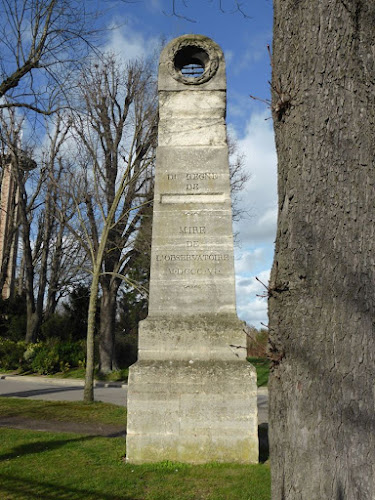
In Parc Montsouris at 2 rue Gazan in the 14th arrondissement, Mire du Sud stands as architect Antoine Vaudoyer’s 1806 geodetic monument that materialized the Paris Meridian through a four-meter cylindrical stele serving astronomers at the nearby Observatory for calibrating meridian instruments, demonstrating how Napoleonic scientific ambition could challenge British geographic authority through French cartographic excellence that maintained alternative global reference systems until 1911. This extraordinary marker proves how exceptional scientific monuments can serve both immediate astronomical research and broader cultural assertion of national scientific excellence through geodetic infrastructure that honors both practical measurement requirements and political geographic independence worthy of Historical Monument protection and ongoing appreciation for French scientific achievement that challenged international geographic conventions.
Paris Meridian establishment and geographic sovereignty
Napoleonic inscription and political transformation
Parc Montsouris relocation and urban development adaptation
Contemporary scientific heritage and educational value
Essential information
- Architect: Antoine Vaudoyer
- Construction: 1806 (Napoleonic era)
- Original location: Paris Observatory gardens
- Current location: 2 rue Gazan, Parc Montsouris, 14th arrondissement
- Scientific purpose: Paris Meridian materialization for astronomical calibration
- Physical description: 4-meter cylindrical stele with pierced opening
- Historical protection: Monument historique (1928)
- Political modification: Napoleon’s name chiseled away during Restoration
Scientific and cultural significance
- Meridian heritage: French alternative to Greenwich geographic reference
- Astronomical function: Observatory instrument calibration support
- Geographic sovereignty: French-Irish meridian use until 1911
- Political survival: Scientific function transcending regime changes
- Urban adaptation: Monument preservation through park relocation
Scientific precision creates geographic sovereignty monument
Mire du Sud embodies the extraordinary assertion of French scientific authority through geodetic precision that challenged international geographic conventions, where Antoine Vaudoyer’s 1806 monument materialized the Paris Meridian to support Observatory astronomical calibration while demonstrating how Napoleonic scientific ambition could serve both immediate astronomical research and broader cultural assertion of French geographic excellence that maintained alternative global reference systems alongside Ireland until 1911 despite international Greenwich adoption. This remarkable marker proves that exceptional scientific monuments emerge when national scientific achievement meets political determination to maintain cultural independence through geodetic infrastructure that serves both practical astronomical measurement and broader assertion of scientific sovereignty worthy of Historical Monument protection and ongoing appreciation for French scientific excellence. For geodetic history enthusiasts, astronomical heritage admirers, or anyone interested in how scientific achievement can serve national cultural identity, this Parc Montsouris monument offers an extraordinary encounter with geographic precision, where cylindrical stone design and meridian materialization demonstrate the scientific sophistication required to create measurement infrastructure that maintains both astronomical accuracy and cultural significance, proving that the finest scientific monuments achieve lasting significance through ongoing educational service rather than mere historical preservation, creating markers where French scientific heritage continues inspiring appreciation for astronomical achievement and geographic measurement excellence through monuments that honor both scientific precision and national cultural identity serving diverse scientific education and cultural heritage requirements within park contexts that maintain both monument dignity and community accessibility for ongoing appreciation of French scientific achievement that challenged international geographic authority through precision measurement worthy of both heritage protection and educational programming excellence.