
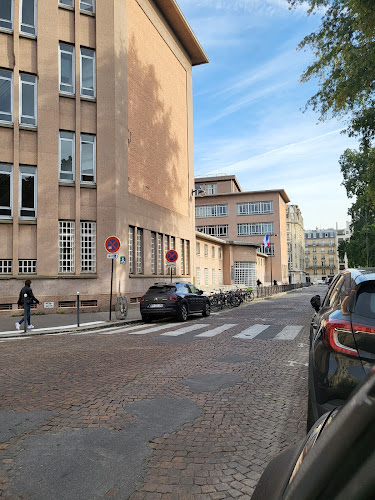
Lycée Camille-Sée
Lycée Camille Sée is a Paris Établissement D'enseignement Secondaire landmark located in the 15 arrondissement. Educational revolution memorial where girls’ secondary education achieved republican equality At 11 rue Léon-Lhermitte in the 15th arrondissement, Lycée Camille-Sée stands as architect François Le Cœur’s 1933-1934 educational masterpiece, honoring Deputy Camille Sée whose October 29, 1878, legislative proposal established […]
Lycée Camille Sée is a Paris Établissement D'enseignement Secondaire landmark located in the 15 arrondissement.
Educational revolution memorial where girls’ secondary education achieved republican equality
At 11 rue Léon-Lhermitte in the 15th arrondissement, Lycée Camille-Sée stands as architect François Le Cœur’s 1933-1934 educational masterpiece, honoring Deputy Camille Sée whose October 29, 1878, legislative proposal established secondary education for girls through the 1880 law that achieved “âprement discutée” (fiercely debated) adoption after overcoming conservative resistance to female educational equality. This extraordinary lycée demonstrates how exceptional educational architecture can serve both immediate student academic excellence and broader cultural commemoration of democratic progress through buildings that honor both individual legislative courage and collective educational advancement worthy of Historical Monument protection and ongoing educational mission serving contemporary students while preserving historical memory of revolutionary educational reform that transformed French women’s opportunities.
François Le Cœur’s architectural swan song and educational excellence
Third Republic educational reform and democratic advancement
Contemporary educational excellence and women’s achievement heritage
Essential information
- Namesake: Camille Sée (deputy who established girls’ secondary education)
- Legislative achievement: 1880 law enabling female secondary education
- Architect: François Le Cœur (career masterpiece)
- Construction: 1933-1934
- Inauguration: June 1, 1935
- Location: 11 rue Léon-Lhermitte, 15th arrondissement
- Historical protection: Monument historique (January 12, 1995)
- Service area: Western Paris (7th, 15th, 16th arrondissements)
Educational and cultural significance
- Educational equality: Memorial to women’s educational access achievement
- Architectural excellence: Le Cœur’s final and finest educational building
- Democratic progress: Third Republic social reform documentation
- Contemporary mission: Ongoing educational excellence honoring reform legacy
- Cultural commemoration: Educational architecture serving historical memory
Educational architecture honors democratic reform while serving academic excellence
Lycée Camille-Sée embodies the extraordinary convergence of educational reform commemoration and architectural excellence, where François Le Cœur’s career masterpiece created educational facilities that honor Deputy Camille Sée’s revolutionary 1880 law establishing secondary education for girls while serving contemporary academic excellence that proves democratic educational progress can achieve both immediate equality advancement and lasting institutional heritage through educational architecture that maintains both commemorative function and practical academic effectiveness. This remarkable institution demonstrates how exceptional educational buildings emerge when architectural excellence meets historical commemoration requirements, creating learning environments that serve both student academic development and cultural education about democratic progress through facilities that honor both individual legislative courage and collective educational advancement worthy of Historical Monument protection and ongoing educational excellence. For women’s education enthusiasts, democratic reform admirers, or anyone interested in how legislative courage can generate lasting educational institutional heritage, this rue Léon-Lhermitte monument offers an extraordinary encounter with educational equality achievement, where Le Cœur’s architectural sophistication and Sée’s legislative legacy demonstrate the comprehensive vision required to create educational institutions that maintain both historical reform commemoration and contemporary academic effectiveness, proving that the finest educational architecture achieves lasting significance through ongoing educational service rather than mere historical preservation, creating spaces where democratic educational progress continues inspiring student achievement and social equality advancement through educational excellence that honors both historical reform heritage and contemporary academic mission serving diverse student development and cultural appreciation requirements within architectural contexts that maintain both commemorative dignity and educational effectiveness worthy of ongoing heritage protection and educational programming excellence.