
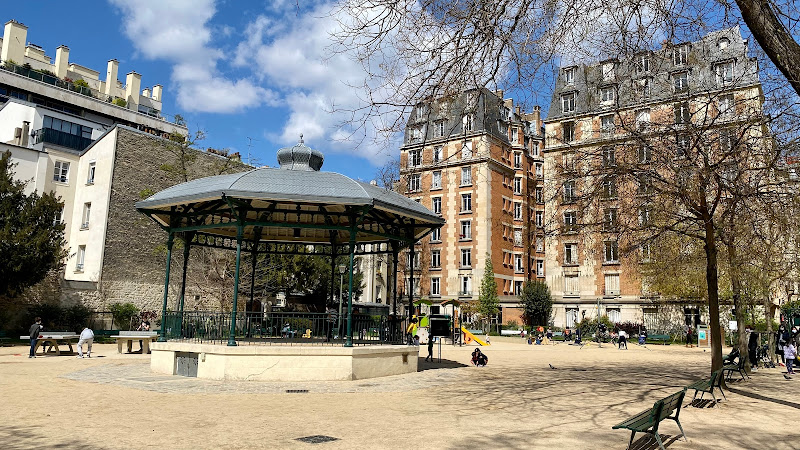
Pavillon Violet
Square Violet is a Paris Attractions landmark located in the 15 arrondissement. Neoclassical elegance in neighborhood square At 6 Place Violet in the 15th arrondissement, the Pavillon Violet stands as a charming example of Restoration-era neoclassical architecture within one of Paris’s most pleasant neighborhood squares. Built in 1824 and serving as a fire station since […]
Square Violet is a Paris Attractions landmark located in the 15 arrondissement.
Neoclassical elegance in neighborhood square
At 6 Place Violet in the 15th arrondissement, the Pavillon Violet stands as a charming example of Restoration-era neoclassical architecture within one of Paris’s most pleasant neighborhood squares. Built in 1824 and serving as a fire station since 1860, this elegant pavilion demonstrates how functional civic architecture can achieve aesthetic distinction while serving essential public safety needs, creating architectural landmarks that enhance daily neighborhood life through beauty and practical service.
Léonard Violet’s legacy and neighborhood development
The pavilion takes its name from Léonard Violet (1791-1881), the developer whose mansion and park once occupied this site before the creation of Square Violet in 1876. This transformation from private aristocratic estate to public neighborhood amenity reflects the democratization of urban space that characterized 19th-century Parisian development.
The square’s 9,550 square meters, created between rue de l’église and place Violet, provide essential green space and community gathering place that demonstrates how thoughtful urban planning can transform private wealth into public benefit while honoring the memory of neighborhood benefactors.
Restoration neoclassical architecture
The pavilion’s façade exemplifies the neoclassical style popular during the early Restoration period, featuring four Doric columns framing the door and two arched windows on the ground floor. The first floor showcases four Ionic columns flanking three rectangular windows, topped by a modillion cornice supporting the second floor—creating elegant architectural hierarchy through classical orders.
This architectural composition demonstrates how public buildings could achieve dignity and beauty through classical principles while serving practical civic functions, proving that even utilitarian structures like fire stations could contribute to neighborhood architectural character through thoughtful design.
Continuous public service and heritage preservation
The pavilion’s remarkable continuity of service as a fire station since 1860 demonstrates how well-designed civic architecture can serve communities across multiple centuries while maintaining its essential character. The building’s designation as a Monument Historique in 1993 recognizes both its architectural merit and its role in neighborhood public safety.
The preservation of the façade and roofs ensures that future generations can appreciate how Restoration-era architects created civic buildings that combined classical elegance with practical function, establishing standards for public architecture that honored both aesthetic principles and community service.
Square Violet and community life
The pavilion anchors Square Violet, a beloved neighborhood gathering place surrounded by beautiful 19th-century Haussmannian buildings with intricate ironwork balconies and elegant façades. The square’s music kiosk and green spaces create community focal points that demonstrate how public architecture can enhance neighborhood identity and social life.
The integration of historic pavilion, contemporary fire station function, and public square amenities creates a model of how historic buildings can continue serving their communities while preserving architectural heritage and supporting contemporary neighborhood vitality.
Essential information
- Construction: 1824
- Architectural style: Restoration neoclassical
- Function: Fire station (since 1860)
- Namesake: Léonard Violet (1791-1881, developer)
- Location: 6 Place Violet, 15th arrondissement
- Heritage status: Monument Historique (1993)
- Protected elements: Façades and roofs
- Square creation: 1876 (on former Violet estate)
Architectural and community features
- Classical elements: Doric columns (ground floor), Ionic columns (first floor)
- Design features: Modillion cornice, arched windows, rectangular windows
- Square amenities: Music kiosk, green spaces, community gathering areas
- Neighborhood context: Haussmannian buildings with ironwork balconies
- Continuity of service: 160+ years of fire station operation
Civic architecture and community service
Pavillon Violet embodies the principle that civic architecture should serve both practical community needs and aesthetic enhancement of neighborhood life. This remarkable building demonstrates how neoclassical design principles can create public buildings that maintain their dignity and beauty while adapting to serve essential municipal services across multiple centuries. For neoclassical architecture enthusiasts, community planning admirers, or anyone interested in how public buildings shape neighborhood character, the Pavillon Violet offers an inspiring example of civic architecture excellence, where Restoration-era classical elegance continues to anchor community life within Square Violet’s green spaces, proving that the finest public architecture combines aesthetic distinction with practical service that honors both architectural tradition and contemporary community needs.