
Mont Saint-Michel pops out of the sea like something straight from a storybook, and honestly, no photo really does it justice. You can visit Mont Saint-Michel as a day trip from Paris, but you’ll need to set aside about 14 hours, considering the 3-4 hour journey each way and the time you’ll want for exploring the island. Most people wonder if the long trek is worth it. I’ll be honest—it is, but only if you know what you’re signing up for.
The tough part about planning a day trip to Mont Saint Michel from Paris isn’t just the distance. You’ll need to figure out which transport fits your budget and style, time your visit around the tides, and avoid wasting hours in lines. The island welcomes over 3 million visitors every year, so crowds are a real thing, and you’ll want a plan.
Whether you’re eyeing a guided tour, taking the train, or driving yourself, this guide breaks down everything you need to make your Mont St Michel day trip as smooth as possible. I’ll cover the best ways to get there, when to arrive to dodge the crowds, and what’s actually worth your time once you step onto the island.
Key Takeaways
- Mont Saint-Michel takes about 14 hours for a day trip, including 6-8 hours of travel from Paris
- You can get there by train, guided tour, or car—each comes with its own perks and costs
- The Abbey’s the main draw, but wandering the ramparts and strolling the bay are just as memorable
How to Get from Paris to Mont St Michel in a Day
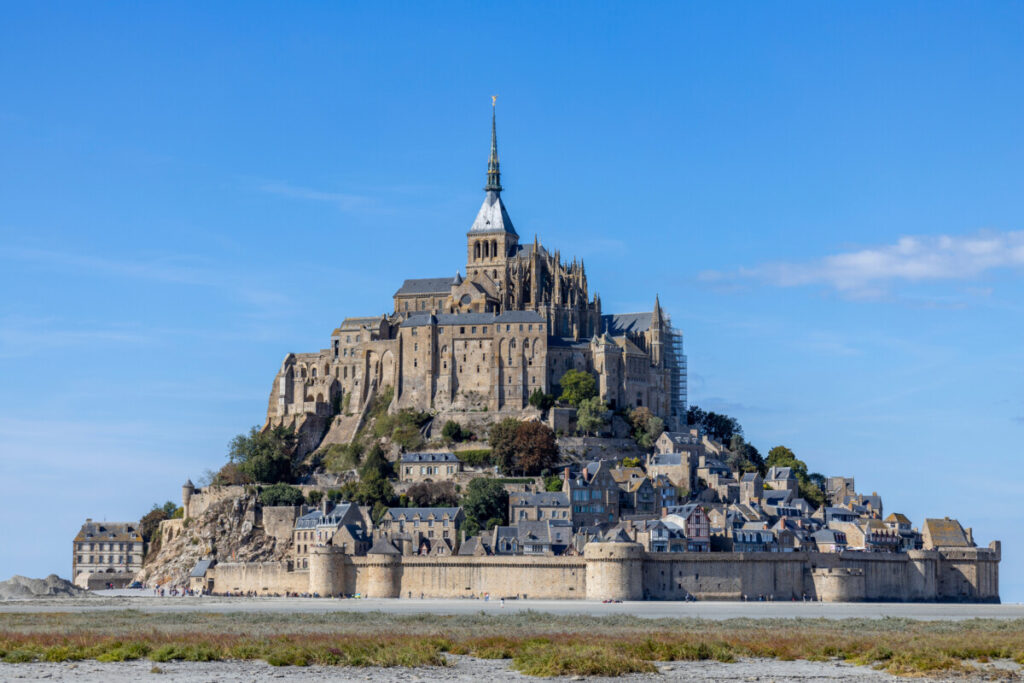
Traveling from Paris to Mont St Michel takes roughly 3.5 to 4 hours each way. You’ll want to get an early start and pick your transport wisely. You’ve got four main choices: join a guided tour, take the train to Pontorson, drive yourself, or hop a bus through Rennes.
Guided Tours and Day Trip Packages

Guided tours from Paris handle all the logistics, which, to be honest, makes a huge difference on such a long day. Most tours scoop you up around 7 AM from central Paris and bring you back by 9 or 10 PM.
Here’s the best part: you can nap on the bus instead of wrangling train schedules or French highways. Many tours include skip-the-line abbey tickets and a guide who actually knows the history (and the fun stories).
Expect to pay about $150 to $200 per person for a full-day Mont Saint-Michel tour. Sure, it’s pricier than going solo, but you’re buying convenience and know-how. The coach usually stops for a quick lunch break in Normandy on the way.
The catch? You’re on someone else’s schedule. You’ll typically get about 4 hours at Mont St Michel, which is enough for the abbey and a wander, but don’t expect much wiggle room.
Travel by Train via Pontorson
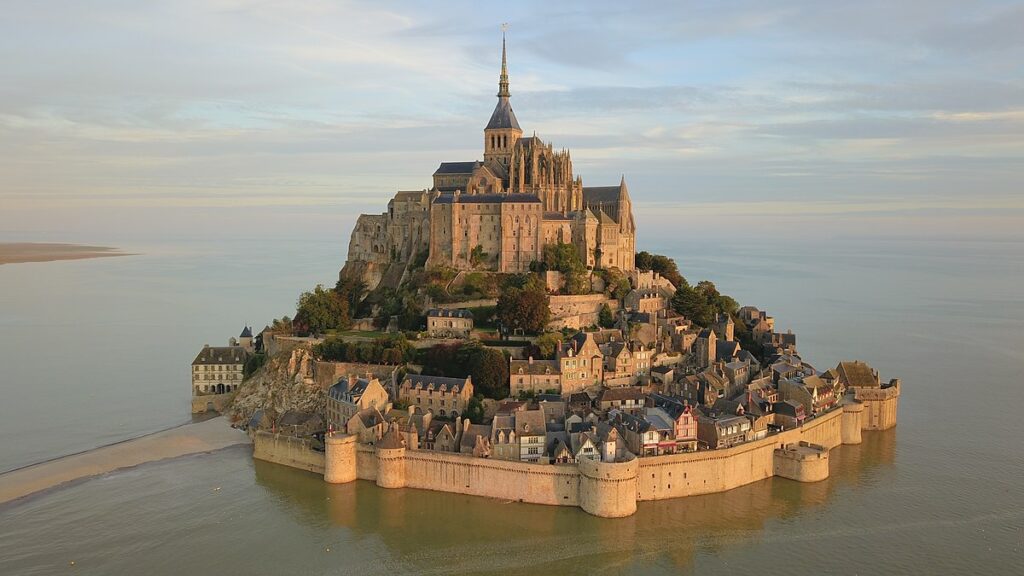
If you take the train from Paris, you’ll save money but need to plan a bit more. Trains leave from Gare Montparnasse and head to Pontorson, the closest station—about 9 kilometers from Mont St Michel.
There’s no direct train, so you’ll have to transfer in Rennes, which adds some time and a little stress. The whole ride from Montparnasse to Pontorson takes about 3.5 to 4 hours, and you’ll want to watch your connections.
Once you get to Pontorson, hop on the shuttle bus to Mont St Michel. These buses line up with train arrivals, but check the schedule—sometimes they don’t run as often as you’d hope.
Train travel costs:
- Paris to Rennes: €30-60
- Rennes to Pontorson: €15-25
- Pontorson shuttle bus: €3-5
Book ahead on the SNCF site for better prices. And honestly, leave yourself extra time between trains. Miss one in Rennes and you could be stuck for hours.
Driving and Car Rental Options
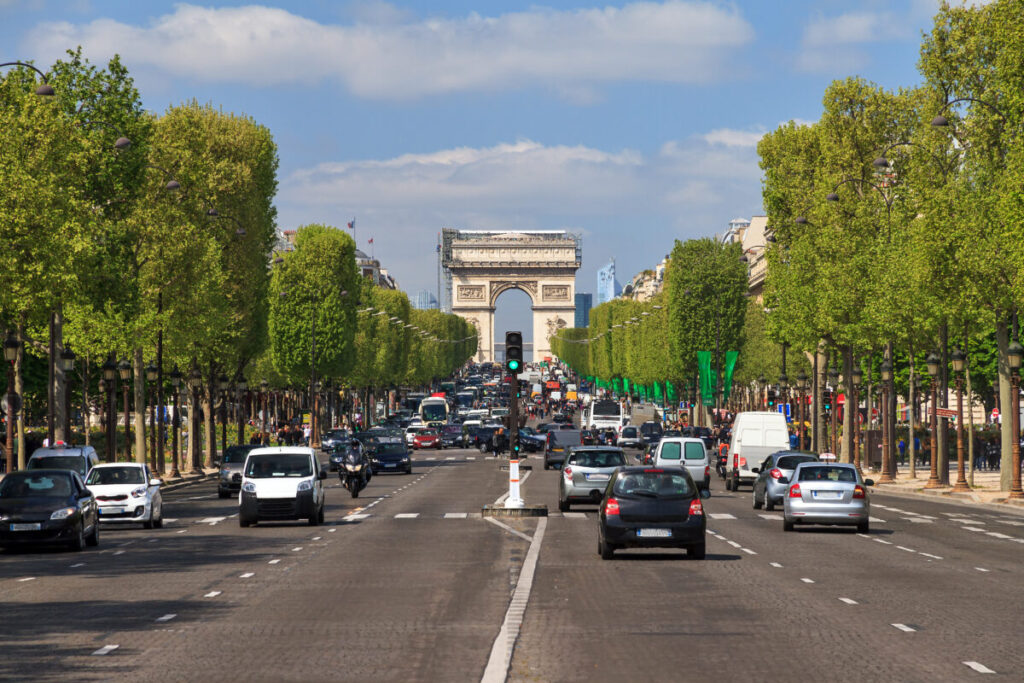
Renting a car gives you the most freedom, but driving in France isn’t everyone’s idea of fun. The route from Paris to Mont St Michel covers about 360 kilometers and takes around 3.5 hours on the A11 and A84.
You’ll pay tolls (about €25-30 total) and parking fees near Mont St Michel. The island itself is car-free, so you’ll park on the mainland and either walk or take a free shuttle bus across the causeway.
Parking costs at Mont St Michel:
- Less than 2 hours: €5
- 2-24 hours: €14.70
- Overnight: €24
Car rentals in Paris start at €50-70 per day, plus fuel. If you’re traveling with a group, splitting the cost makes this option pretty reasonable.
But let’s be real—Paris traffic is wild, and after 7 hours on the road plus a day of exploring, you’ll be wiped. I’d only go this route if you’re comfortable with European driving or want to hit other Normandy or Brittany spots.
Bus Connections from Paris and Rennes
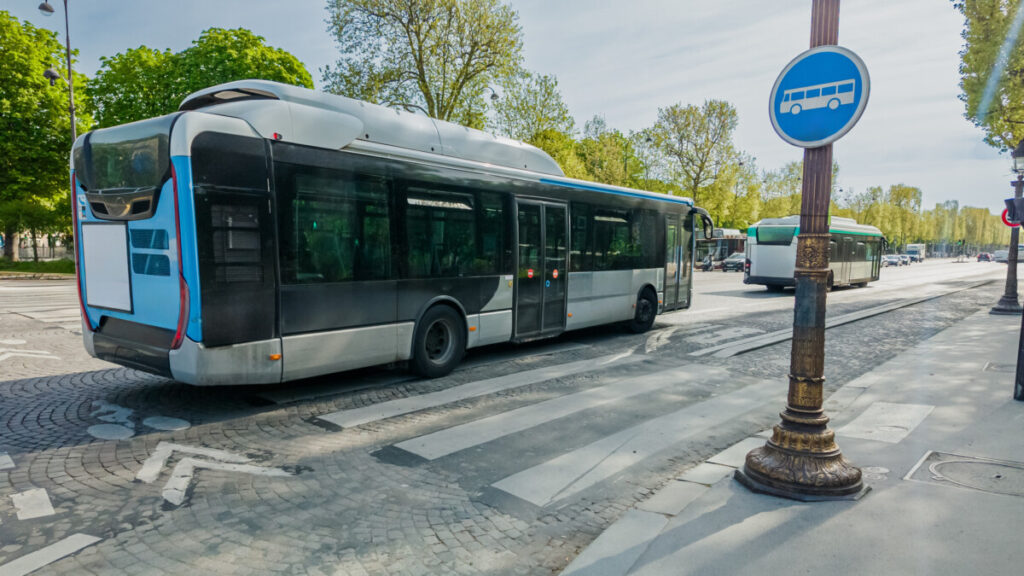
FlixBus runs direct buses from Paris to Mont St Michel a few times a week (not daily, though). These leave from Paris Bercy Seine and take about 5 hours.
The upside? It’s cheap—tickets go for €15-30 if you book early. The downside? That’s a long time on a bus, and the schedules don’t always fit a day trip.
A better bet is connecting through Rennes. Several bus companies run from Rennes to Mont St Michel throughout the day, taking about 90 minutes. If you catch an early train from Paris to Rennes, you can grab a mid-morning bus and still have a good chunk of time at the island.
Rennes to Mont St Michel bus details:
- Frequency: Several departures daily
- Duration: 75-90 minutes
- Cost: €15-18 one-way
Check BreizhGo and FlixBus for the latest. The buses drop you right at the visitor center, which is honestly more convenient than driving.
Timing Your Mont Saint Michel Day Trip
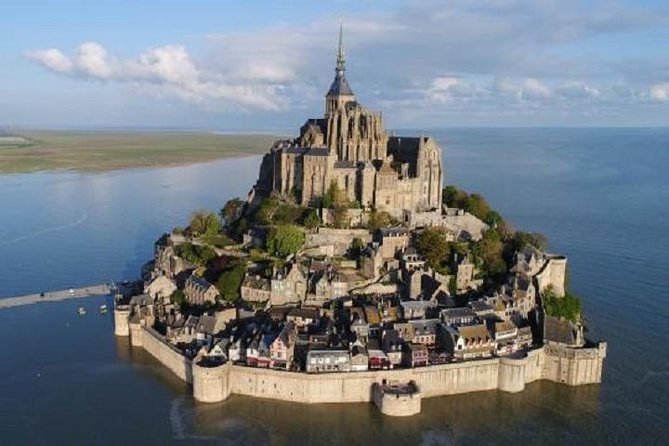
Getting your timing right can mean the difference between a magical experience and a headache. The tides run the show here, and you’ll want to line up your visit with abbey hours and the weather.
Best Seasons and Weather Considerations
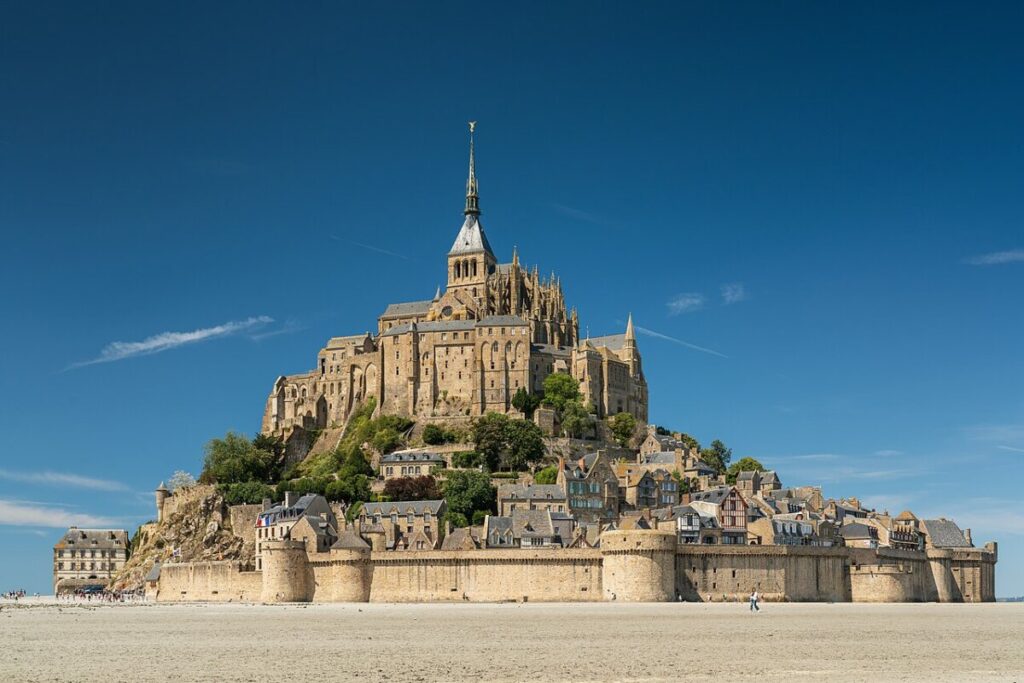
Spring brings big tides and mild temps, so it’s one of the best times to go. Flowers start popping up, and the crowds haven’t hit summer levels yet.
In summer, you get long days and a lively scene. But let’s be honest, it’s packed. If you’re after warm weather and don’t mind crowds, June through August works.
Autumn brings gorgeous colors and a quieter vibe. The light gets dramatic, and you’ll snap better photos without all the people. September and October are especially nice.
Winter? You’ll practically have the place to yourself, especially on weekday mornings. The light’s amazing, but the wind and rain can be brutal. Bring serious gear.
The best times for photos are around 8-9am and 5-6pm, no matter the season.
Understanding the Tides
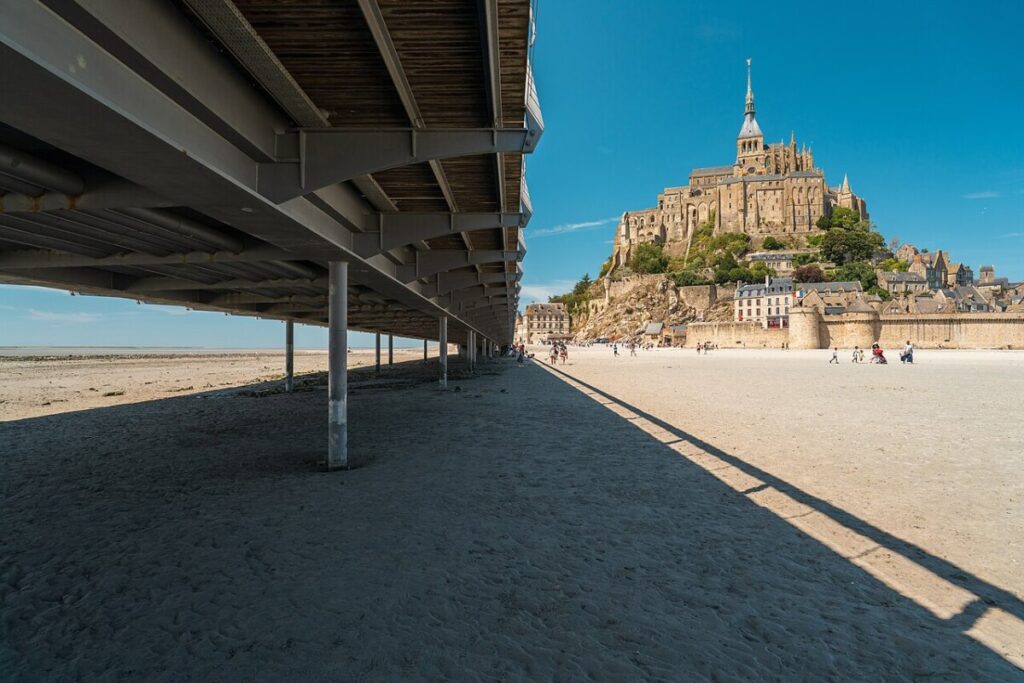
The bay here has some of the wildest tides in Europe. Water levels can swing up to 15 meters between high and low, and the whole landscape changes every six hours.
At high tide, Mont-Saint-Michel turns into a true island, cut off from the mainland. Water creeps up around the ramparts, and the reflections are unreal. If you can, time your visit for high tide—it’s worth it.
Check tide times before you go. The tourist office posts schedules online, and the most dramatic tides happen during new and full moons.
Low tide exposes huge stretches of sand and shows off the bay’s unique look. Some people join guided walks across the tidal flats, but seriously—don’t try it alone. The tide rushes in and can trap you fast.
Abbey Opening Times and Schedule Planning
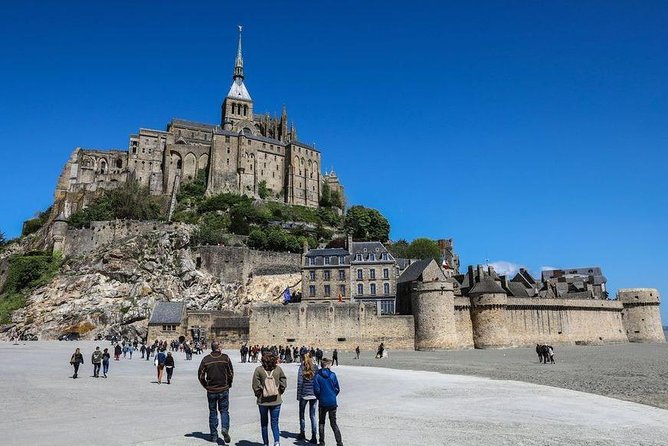
The Benedictine abbey usually opens at 9:30am and closes between 6pm and 7pm, depending on the season. You can buy tickets at the door or online to skip the line.
Plan for 1.5 to 2 hours inside the abbey to really see the church, cloister, refectory, and all the nooks. Each space tells a piece of the thousand-year story, so don’t rush it.
Arrive early—like, really early. If you get there around 8:30am, you can stroll up before the tour buses arrive. The climb takes about 20 minutes from the entrance, and you’ll want to catch your breath before diving in.
The abbey sometimes closes for lunch and has shorter hours in winter. Always check the latest schedule, especially if you’re visiting between November and March.
See Related: Best Road Trips In France
Essential Pre-Arrival Tips
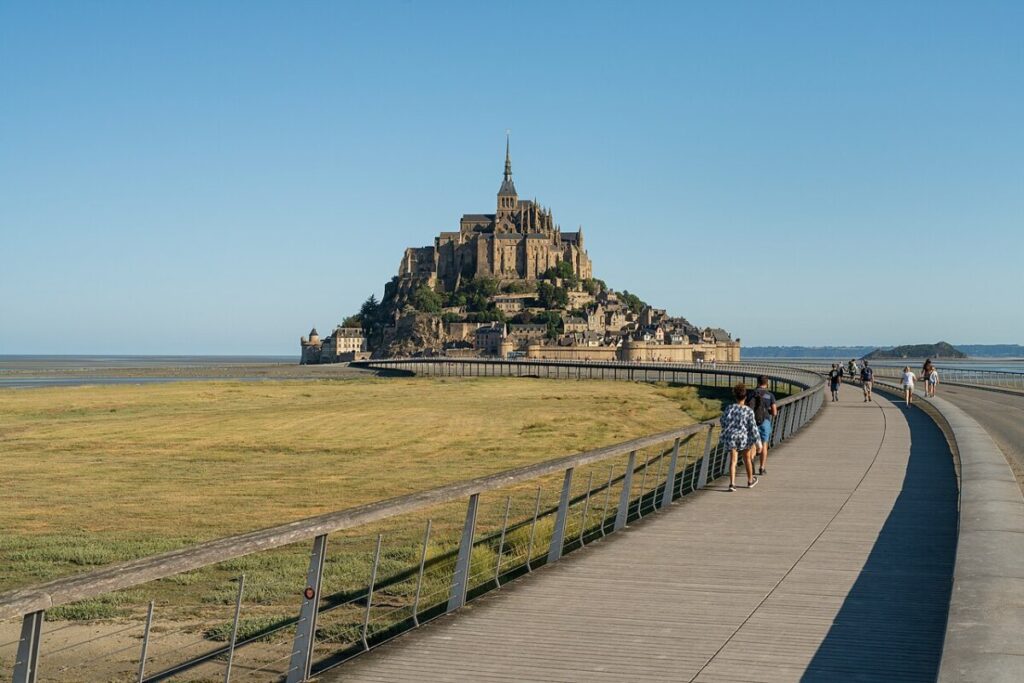
Getting to Mont Saint-Michel isn’t as simple as just showing up—you’ll need to deal with parking about 2.5 kilometers from the island, figure out how you want to cross the causeway over the Couesnon River, and pack for a full day of walking on cobblestones and climbing steep steps.
Parking and Access on the Mainland
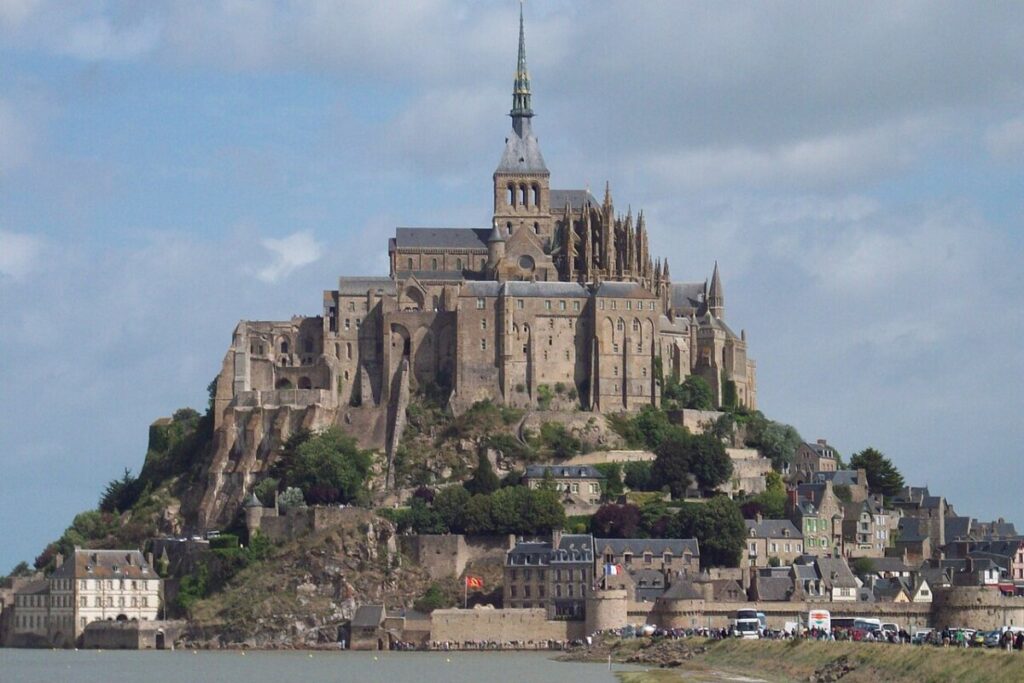
You can’t drive right up to Mont Saint-Michel anymore. The main parking sits on the mainland, and honestly, it’s a bit of a hike.
Parking costs €15.70 for up to 24 hours as of 2026. The lot’s huge and open all year, but getting there before 10:00 AM helps you dodge midday crowds and snag a closer spot. The earlier you arrive, the less you’ll trudge across that giant lot.
From the parking area, you’ve got two ways to reach the island. Both are free, which is nice after paying for parking. The shuttle bus runs from 7:30 AM to at least 11 PM in summer and a bit shorter in winter.
But honestly, the views of the Normandy countryside and the bay from the causeway are fantastic. If you’ve got the time and energy, walking at least one way is totally worth it.
Walking the Causeway vs. Taking the Shuttle
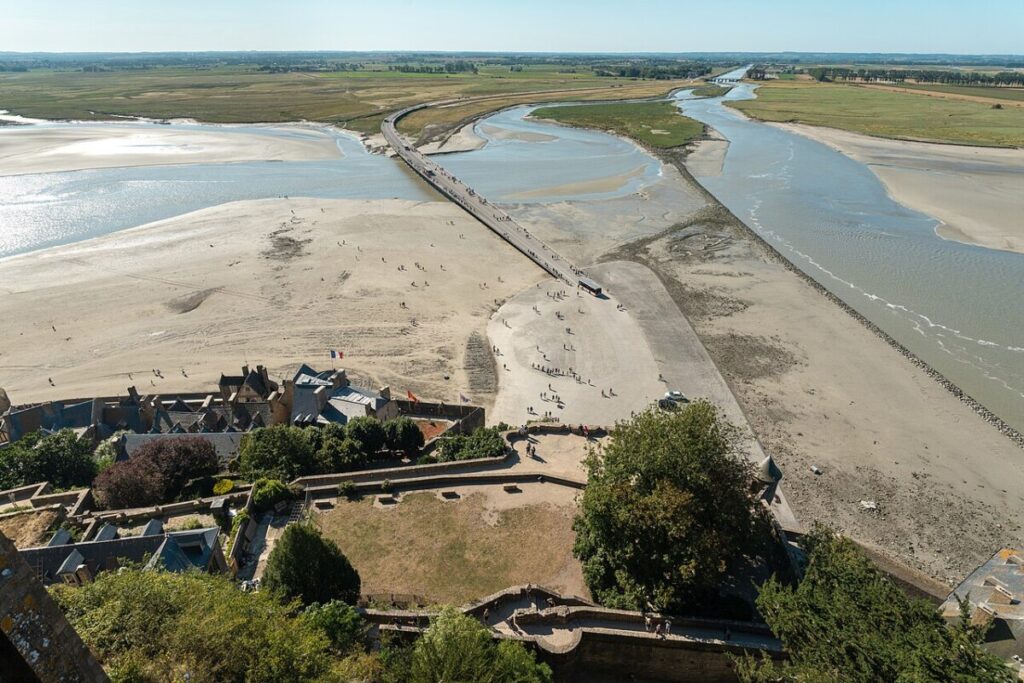
The causeway stretches about 2 kilometers from the shuttle drop-off to Mont Saint-Michel’s entrance. Walking takes maybe 40-50 minutes, and you’ll cross a modern bridge that replaced the old dam.
The shuttle is faster—10-15 minutes, unless it’s crowded. On peak summer days, you might wait 20-30 minutes just to get on, since everyone else has the same idea.
I walked it last time, and honestly, watching the abbey grow bigger with every step while the Couesnon River flowed beneath made the whole thing feel epic. You see the tides change, birds poke around the mudflats, and the full sweep of this UNESCO site rising from the bay.
The shuttle makes sense if:
- You’re traveling with kids or older folks
- The weather’s rough (it can get windy and cold)
- You’re short on time
Walk the causeway if:
- You want better photos without crowds in your way
- You like the journey as much as the destination
- The weather’s decent
What to Pack for a Comfortable Visit

Bring comfortable walking shoes with good grip. The village streets are full of uneven cobblestones, and you’ll end up climbing lots of steep staircases to get to the abbey at the top.
Leave big bags at home or in your car. The narrow streets get unbearably crowded, and trust me, dragging a backpack through packed crowds is no one’s idea of fun.
Essential items to bring:
- Sunscreen and sunglasses (there’s barely any shade on the causeway or ramparts)
- Light rain jacket (the weather can turn on a dime near the coast)
- Refillable water bottle (the climb to the abbey will leave you parched)
- Small daypack or crossbody bag for just your essentials
- Phone or camera with an extra battery (you’ll probably take way more photos than expected)
Pack layers instead of one heavy coat. You’ll get warm hiking up but cool off fast on the windy ramparts. Toss in some snacks—food on the island is pricey, and you’ll be glad to have something handy.
Exploring the Island: Must-See Sights and Experiences
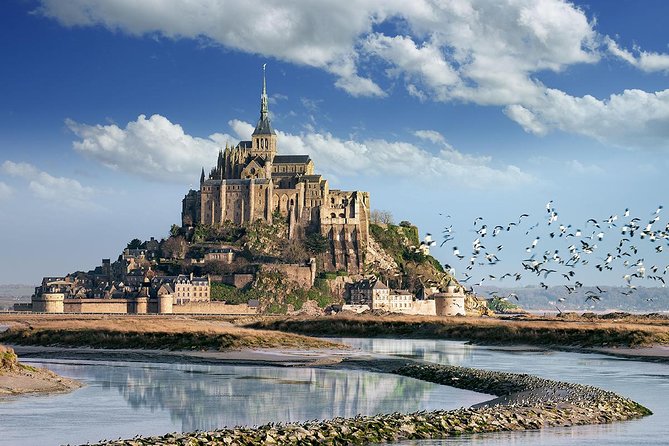
The cobblestone streets of Mont-Saint-Michel twist their way up through a village that feels like it’s barely changed since medieval times. Wandering here, you kind of slip back in time, squeezing through old gates, walking on weathered ramparts, and pausing for those jaw-dropping views across one of Europe’s wildest tidal bays.
The Historic Village and Grande Rue
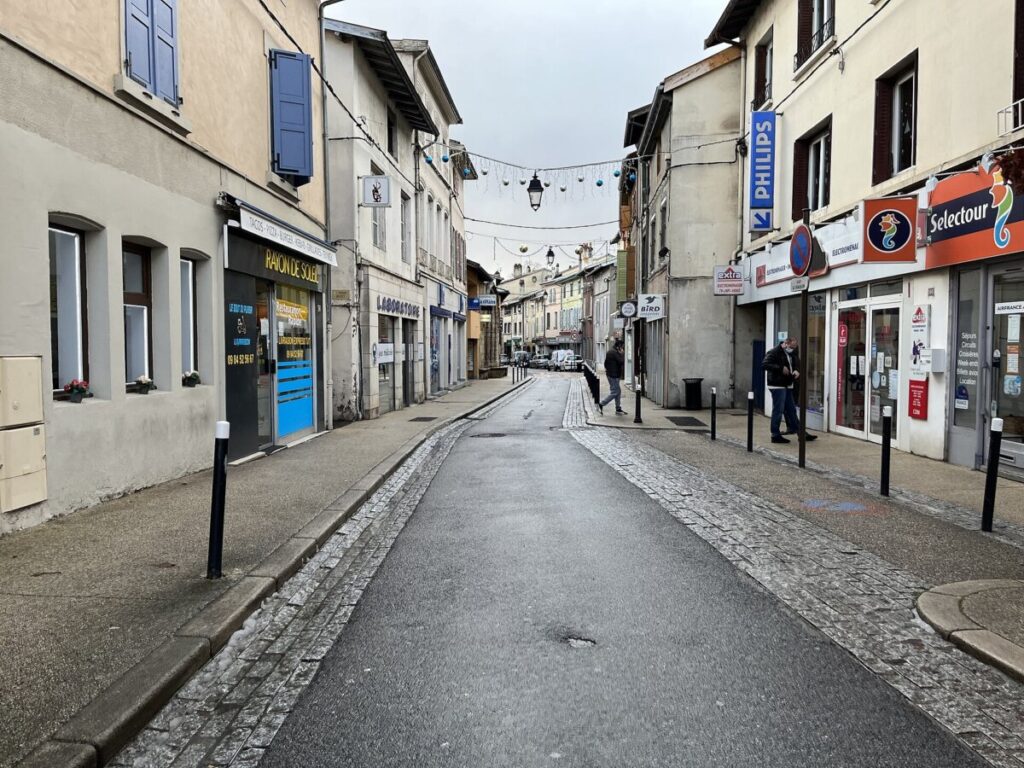
As soon as you step through the fortified entrance, you’re literally following in the footsteps of pilgrims from centuries ago. The Grande Rue—the main street climbing upward—cuts right through the heart of the village, lined with 15th and 16th-century houses that lean and tilt in ways that would make any modern architect nervous.
Look up while you walk. Most people keep their eyes at street level, dodging crowds and peeking into shops, but the real charm is up above. You’ll spot timber-framed buildings like the Auberge de la Sirène and granite houses with tiny windows that once sheltered entire families.
The street narrows and gets steep in places. Take your time and check out the little alleyways branching off. About halfway up, duck into the Church of Saint Peter for a break and a peek at the silver replica of the archangel statue that crowns the abbey.
Walking the Medieval Ramparts
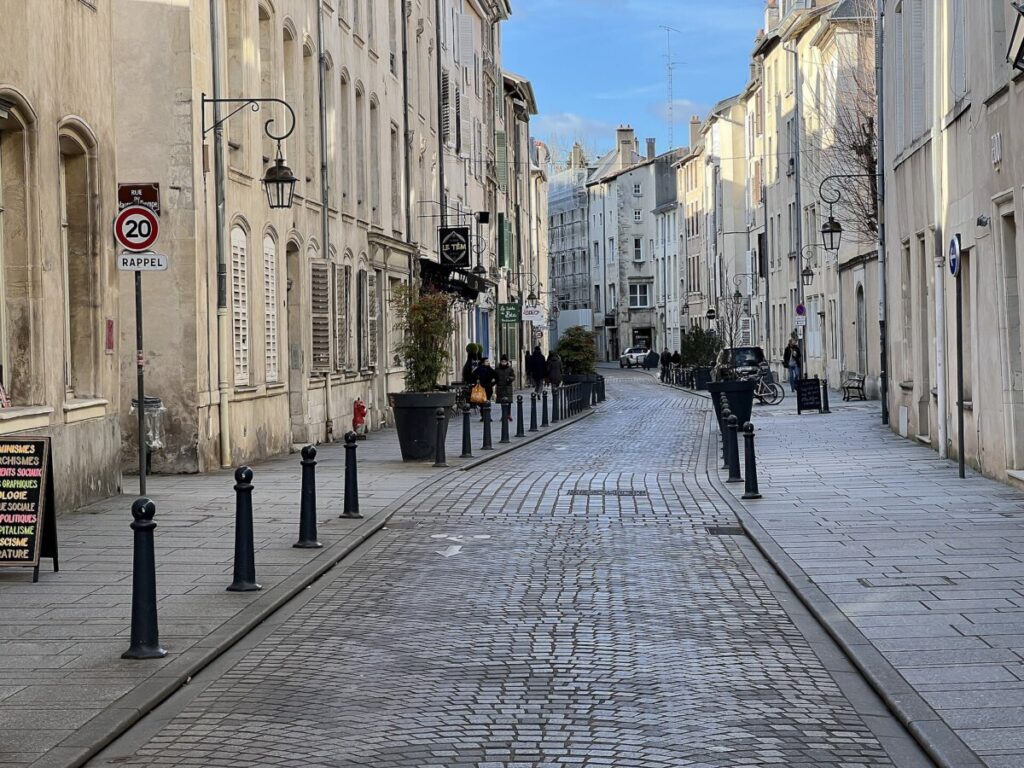
Don’t just follow the crowds straight up the Grande Rue—head over to the ramparts early in your visit. These 15th-century walls stood strong during the Hundred Years War, and now they make for the best walk around the island.
The covered walkway leads you past several towers, each with its own quirky shape and purpose. Some are tall and round, others have a horseshoe design for defense. Between the towers, you’ll get wide-open views of the bay and the little islet of Tombelaine way out in the distance.
Honestly, this is my favorite part of Mont-Saint-Michel besides the abbey itself. The scenery keeps changing as you move from tower to tower. You’ll spot the village rooftops from angles most people miss, and the gargoyles and details up close are just fun to take in.
Panoramic Bay Views and Photogenic Spots
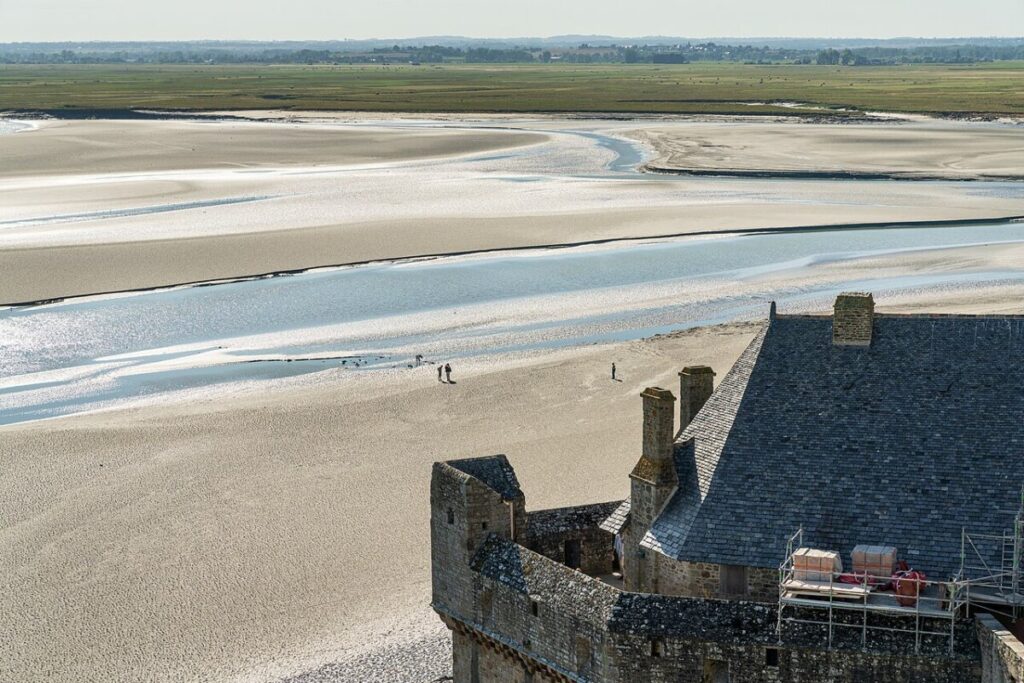
The bay around this UNESCO World Heritage site gets some of the highest tides in Europe. Depending on when you visit, the landscape flips between endless sand flats and water completely surrounding the island.
For the best photos, try the ramparts facing northwest in late afternoon. The light is usually gorgeous, and you can catch both the abbey’s architecture and the drama of the tidal bay. The abbey terrace also gives you amazing views from above, but you’ll need a ticket to get up there.
But honestly? Some of the best views are from outside the island. Walk back toward the mainland along the causeway and turn around. Seeing Mont-Saint-Michel’s silhouette rising up from the bay, with all those Romanesque and Gothic layers stacked impossibly high, is totally worth the extra steps.
See Related: Best Weekend Trips from Paris, France
Visiting the Mont Saint-Michel Abbey
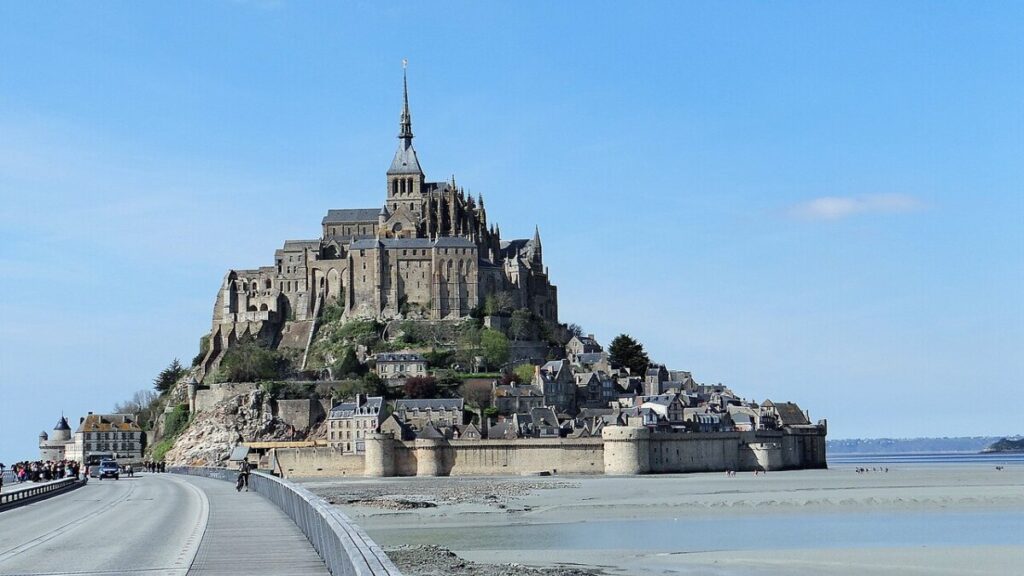
The abbey sits at the very top of the rock, and most people climb all the way up just to see it. You’ll walk through centuries of history as you wander from room to room, and the views alone make the climb and ticket price feel worth it.
History and Architecture Overview
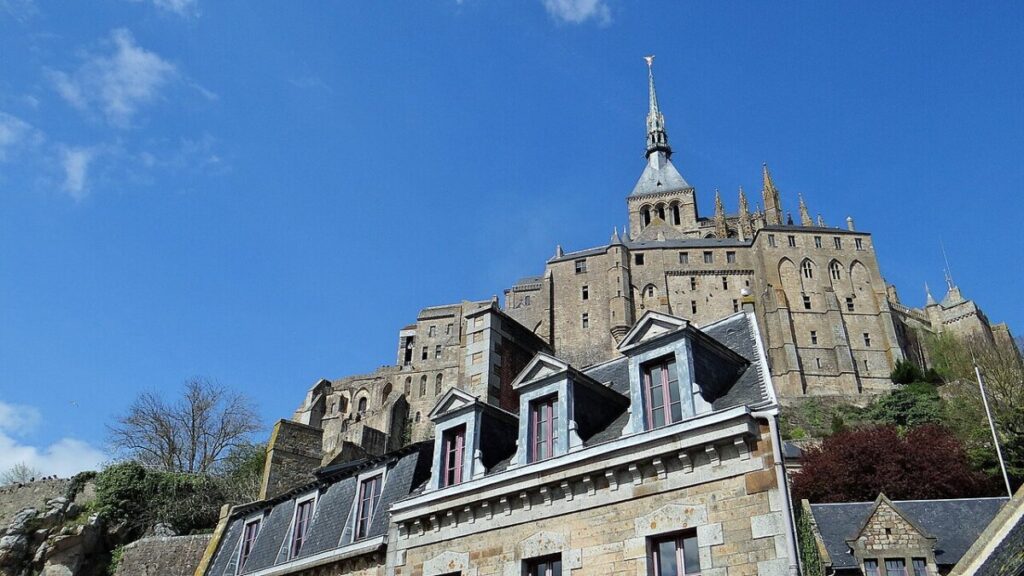
The Abbey of Mont Saint-Michel got its start in 708, when Bishop Aubert of Avranches claimed the Archangel Saint Michael appeared in his dreams and told him to build a sanctuary on the rocky island. What began as a simple oratory eventually became a grand Benedictine abbey by the 10th century.
It took nearly 500 years to build what you see today. Medieval builders hauled granite blocks up narrow paths to construct the abbey church 80 meters above sea level. The church itself mixes Romanesque and Gothic styles, with the dramatic Gothic choir added in the 15th century after part of the earlier structure collapsed.
Over the centuries, the abbey filled many roles:
- Major pilgrimage site in the Middle Ages
- Military fortress during the Hundred Years’ War
- Prison during and after the French Revolution
- Restored monument and UNESCO World Heritage Site since 1979
People call the building “La Merveille” (The Wonder) for a reason. The suspended cloister, with its delicate columns that almost seem to float, really does defy gravity and expectations.
Pilgrimage, Monastic Life, and Legends
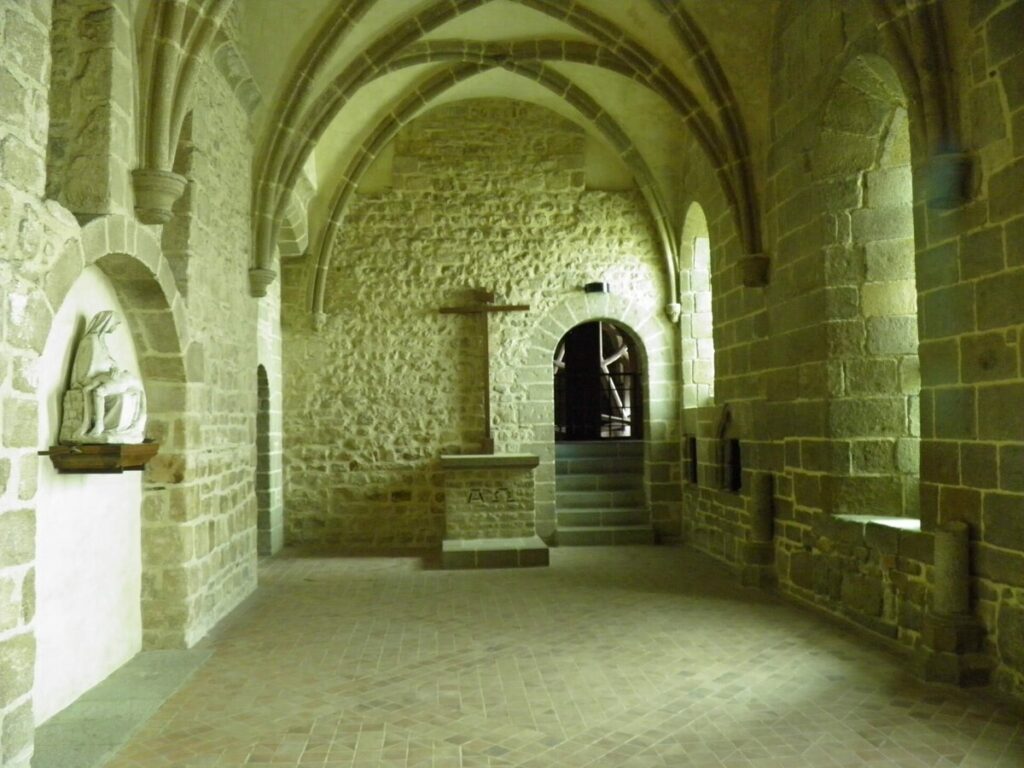
For more than a thousand years, pilgrims braved dangerous routes across quicksand and shifting tides to reach this sacred site dedicated to Archangel Saint Michael. They hoped their journey would earn them spiritual protection and merit.
The Benedictine monks kept a strict daily rhythm of prayer, work, and study. They’d wake before dawn, pray, copy manuscripts in the scriptorium, and welcome pilgrims in the grand halls. Meals in the refectory were silent except for one brother reading scripture—the acoustics let a whisper carry to every corner.
Legend claims Bishop Aubert ignored the archangel’s command twice, so Saint Michael burned a hole in his skull with a finger to get his attention. Apparently, you can still see Aubert’s skull with the mark in the basilica of Avranches, though historians aren’t so sure about that story.
Saint Michael, the warrior angel, gave the site a reputation for divine protection. The English never managed to capture it during the Hundred Years’ War, which the French took as a sign they had help from above.
Interior Highlights and Audio Guide Recommendations
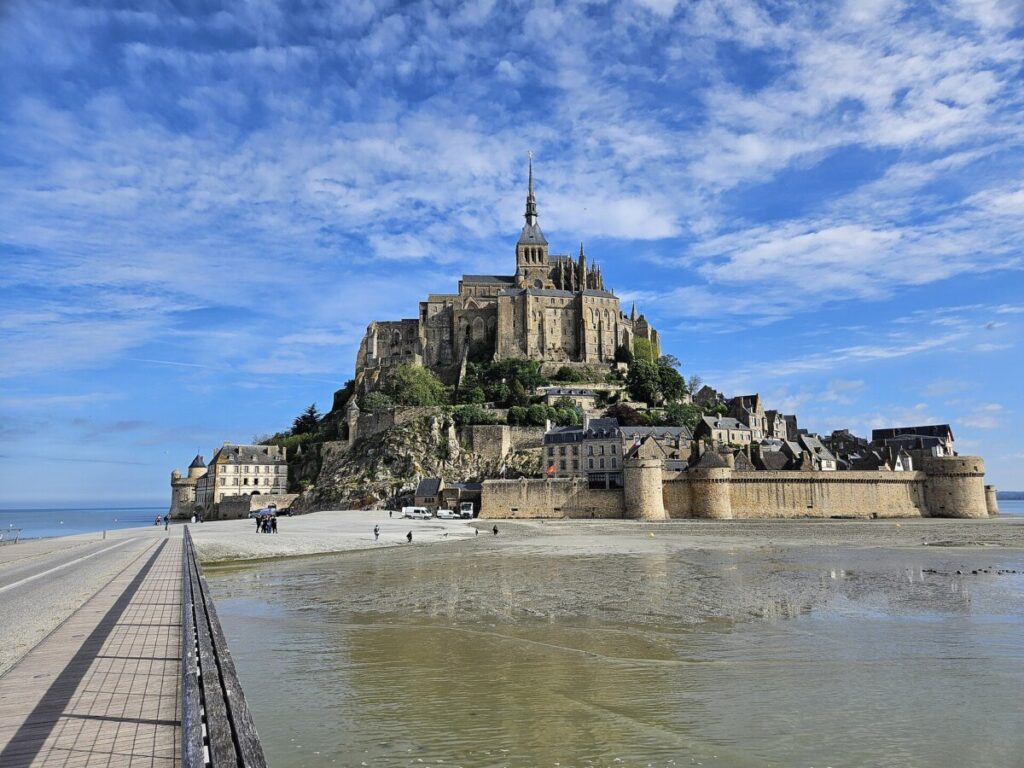
Start your visit at the West Terrace, where you’ll get panoramic views of the bay on a clear day. Inside, the abbey church features soaring vaulted ceilings and a simplicity that lets the architecture shine.
Don’t rush through the cloister. The slender, offset columns create a hypnotic pattern, and the place feels surprisingly peaceful even with crowds. The monks designed it for meditation, and you can still sense that calm.
In the refectory, narrow windows let in floods of light but stay hidden from inside—a clever trick. The Knights’ Hall, despite the name, was where monks worked on manuscripts and art.
The audio guide (available at the entrance) is worth it. It points out details you’d never notice on your own, like why some rooms have massive fireplaces or how the monks built on such a tricky, rocky foundation. Plan for at least 90 minutes inside, though two hours is better if you want to soak it all in.
The abbey opens at 9:30 AM most days. If you arrive right at opening, you’ll avoid the thickest crowds for a while.
Local Food, Culture, and Unique Souvenirs
Mont Saint-Michel brings Norman and Breton culture to life with its famous omelettes, regional specialties, and handcrafted treasures. You’ll find everything from buttery galettes to artisan crafts that capture the island’s medieval vibe.
Tasting la Mère Poulard’s Famous Omelette
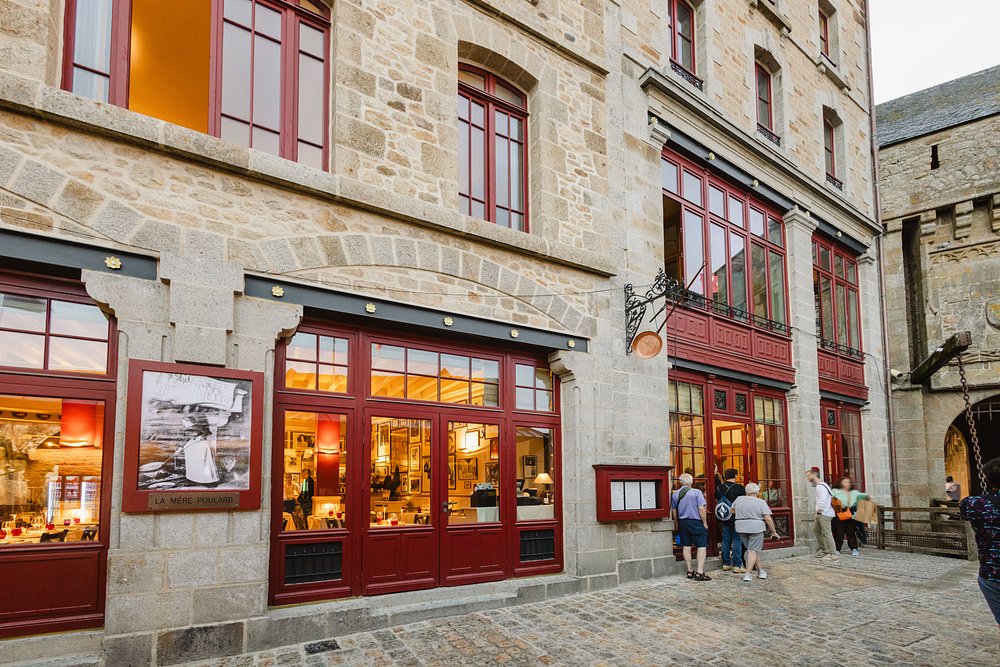
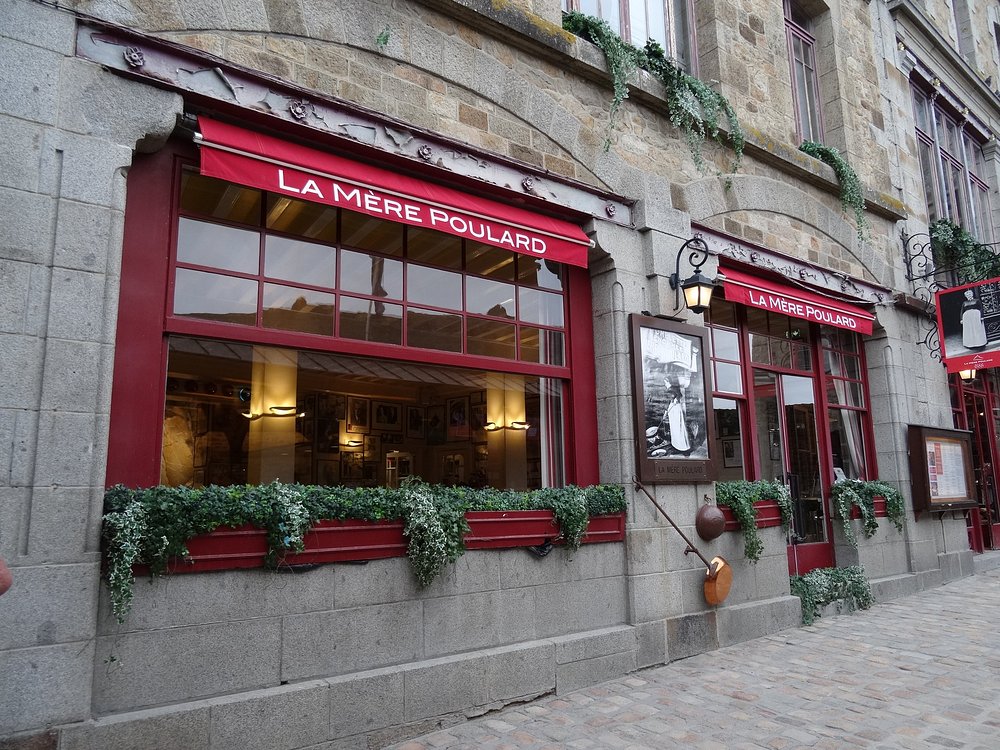
You really can’t visit Mont Saint-Michel without at least considering the fluffy omelette that made la Mère Poulard legendary. Annette Poulard started whipping up eggs here in 1888, and the restaurant still sticks to her original recipe.
They cook the omelette in a copper pan over an open fire, which gives it that super light, airy texture. You can watch the chefs whisking eggs like mad right at the entrance—it’s a bit of theater.
Is it expensive? Absolutely. One omelette can set you back €30 or more. Some folks call it a tourist trap, others say it’s a classic experience. Personally, I think it’s worth a try for the history and spectacle, but don’t expect a life-changing meal. The tradition and show are half the fun.
Sampling Norman and Breton Specialties
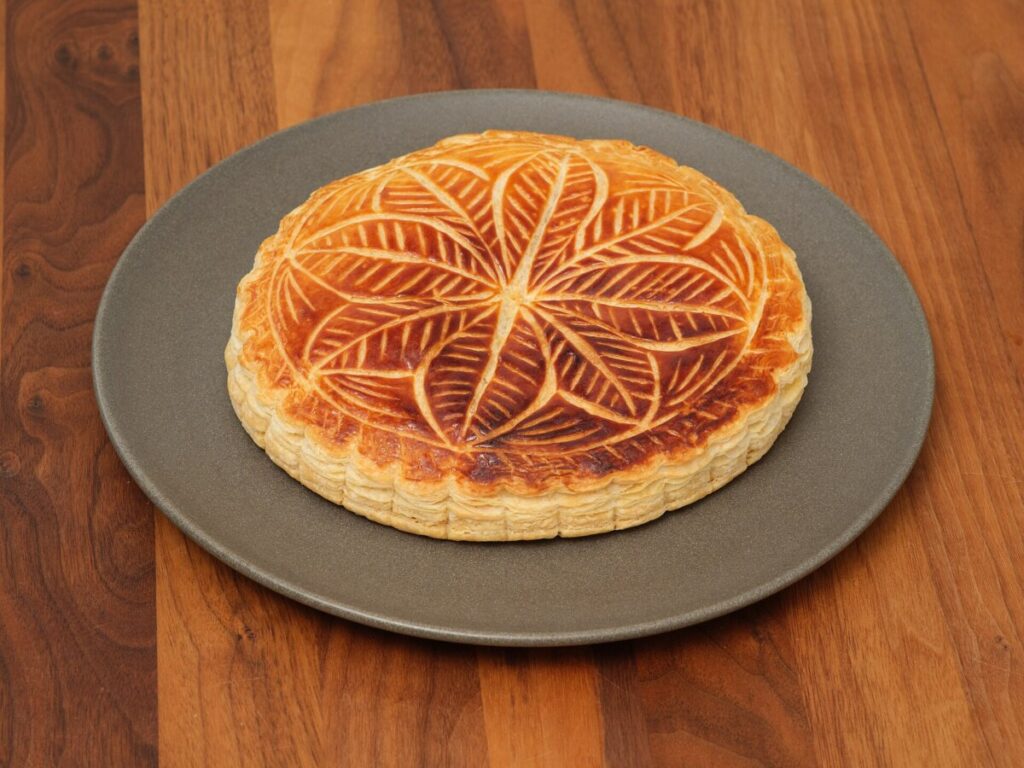
The real culinary gems at Mont Saint-Michel blend Normandy and Brittany flavors. Definitely try galettes—savory buckwheat crepes from Brittany, usually stuffed with cheese, ham, or eggs.
Salt meadow sheep (agneau de pré-salé) is another local specialty. These lambs graze on salty coastal meadows, which gives the meat a unique taste. Local spots serve it roasted with herbs, and honestly, it’s delicious.
Don’t skip the region’s famous salted caramel and buttery biscuits. Mère Poulard’s shop sells cookies using that same rich recipe passed down through generations. And if you’re feeling adventurous, grab a bottle of Norman cider or calvados, the local apple brandy.
Shops, Museums, and Artisan Finds
The narrow streets brim with boutique shops selling local crafts and regional goodies. As you wind your way up to the abbey, you’ll see everything from handmade jewelry to medieval-themed souvenirs.
Artisan shops offer pottery, textiles, wooden toys, and more. Look for “fait main” (handmade) signs if you want authentic crafts instead of mass-produced trinkets. The prices are steeper, but the quality really stands out.
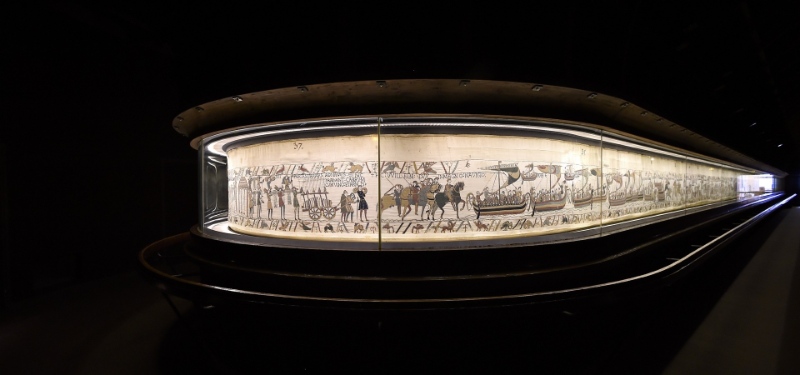
A few small museums dot the village, like the Archeoscope and Maritime Museum—they’re worth a peek if you have spare time. If you’re up for exploring farther, you might want to check out the Bayeux Tapestry or swing by Saint-Malo on the Brittany coast. The D-Day landing beaches aren’t too far either if you’re a history buff.
If you’re visiting from outside the EU, keep your receipts—many shops offer tax-free shopping on souvenirs.
See Related: Beyond Versailles: Alternative Day Trips from Paris
Frequently Asked Questions
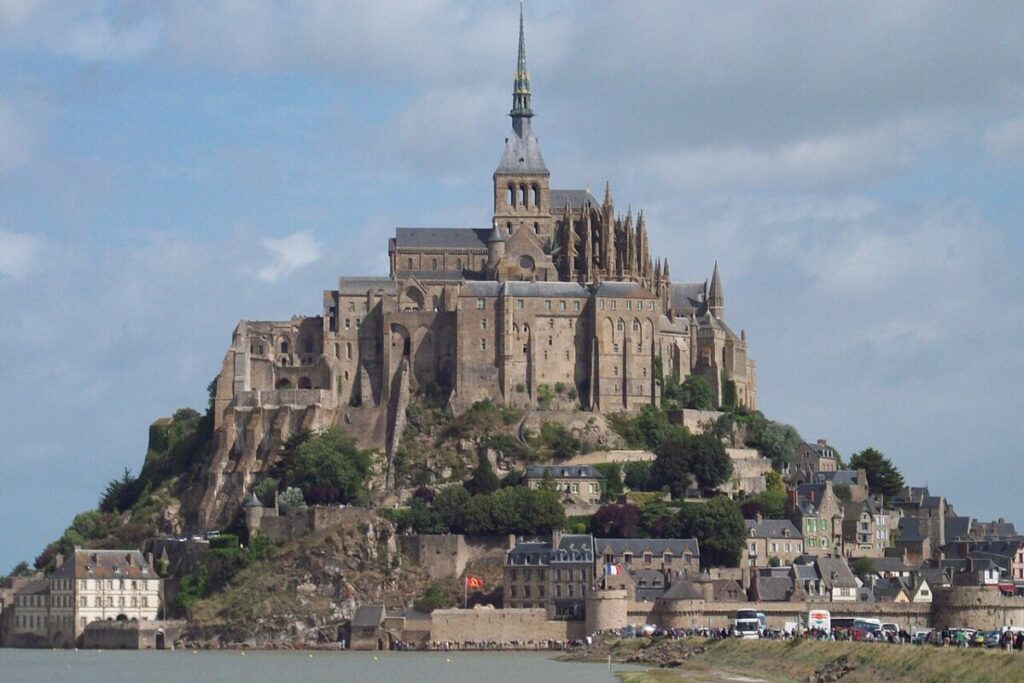
A lot of people wonder about the best timing, how to get there, and whether you can fit in other Normandy sights during a Mont Saint-Michel day trip from Paris.
What’s the best way to get from Paris to Mont Saint-Michel for a one-day visit?
You’ve got two main choices: book an organized tour or go it alone by train and bus. Honestly, the organized tour is the most hassle-free.
They’ll pick you up at a central Paris spot (usually near the Eiffel Tower or Opera), and a coach takes you straight there. No need to stress about changing trains or missing a bus.
If you want more flexibility, take the TGV from Paris-Montparnasse to Rennes (about 90 minutes), then hop on a regional bus to Mont Saint-Michel (roughly 80 minutes). The Paris-to-Rennes transfer takes some planning, but you set your own pace.
Some people take the train to Pontorson and then a shuttle, but honestly? That adds extra time and not much benefit.
How early should I leave Paris to have enough time to explore the abbey and the village?
If you’re joining an organized tour, expect them to scoop you up sometime between 6:30 and 7:30 AM. Yeah, it’s brutally early, but you’ll roll into Mont Saint-Michel by late morning—usually around 11 AM or noon.
If you’re heading out on your own, you’ll want to catch the first TGV, which leaves Paris around 7 AM. That gets you there by mid-morning, assuming you make your connections. Trust me, you’ll need at least 5-6 hours to really explore. The abbey, ramparts, and village deserve a slow wander, not a sprint.
I’ve watched people try to squeeze it in with a later train, and honestly, they just look stressed and worried about missing the last ride home. The final trains from Rennes to Paris usually leave around 8 PM, so plan backwards from that.
Give yourself about 90 minutes to two hours for the abbey itself. Add another hour to stroll the ramparts and poke around the medieval streets. Don’t forget to factor in time for lunch—and that long-ish walk from the parking lot.
Should I book a guided tour or go independently, and what are the real pros and cons?
Guided tours take care of all the logistics. No need to fuss over train schedules or bus connections, and you won’t get lost. The guide will actually make the abbey’s history feel alive, which is pretty cool.
But here’s the thing: you’re stuck on their timetable. Most tours only give you about 3-4 hours at the Mont, and that just isn’t enough if you want to really soak it in. Plus, you’ll be shuffling around with a big group.
Going independently costs less and lets you do your own thing. You can show up early for those golden photography hours or hang around for sunset if you’re after that perfect shot.
Of course, it’s all on you. Miss a bus and you could easily miss the last train back to Paris. The abbey doesn’t have a guided tour included, so you’d need to book that separately if you want one.
If you’re comfortable with French trains and buses and want freedom, go solo. If you just want things easy, a tour is the way to go.
How much should I budget for transport, tickets, and meals for a full day there?
Let’s break it down. Organized day tours from Paris usually cost €130-180 per person.
That covers your transport and sometimes the abbey entrance. It’s the simplest, all-in price.
If you’re traveling independently, expect to pay €60-80 for round-trip TGV tickets from Paris to Rennes—assuming you book ahead. The bus from Rennes to Mont Saint-Michel is about €15 each way. Abbey entrance is €11 for adults.
Parking at the Mont runs about €15 for the day. The shuttle bus called “Le Passeur” from the parking lot to the entrance is free, thankfully.
Meals are pricey once you’re on the Mont. A sit-down lunch can easily set you back €25-40 per person. Those famous omelettes at La Mère Poulard? Around €35 just for eggs. If you want something quicker, grab a crepe or galette for €10-15.
If you’re going independently, budget at least €100-150 per person for the day. If you want a proper meal, bump that up to €150-200.
Where exactly do you catch the train or coach in Paris, and how do the transfers work?
For trains, you’ll leave from Gare Montparnasse in the 15th arrondissement. Metro lines 4, 6, 12, and 13 all stop there. Get there at least 20 minutes early—the place is massive and finding your platform isn’t always quick.
Grab your TGV tickets on the SNCF website or app. Look for trains to Rennes; they’re clearly listed on the boards.
When you arrive at Rennes, head outside to the bus bays. The BreizhGo line 8 bus to Mont Saint-Michel leaves from there. You can buy tickets from the driver or at the station.
Most organized tours pick up from central Paris spots, like 2 Avenue de Tourville near the Eiffel Tower or around Opera Garnier. They’ll send you the exact meeting point when you book.
The coach ride itself is easy—you just board in Paris, settle in for about three hours, and get dropped off at Mont Saint-Michel’s parking area. No transfers, no fuss.
Is it realistic to combine the D-Day beaches and Mont Saint-Michel in a single day without feeling rushed?
Honestly? It’s just not a good idea.
Mont Saint-Michel really needs a full day, especially once you count the travel time from Paris. If you throw in the D-Day beaches, you’re basically signing up for more than 14 hours on the road. That barely leaves any time to actually experience either spot.
The D-Day beaches stretch out over 50 miles of coastline. Places like Omaha Beach, Pointe du Hoc, and the American Cemetery aren’t anywhere near each other. You’ll spend hours just driving between the main sites, let alone exploring them.
Sure, some tour companies claim you can see both in one day. In reality, you’ll get maybe an hour and a half at Mont Saint-Michel, plus a couple of quick stops for photos at a beach or two. Does that even count as visiting? It feels more like rushing through a checklist.