
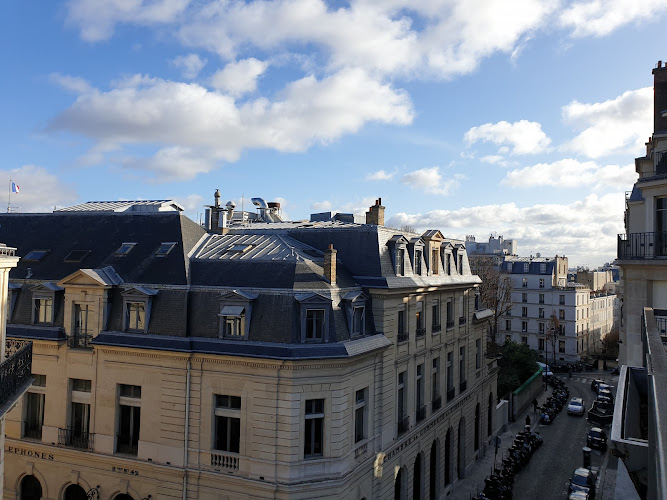
Architectural jewel of the Marais nobility
Hidden behind an unassuming facade at 10 rue du Parc-Royal in the 3rd arrondissement, Hôtel de Vigny stands as one of the most exquisite examples of 17th-century private mansion architecture in Paris. Built in 1618 and later enhanced by the legendary architect Louis Le Vau, this aristocratic residence embodies the golden age of the Marais, when French nobility created architectural masterpieces that combined intimate elegance with formal grandeur.
Birth of a noble residence
The mansion was constructed in spring 1618 by Charles Margonne on land purchased from gardener René Jacquelin, representing the early phase of aristocratic development in the Marais. The building contract with Jean Thiriot, who had previously constructed neighboring houses at numbers 6 and 8 rue du Parc-Royal, demonstrates the systematic approach to creating this elegant residential district.
On March 30, 1628, the mansion was acquired by Jacques Bordier, steward of finances to Queen Anne of Austria, marking its transformation into a residence worthy of the highest levels of French society. This purchase began the mansion\s long association with the court nobility that would define its character for centuries.
Louis Le Vau\s architectural enhancement
Between 1645 and 1648, the renowned architect Louis Le Vau undertook extensive renovations that elevated the mansion to new heights of architectural sophistication. Le Vau, who would later design portions of the Palace of Versailles and the Louvre, brought his mastery of classical French architecture to create interiors and facades that exemplified the refined taste of the grand siècle.
Le Vau\s interventions transformed the mansion into a perfect example of French classical residential architecture, where proportional harmony, elegant detailing, and sophisticated spatial organization created living spaces that were both intimate and impressive, suitable for both family life and formal entertaining.
Aristocratic ownership and decoration
In 1661, the mansion was sold to Anne de Villers and her husband Louis Girard, lord of la Cour de Bois, who commissioned sumptuous decorations and transformations that reflected the height of 17th-century aristocratic taste. Their decorative program created interiors that rivaled the grandest royal residences in their artistic sophistication and material luxury.
The mansion later passed to Jean Girardin des Préaux before being acquired in 1764 by the widow of Jacques Olivier de Vigny, Marquis de Courquetaine. The de Vigny family retained ownership until the French Revolution, giving the mansion the name by which it is known today and ensuring its preservation through the transformative political upheavals of the late 18th century.
Preservation through modern challenges
The Hôtel de Vigny survived the dangers of both revolutionary destruction and modern urban development. In the 1960s, when the Ministry of National Education proposed demolishing the mansion to build a school, the historic monuments commission successfully advocated for its preservation, recognizing its irreplaceable contribution to Parisian architectural heritage.
This preservation effort ensures that future generations can appreciate how 17th-century nobility lived and how master architects like Louis Le Vau created domestic spaces that combined practical comfort with artistic excellence.
Living testament to aristocratic taste
Today, the Hôtel de Vigny represents the enduring appeal of French classical architecture and the sophisticated lifestyle it was designed to support. The mansion demonstrates how private residences could achieve architectural significance equal to public monuments through exceptional design, master craftsmanship, and the patronage of discerning aristocratic clients.
Essential information
- Construction: 1618 by Charles Margonne
- Architect enhancement: Louis Le Vau (1645-1648)
- Location: 10 rue du Parc-Royal, 3rd arrondissement
- Notable owners: Jacques Bordier (steward to Queen Anne of Austria), de Vigny family
- Architectural style: French classical, 17th century
- Historical significance: Example of Marais aristocratic development
- Preservation: Saved from 1960s demolition threat
Aristocratic legacy
The Hôtel de Vigny stands as more than a beautiful building—it represents the pinnacle of French aristocratic domestic architecture and the cultural refinement that made 17th-century Paris the envy of Europe. This remarkable mansion, enhanced by Louis Le Vau\s architectural genius, demonstrates how private patronage and artistic vision combined to create living spaces that were simultaneously intimate homes and works of art. For architecture enthusiasts, history lovers, or anyone seeking to understand the foundations of French cultural excellence, the Hôtel de Vigny offers an extraordinary window into the world of 17th-century nobility, where every room preserves the aesthetic ideals and sophisticated lifestyle that established France as the arbiter of European taste and elegance.