
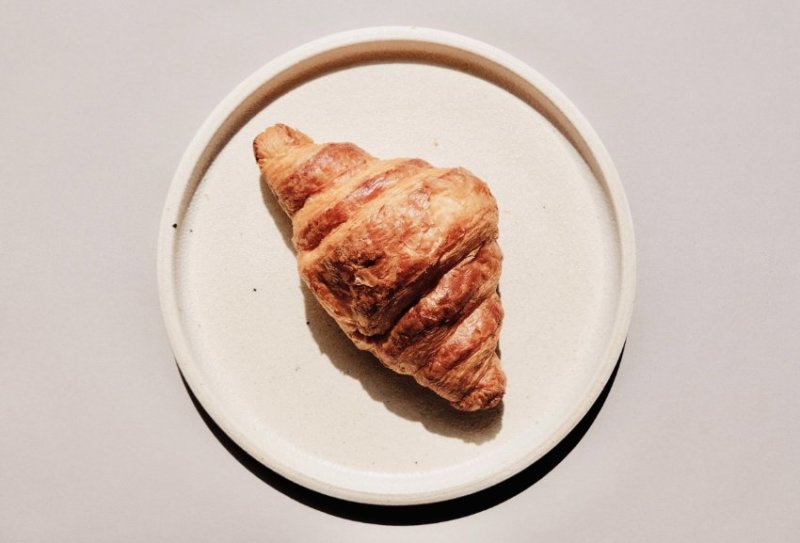
You’ve seen butter spread, and now someone is tucking into a pain au chocolate. Tea and coffee sound too wet all of a sudden, or is it that their pastries are just too damned dry?
What is this madness? Can’t a schlub just enjoy a curly roll without this pressure? What even is this curly roll?!
What is a Croissant?

They are among the most “French” of French staple foods. Croissants are a range of delicious French pastries known for their buttery flavor and soft, flaky texture.
There are many variations of the traditional croissant, so when in doubt, ask a local for the best place to get one—it will be the easiest thing in the world because you’ll be in Paris.
As a general rule, they are to DIE for.
When to eat a Croissant
Croissants are consumed for breakfast, lunch, and dinner, so some newcomers to Paris often have difficulty knowing when to eat one.
Well, the best time to eat a croissant is in the morning. This is because the croissants are freshest during this time and have not been sitting out all day.
Ah yes, the struggles of eating a croissant in Paris.
How to Eat a Croissant in Paris Like a French Local

The biggest challenge some people have when eating a croissant in Paris for the first time is knowing how to eat it. Many visitors to Paris are unfamiliar with how the French HEART their croissants, so they often make a mess of these flaky rolls.
Well, good news: Eating a croissant has many different ways. You may breathe that sigh of relief. The most popular way to eat a croissant is to partner it with coffee and or tea.
Another popular way to eat a croissant is to spread butter on it. This gives the croissant a richer flavor. You can also eat a croissant with jam or other preserves or curd. This is a popular option for breakfast or dessert.
Most croissants are meant to be savory and enjoyed with a light spread of butter and jam or dipped into a soup bowl. While this is a popular French pastime, it is considered uncouth to dip them into tea or coffee like a doughnut or biscuit in Paris.
Croissants commonly come with different fillings, such as chocolate, cheese, ham, eggs, or anything else. I’ve enjoyed raspberry cream cheese croissants in Paris, as well as spinach and feta ones—the options are virtually limitless.
My one blanket pro tip is that when you eat a croissant, it is best to take small bites. This will help prevent the croissant from falling apart and making a mess. It is also important to eat the croissant slowly so that you can savor the flavor. Plus, you’ll look like a civilized human instead of some oik!
Croissants are often served as a side dish at breakfast, lunch, and dinner in France. This is because they are easy to bake, crazy popular, and lovely.
You can find croissants at any bakery or café in France. This used to be enforced by law – not that any self-respecting French bakery would call itself such without having croissants.
How to avoid getting covered in buttery croissant flakes

If you’re worried about making a mess while eating a croissant, you can do a few things to avoid it. One is to use napkins to wrap around the bottom of the croissant before eating it from the top.
That way, you won’t have to worry about buttery pastry fingers or a flaky front. Another French habit is to soak a croissant briefly in your favorite hot beverage before eating it.
This will help partially bind any perilous flakes to the rest of your roll, and the cup will catch any that can’t be coaxed into staying on the croissant.
People also like to eat croissants with a knife and fork, which can help prevent crumbs from falling everywhere. So, if you’re looking for ways to avoid making a mess while eating a croissant, these tips might help.
See Related: Is It Illegal to Work Weekends in Paris?
What’s the typical French breakfast?

Science has proven breakfast is the most important meal of the day. In the US, breakfast food is a heavy, fried affair that will put you in an early grave for all its sinful deliciousness.
France has a lighter breakfast, and the croissant has a significant role of teehee to play in this meal. The typical French breakfast consists mainly or entirely of bread products like pain au chocolat and pain aux raisins and additional accompaniments like jam, honey, cold meats, cheeses, and butter to begin the morning before heading off.
During breakfast, you may enjoy coffee with milk, black hot chocolate, or tea. For an authentic French breakfast, order a café au lait.
Coffee with hot milk and coffee is called a grand crème. A small coffee with hot milk is called a petit crème. You can also find variations of these coffees, such as a noisette (a drop of hazelnut syrup) or a café Français (a strong black coffee).
If there is one common hot breakfast food the French are known for, it’s an omelet.

See Related: Restaurant L’Ambroisie
Why do the French have a light breakfast?
France has surprisingly simple breakfast options for a nation focusing on the finest cuisine. A French Continental breakfast typically revolves around one or two croissants and little else in terms of hot food.
This is because, in France, breakfast is not the most important meal. Contrary to many other countries, breakfast has the lowest importance at breakfast.
Lunch is the most important meal for the French – you can tell by the length of their work lunches. Plus, it’s also illegal to take lunch at your desk!
The lunch break is a time for employees to relax and socialize with their colleagues.
This social time is important for building relationships, networking, and drinking wine. It also allows employees to recharge their batteries before returning to work in the afternoon.
Where to find the best breakfast in France
There is no better place to enjoy a French breakfast than at a local bakery or café. This is where you will find the freshest and most delicious breakfast foods.
The cream of these will be in Paris.
Different variations of croissant

Croissants are French pastry made from dough rolled and folded to create multiple layers. The dough is then baked until it is golden brown and flaky.
Croissants can be served plain or with different ingredients such as pains au chocolat (chocolate croissant), cheese, ham, or egg. There are also different variations of croissants, such as savory or sweet croissants.
See Related: Best Places for Hot Chocolate in Paris, France
Savory croissants

If you are looking for a savory croissant in Paris, you have many options. The most popular savory croissants are ham and cheese and egg croissants. Here is a table of the different types of savory croissants in Paris.
Type |
Description |
Common Fillings |
Best Time to Eat |
|---|---|---|---|
Jambon-Fromage |
Classic ham and cheese croissant |
Ham, Emmental or Gruyère cheese |
Lunch or snack |
Poulet |
Chicken-filled croissant |
Shredded chicken, mayonnaise, herbs |
Lunch |
Saumon-Épinards |
Salmon and spinach croissant |
Smoked salmon, spinach, cream cheese |
Brunch or light dinner |
Chèvre-Miel |
Goat cheese and honey croissant |
Goat cheese, honey, sometimes walnuts |
Breakfast or afternoon tea |
Parisien |
Parisian-style savory croissant |
Ham, cheese, béchamel sauce |
Lunch or dinner |
Sweet croissants
If you are looking for a sweet croissant in Paris, many options exist. The most popular sweet croissants are the chocolate croissant and the almond croissant. Here is a table of the different types of sweet croissants in Paris.
Type |
Description |
Common Fillings/Toppings |
Best Time to Eat |
|---|---|---|---|
Croissant au Chocolat |
Classic chocolate-filled croissant |
Dark chocolate |
Breakfast or afternoon snack |
Croissant aux Amandes |
Almond croissant |
Almond cream, sliced almonds |
Breakfast or dessert |
Croissant à la Confiture |
Jam-filled croissant |
Various fruit jams (strawberry, apricot, raspberry) |
Breakfast or tea time |
Croissant au Caramel |
Caramel-filled croissant |
Salted caramel cream |
Dessert or indulgent snack |
Croissant à la Crème Pâtissière |
Custard-filled croissant |
Vanilla custard cream |
Breakfast or dessert |
FAQ
What’s a typical French breakfast?
In France, people often have a light breakfast called “petite déjeuner” or “pit dej”. This usually includes French bread products, jam, honey, and butter. You might also drink coffee or tea along with orange juice. If there are children present, they typically eat breakfast cereals.
Where is the best place to get a croissant in Paris?
There are many variations of the traditional croissant, so when in doubt, ask a local for the best place to get one. Enjoy your croissant!
Are you supposed to dip your croissant in a cup of coffee?
No – not in Paris at Least! The Parisian or French way is not to dip your croissant in a cup of coffee.
When is the best time to eat a croissant?
The best time to eat a croissant is in the morning when they’re fresh!
How do you pronounce “croissant?”
If you want to sound like a native, it’s something like krwa-san, but most Americans pronounce it kruh-saant.
Related Resources
Find Things to Do in Paris
Find Accommodation

Continue Planning Your Paris Trip
Michelin Dining for the Picky Eater: Your Guide Near the 6th Arr. in Paris
Booked a Michelin dinner in Paris but you're a picky eater? How to enjoy a multi-course tasting near…
Read Guide →
Dining Delights in Paris: Where Vegetarians and Meat-Lovers Unite
Dining in Paris with one vegetarian and one meat-lover? Restaurants that genuinely please both, so dinner doesn't become…
Read Guide →
Chasing the Perfect Croissant: A Journey from Châtelet-Les-Halles to Notre Dame
A croissant crawl from Chatelet-Les-Halles to Notre Dame, mapping the buttery, flaky stops worth a detour on a…
Read Guide →