

Planning a day trip from Paris and stuck between two legendary royal palaces? Honestly, it’s a classic dilemma. Versailles and Fontainebleau both open windows into French royal history, but the vibe and experience couldn’t be more different. It really depends on what you’re after.
Versailles is the grand showstopper with its famous Hall of Mirrors and massive gardens, while Fontainebleau offers a quieter, more intimate look at eight centuries of royal life with shorter queues and easier access. The Palace of Versailles sits about 20 kilometers southwest of Paris, while Fontainebleau lies about 55 kilometers to the southeast.
Versailles draws huge crowds year-round—it’s basically the face of French royal excess. Fontainebleau? Locals actually go there. It feels like a secret, even though it’s not.
If you can, see both. But let’s be real—most people only have time for one château. So which should you pick? Do you want to walk in Marie Antoinette’s footsteps through the world’s most famous palace? Or maybe you’d prefer a less hectic castle that saw everyone from François I to Napoleon? Here’s what you should know before deciding.
Key Takeaways
- Versailles offers grand spectacle and famous history with long queues, while Fontainebleau provides a quieter experience spanning eight centuries of royal residents
- Versailles requires 3-6 hours for a full visit including gardens and Trianon, while Fontainebleau needs 2.5-4 hours for the palace and grounds
- Both palaces are included with the Paris Museum Pass, making it easy to visit whichever château fits your schedule and travel style
Versailles vs. Fontainebleau: Key Differences

The Palace of Versailles sprawls across a massive estate with long queues and premium prices, while Fontainebleau offers a more intimate royal experience at roughly half the cost with far fewer tourists.
Size and Layout
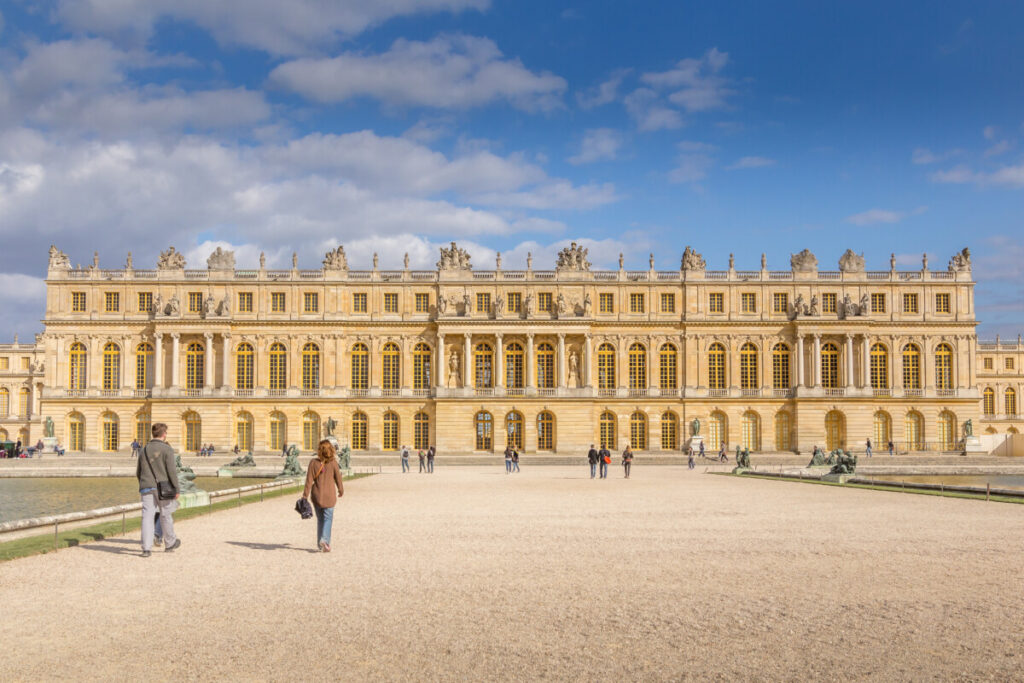
Versailles is honestly enormous—we’re talking about an 800-hectare estate that includes the main palace, the Grand Trianon, Petit Trianon, and Marie Antoinette’s Hamlet. You’ll need at least 3-6 hours if you want to see the gardens and Trianon palaces, though some visitors spend an entire day wandering the grounds.
The Château de Fontainebleau sits about 55 kilometers southeast of Paris and features a large palace complex with three distinct gardens and a carp pond. It’s definitely big, but you can comfortably tour the palace in 2.5-4 hours. The layout feels more manageable because everything’s concentrated in one main building rather than spread across multiple structures.
Versailles can be overwhelming, especially if it’s your first visit. The scale is wild, and you’ll do a ton of walking between buildings and gardens. Fontainebleau’s design keeps things easier—most of the highlights are under one roof, so you can focus on the interiors without wearing yourself out.
Atmosphere and Crowds
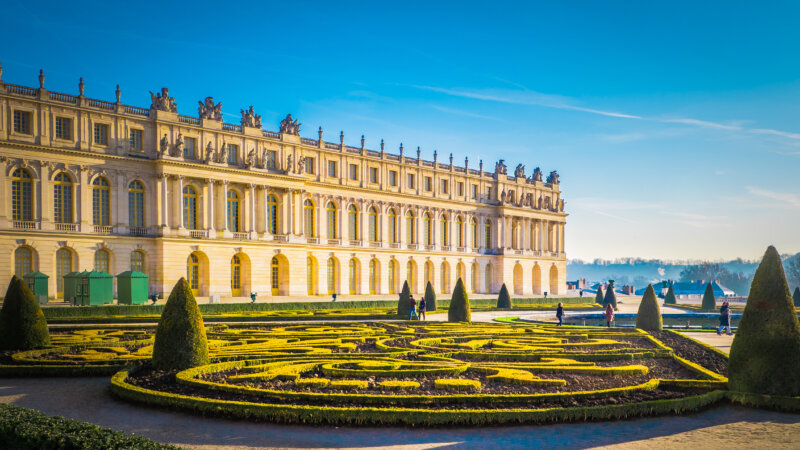
Versailles gets packed, no sugarcoating it. The Palace of Versailles sees long queues, and you really should book a time slot unless you enjoy standing in line for ages. On busy weekends, it can feel like you’re caught in a slow-moving parade through the Hall of Mirrors.
Fontainebleau feels worlds apart. Outside of peak weekends, you’ll face only short or moderate waits, and the whole visit is just more relaxed. It’s like stumbling onto a secret—most tourists haven’t caught on yet.
The quieter vibe at Fontainebleau means you can actually take in the Renaissance galleries and Napoleon’s apartments without someone’s selfie stick blocking your view. Versailles delivers the wow factor, sure, but sometimes it feels more like a theme park than a palace.
Ticket Prices and Value

Fontainebleau tickets start at just €12 for adults to enter the palace, or you can grab the Passport option for €24-€32 depending on the season. Versailles charges €21 for palace-only tickets, with the full Passport running €24-€32 as well.
Both palaces come with the Paris Museum Pass, which is handy if you plan to visit several attractions. But at Versailles, the pass doesn’t get you into the gardens on Musical Fountain Days—you’ll have to pay extra.
Palace | Basic Entry | Full Access | Location from Paris |
|---|---|---|---|
Fontainebleau | €12 | €24-€32 | 55 km southeast |
Versailles | €21 | €24-€32 | 20 km southwest |
Honestly, Fontainebleau feels like a better deal. You pay less for the basic ticket and get a palace that’s seen centuries of history, from medieval times all the way through Napoleon.
Historical Significance and Royal Residents
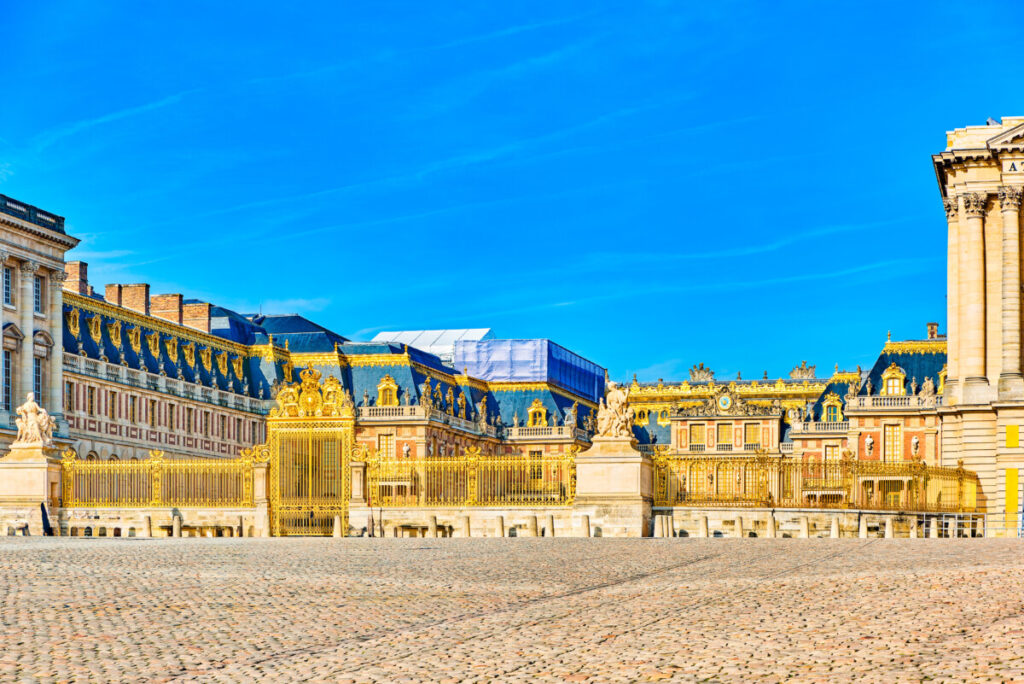
Both châteaux served French royalty for centuries, but their stories are different. Fontainebleau housed generations of rulers over nearly 800 years, while Versailles is really about the height of absolute monarchy under a few powerful kings.
Origins and Timeline of Each Palace
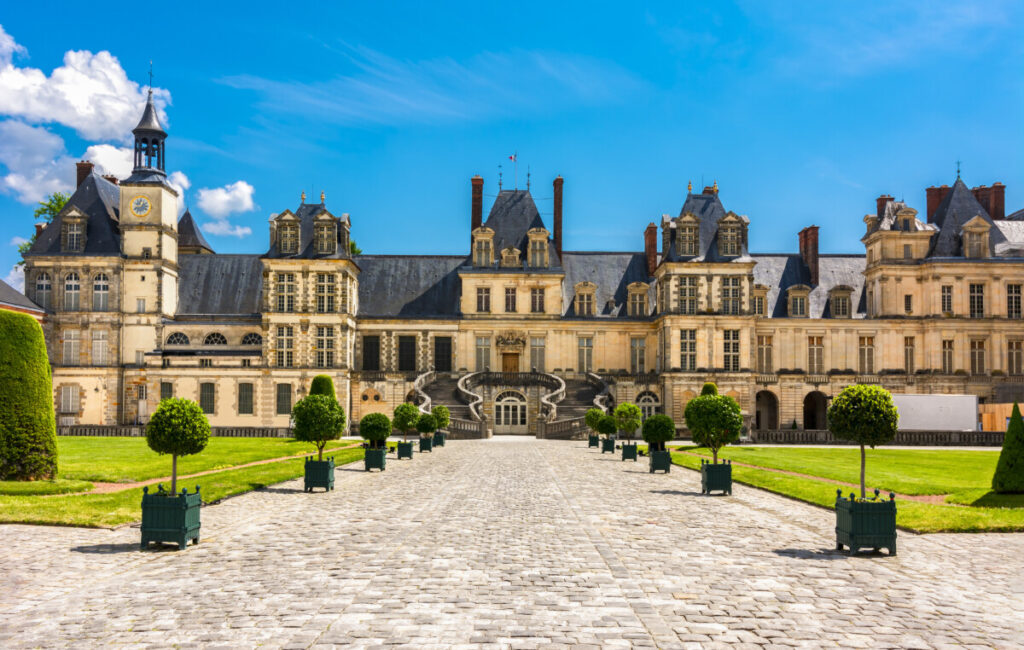
Fontainebleau’s roots go back to the 12th century when Louis VII set up a royal hunting lodge there. Over the next seven centuries, French kings kept expanding and renovating the palace. You’ll spot layers of architecture—from François I’s Italian Renaissance flair in the 1520s to Napoleon III’s Second Empire touches in the 1860s.
François I took the old medieval fortress and turned it into a true Renaissance palace in the late 1520s. His gallery still shows off Italian artistry that set the tone for French taste. The Château de Fontainebleau covers the reigns of 7 kings and 3 emperors, making it one of France’s most layered historic sites.
Versailles started small. Louis XIII built a hunting lodge there in 1623. But Louis XIV (the Sun King) moved his entire court from Paris in 1682 and spent nearly 50 years turning Versailles into a jaw-dropping symbol of absolute power. European rulers tried to copy it, but nobody really matched the scale.
Famous Royal Figures

Louis XIV made Versailles what it is—he obsessed over every detail to impress and intimidate. The Hall of Mirrors wasn’t just for show; it was a statement.
Louis XV kept building, adding the cozy Petit Trianon. But honestly, it’s Marie Antoinette who captures most people’s imagination now. Her private apartments and the Hameau de la Reine show a queen desperate to escape the strict court life.
Fontainebleau gives you a much bigger cast. François I brought Leonardo da Vinci’s Mona Lisa to France and died at the palace.
Henry IV was born there. Louis XV married Marie Leszczyńska in its chapel.
Napoleon’s Legacy at Fontainebleau
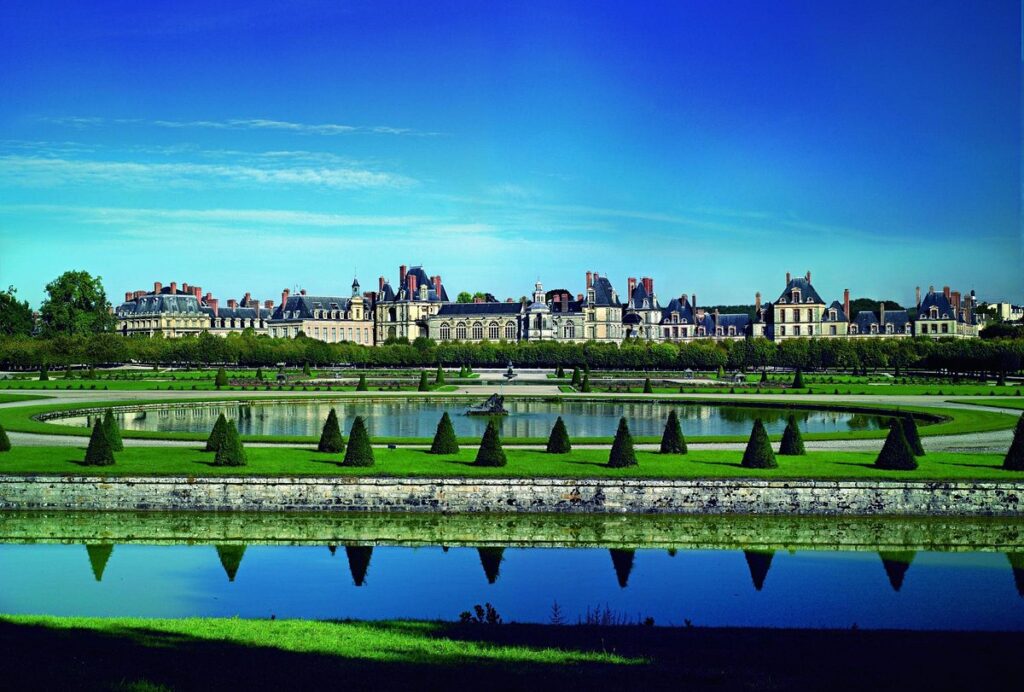
Napoleon chose Fontainebleau over Versailles, which he saw as too tied to the old monarchy. He poured time and money into making it his main home outside Paris.
You can still see Napoleon’s throne in the palace—one of the last imperial thrones left in France. His apartments have original furniture he actually used, so it’s not just for show. The horseshoe staircase is where he said his dramatic goodbye to the Imperial Guard in 1814 before heading to exile.
Napoleon’s bedroom, his tiny study, even his bathtub—they’re all still there. That preservation gives Fontainebleau a more authentic feel than Versailles, where a lot of the original furniture disappeared during the Revolution.
See Related: Paris Tips: Essential Travel Guide for a Perfect Trip
Architectural and Artistic Highlights
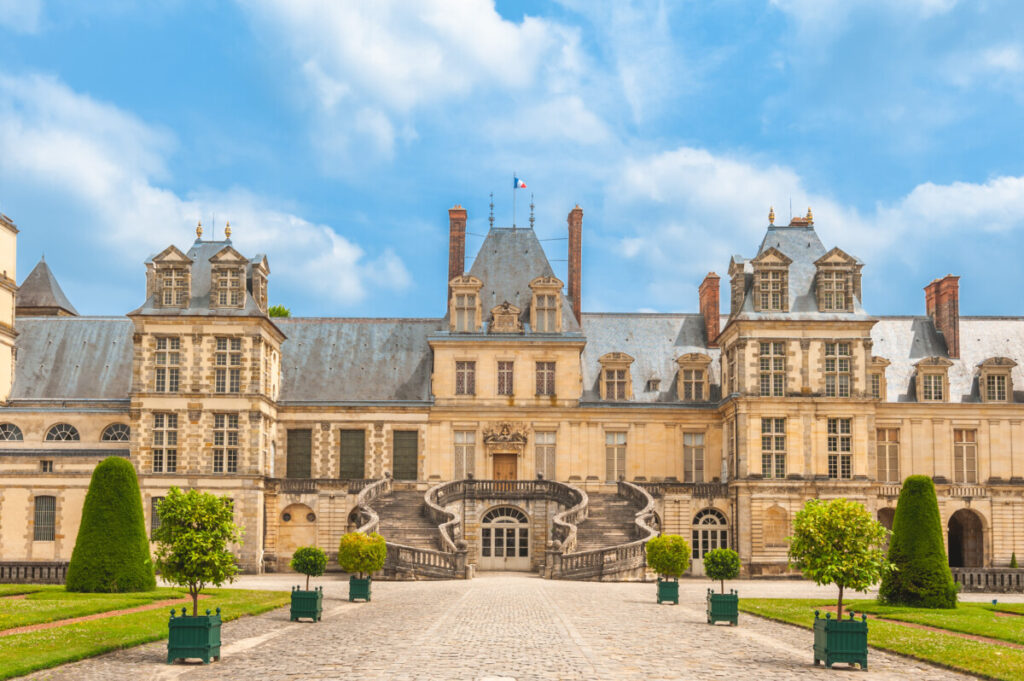
Both palaces show off the artistic trends that shaped French royal taste. Versailles stuns with Baroque extravagance and gold everywhere, while Fontainebleau layers Renaissance elegance with Napoleon’s imperial style.
Hall of Mirrors and State Apartments
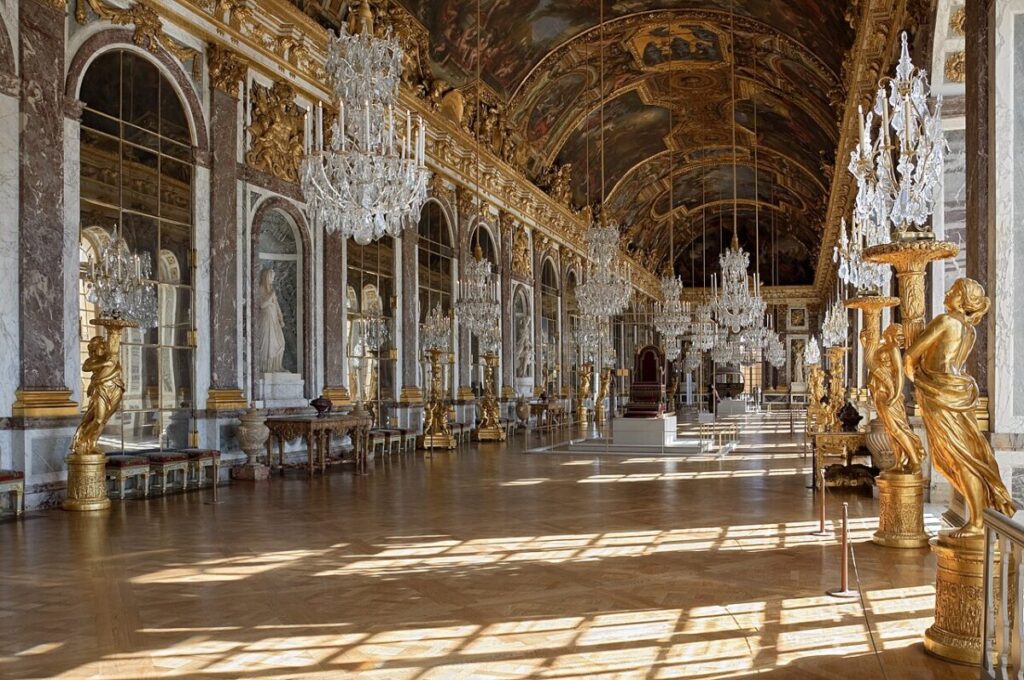
The Hall of Mirrors at Versailles is still one of Europe’s most jaw-dropping rooms. You’ll walk through 73 meters of pure opulence, with 357 mirrors bouncing light from 17 arched windows out over the gardens. Louis XIV wanted to overwhelm you—and it works.
The State Apartments at Versailles have a planetary theme, all about Apollo the sun god. Ceiling frescoes and marble details fill each room, and the King’s Grand Apartment has seven salons where courtiers hung out at night.
At Fontainebleau, the apartments feel more personal. Napoleon’s throne room still has his actual seat, and you can see how he really lived. The Emperor’s quarters include his campaign bed and study, so you get a peek at daily imperial life—not just ceremonial spaces.
François I Gallery and Renaissance Details

The François I Gallery at Château de Fontainebleau is where Italian Renaissance art really started to flourish in France. This 64-meter-long gallery shows off stunning frescoes and stucco work by Italian artists from the 1530s. Between the paintings, leather panels, and carved walnut wainscoting, you get a vibe that’s totally unique in France.
Mythological scenes fill the gallery, mixing classical stories with royal symbolism. Keep your eyes peeled for the salamander motif—that’s François I’s personal stamp, showing up everywhere. The stuccowork is wild, framing each fresco with figures that almost jump right off the wall at you.
This Renaissance artistry feels way more delicate and intellectual than the later Baroque style at Versailles. Fontainebleau’s decorations invite you to linger and notice the details, while Versailles hits you with drama and grandeur. Honestly, you’re walking through two centuries of French art history in these palaces.
Royal Chapels and Sacred Spaces

The Royal Chapel at Versailles took ages to finish—they didn’t wrap it up until 1710. Soaring white columns and a vaulted ceiling create this almost otherworldly space where the king once attended daily mass from the royal gallery. The organ still works, and sometimes you’ll catch it filling the chapel with music during special occasions.
Fontainebleau’s Chapelle de la Trinité offers a different take on sacred architecture. Dramatic frescoes cover the ceiling, painted under Napoleon III, and the chapel served several French dynasties. Louis XV even married Marie Leszczyńska here in 1725.
Both chapels show how religion and royal power went hand in hand, but Versailles’ chapel feels more like a stage set for public displays of piety.
Unique Room Features

Versailles packs in about 2,300 rooms over 63,154 square meters. The Queen’s apartments include Marie Antoinette’s private theatre and the intimate bedroom where royal births happened in front of an audience. On a regular tour, you’ll see around 50 decorated rooms.
Fontainebleau’s Napoleon’s Throne Room stands out—Versailles doesn’t have anything quite like it since it stopped being a royal home earlier. The Ballroom (Salle de Bal) at Fontainebleau stretches 30 meters, with a coffered ceiling and mythological frescoes that actually predate Versailles.
The Gallery of Deer at Fontainebleau runs 80 meters and once displayed hunting trophies. Over at Versailles, the War and Peace Salons frame the Hall of Mirrors, their ceilings covered in paintings celebrating Louis XIV’s military triumphs. Both palaces reward curious visitors—there’s always some hidden gem waiting in the next room.
See Related: French Food Favorites: Must-Try Dishes in France
Gardens and Outdoor Experiences
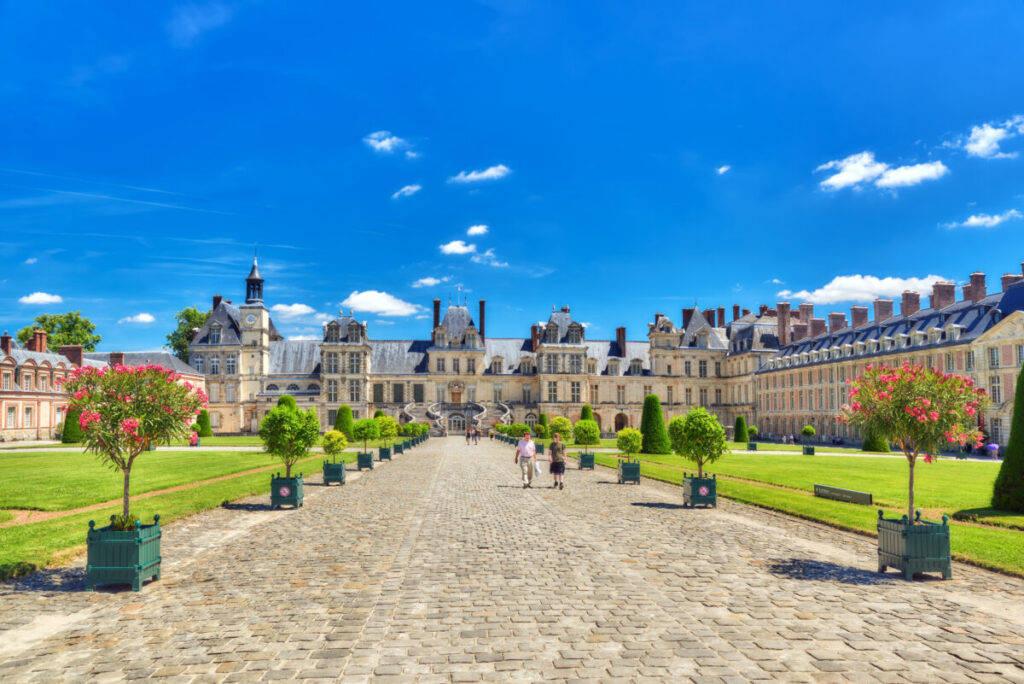
The gardens at these two palaces couldn’t be more different. Versailles is all about formal French garden design at its absolute peak, while Fontainebleau feels wilder—almost like you’ve wandered into a storybook forest.
Gardens of Versailles vs. Grand Parterre

Step outside at Versailles and the sheer scale will probably stop you in your tracks. The gardens cover over 800 hectares of meticulously trimmed lawns, geometric flower beds, and elaborate fountains.
The Grand Parterre sits just below the palace windows. It’s the largest ornamental flower bed in France, and honestly, calling it a “flower bed” doesn’t do it justice. You’re looking at intricate boxwood designs and seasonal blooms, all laid out to be admired from above.
Fontainebleau’s gardens feel quieter. Its Grand Parterre is pretty, but much smaller and less overwhelming. You won’t get the jaw-dropping scale of Versailles, but that’s part of its laid-back appeal.
Key differences:
- Versailles: 800+ hectares of formal gardens
- Fontainebleau: 230 acres of gardens and grounds
- Versailles attracts millions annually
- Fontainebleau sees roughly 300,000 palace visitors per year
André Le Nôtre’s Designs

André Le Nôtre designed the Versailles gardens, basically setting the standard for French formal gardens for centuries. He laid out everything with perfect symmetry and clever sight lines that lead your eyes to certain statues or fountains.
Le Nôtre’s tricks with perspective make the gardens seem even bigger than they are. As you walk from the palace toward the Grand Canal, the paths stretch out in a way that feels endless.
You’ll spot his influence at other French estates, but Versailles is still his crowning achievement. Every hedge and path shows off the precision and power Louis XIV wanted everyone to see.
Grand Canal and Lakes

The Grand Canal at Versailles runs for over a mile in a giant cross shape that’s easy to spot from the palace. Louis XIV used it for extravagant boat parties, and nowadays you can rent bikes near the Grand Canal to explore without wearing yourself out.
Honestly, it’s one of my favorite ways to see the gardens—less walking, more breeze. The canal reflects the sky beautifully, especially if you catch it at golden hour.
Fontainebleau’s ponds and water features are smaller and more scattered. The Étang aux Carpes (Carp Pond) stands out, giving the place a peaceful, natural vibe that’s very different from Versailles’ showiness.
Fontainebleau Forest Highlights

The Forest of Fontainebleau attracts up to 11 million visitors annually, which should tell you just how special it is. This isn’t a garden—it’s a sprawling forest where French kings hunted for centuries.
You might spend hours wandering under ancient oaks and pines, stumbling across massive sandstone boulders that climbers love. The forest covers over 280 square kilometers, so even on busy weekends, it rarely feels crowded.
Locals love to bring a picnic and spend the day here. The trails vary from easy strolls to challenging hikes, and you’ll see families, cyclists, and sometimes even horse riders out exploring.
The wildness of the forest, right next to the palace, gives Fontainebleau a connection to nature that Versailles just can’t match.
Notable Attractions Beyond the Main Palaces
Both châteaux have some fascinating spaces outside the main palaces. You’ll see everything from Marie Antoinette’s country hideaway to Napoleon’s show of imperial swagger.
Grand Trianon and Petit Trianon
If you’re at Versailles, don’t pass up the Trianon estates tucked in the northwest corner of the park. The Grand Trianon, built from pink marble by Louis XIV in 1687, served as his personal escape from the rigid court life. It’s easy to imagine the Sun King finally unwinding here, away from all the ceremony.
The Petit Trianon might be even more charming. Louis XV had this neoclassical gem built in 1762, but Marie Antoinette really made it her own.
Louis XVI gave it to her as a gift, and she turned it into her private sanctuary. The place feels surprisingly cozy—these rooms are about comfort, not intimidation.
Stroll through both palaces and you’ll get a sense of how royalty craved privacy. The gardens connecting them are gorgeous, especially in spring when everything bursts into bloom.
Marie Antoinette’s Queen’s Hamlet
Just past the Petit Trianon, you’ll stumble onto one of the oddest royal attractions in France. Marie Antoinette built this fake peasant village between 1783 and 1786 as her escape from court. It’s a queen playing at farm life—pretty wild, right?
But honestly, there’s something sweet about her wanting that kind of simplicity. Twelve thatched-roof cottages surround a working farm where she could milk cows and collect eggs—though, of course, real farmers and staff kept it all running.
Walking through the Hamlet now feels a bit surreal. The cottages are beautiful, designed by Richard Mique to look rustic but with all the comforts. You’ll spot the Queen’s House, a mill with a working waterwheel, and gardens still growing vegetables and flowers.
Napoleon’s Throne Room
At Fontainebleau, Napoleon’s Throne Room shows off imperial power in a way Versailles never could. Step inside and you’re literally standing where Napoleon ran the show—not as a king, but as Emperor of France.
The throne, set on a raised platform under a canopy, dominates the room. Napoleon had this space done up in 1808, and it’s got a different vibe from Versailles’ gold overload—think military precision and Roman-inspired style. The red, gold, and white color scheme really pops.
What’s cool here is the authenticity. That’s Napoleon’s actual throne—the seat where he made decisions that shaped Europe. Fontainebleau captures French royal evolution in ways Versailles just can’t, and this room says it all.
Chinese Museum and Special Exhibits
Fontainebleau throws a curveball with its Chinese Museum, set up by Empress Eugénie in 1863. She collected Asian art and objects all her life, so the museum overflows with Chinese and Southeast Asian treasures.
You’ll find everything from porcelain vases to silk embroidery, mother-of-pearl-inlaid furniture, and ceremonial objects. The collection reflects that 19th-century European fascination with Asia, though always filtered through a Western lens.
Both palaces put on special exhibitions throughout the year. Versailles usually hosts blockbuster shows that draw huge crowds, while Fontainebleau’s exhibits feel more low-key and scholarly. Check their websites before you go—you might luck out and catch something really special.
Practical Tips for Visiting

Both palaces make for easy day trips from Paris, but getting there and planning your visit takes a slightly different approach for each.
Getting to Versailles from Paris

Versailles sits about 20 kilometers southwest of Paris, so it’s one of the easier palace trips you can do. The RER C train is your best bet—it runs often from central Paris stations like Saint-Michel Notre-Dame or Musée d’Orsay straight to Versailles Château Rive Gauche. The ride takes about 40 minutes and costs around €7 roundtrip.
Once you hop off the train, it’s a quick 10-minute walk to the palace. Just follow the crowds (everyone’s headed the same way, trust me).
If you’re staying in Paris near Montparnasse or the Left Bank, you’re already close to the best RER C stops. Skip the Metro for this trip—it’s slower and involves more transfers than the direct RER line.
Getting to Fontainebleau from Paris

Fontainebleau’s a bit more of a trek—around 55 kilometers southeast of Paris. You’ll hop a train from Gare de Lyon to Fontainebleau-Avon, and the ride takes about 40 minutes. Trains come often, and roundtrip tickets are roughly €18.
But here’s the thing: when you get to Fontainebleau-Avon, you’re still not at the palace yet. You’ll need to catch bus line 1 right outside the station.
It’s another 15 minutes to the château. The bus is pretty reliable on weekdays, but weekends can be a bit trickier, so definitely check the timetable.
Some folks skip the bus and grab a taxi from the station instead. It’s about €15-20, but you won’t have to wait around.
Day Trip Planning and Timing

You’ll want a different strategy for each palace. For Versailles, get there as soon as the gates open at 9 AM, or you’ll be crammed in with the crowds—especially in the Hall of Mirrors. Give yourself at least 3-4 hours if you want to properly explore the palace and gardens.
Fontainebleau opens at 9:30 AM and stays pretty chill all day. You can roll in mid-morning and still have a relaxed visit.
Plan for 2.5-3 hours inside, but honestly, the forest nearby is tempting if you’re up for more wandering. Fontainebleau is closed on Tuesdays, while Versailles shuts its doors on Mondays.
Tickets and Accessibility

Versailles? You really need to book ahead. The palace ticket is €21 for just the palace or €24-32 for the full Passport (that covers the Trianon estates and Marie Antoinette’s hamlet). Book your slot online, especially if you’re going during high season.
Fontainebleau is much more laid-back. Tickets start at €12 for adults, and you can usually grab them at the door without a crazy wait. Both palaces let visitors under 18 and EU residents under 26 in for free.
Both places are wheelchair accessible with adapted restrooms and lifts. Versailles offers free wheelchair loans, but you’ll want to reserve one in advance since they get snapped up fast.
Nearby Attractions and Alternative Château Experiences

If you’re up for more than just the main palaces, the area’s dotted with other cool châteaux and local spots that are easy to miss. Versailles and Fontainebleau themselves are worth a wander too—each has its own vibe.
Vaux-le-Vicomte

This château is kind of a game-changer. Nicolas Fouquet, Louis XIV’s finance minister, built it in 1661, and it was so jaw-dropping that the king got jealous. The same dream team—architect Louis Le Vau, painter Charles Le Brun, and landscape genius André Le Nôtre—were snapped up by Louis XIV to create Versailles right after.
Vaux-le-Vicomte feels almost frozen in time. Most of the original furniture and décor are still there. It’s about 55 kilometers southeast of Paris, so you’ll find it between the city and Fontainebleau.
If you can, catch one of the candlelit evenings from May to October. Every Saturday night, thousands of candles light up the château and gardens.
It’s honestly magical. You can book guided excursions with local experts to really get the most out of your visit.
Versailles Town and Local Markets

The town of Versailles isn’t just about the palace. The Notre-Dame Market runs on Tuesday, Friday, and Sunday mornings in a lovely covered hall from 1841. Locals come here for fresh produce, cheese, and all sorts of prepared goodies.
Check out Rue de Satory and the Saint-Louis neighborhood for indie shops and cafés—tour groups rarely make it this far. The Potager du Roi, or King’s vegetable garden, is still active and you can see old-school veggies growing in the same beds that once fed royalty.
Fontainebleau Town and Dining

The town near Fontainebleau is quieter and has a more rural feel than Versailles. It’s honestly pretty sleepy, especially compared to the buzz around Versailles. Most people just come for the château and don’t linger in town.
Still, if you visit Fontainebleau, there are a handful of decent restaurants near the entrance. The forest—sprawling over 25,000 hectares—is a favorite among Parisians for rock climbing, hiking, and horseback riding. Trails run right from the château grounds into the woods, so you can easily mix a palace visit with some outdoor adventure.
Other Lesser-Known Day Trips

Château de Chantilly is about 50 kilometers north of Paris and has France’s second-biggest collection of old paintings after the Louvre. André Le Nôtre designed the gardens here too, so you’ll spot some familiar style, but way fewer people.
Château de Maisons-Laffitte is a gem of French Baroque architecture. Built between 1630 and 1651, it’s only 20 minutes from central Paris by train and almost never gets crowded, even on weekends.
Château de Rambouillet used to be a presidential summer residence up until 2009. The English gardens and the Queen’s Dairy (built for Marie Antoinette) make it worth the 50-kilometer trip southwest of Paris.
See Related: Top Things to Do in Paris in April
Frequently Asked Questions

Versailles stuns with its Hall of Mirrors and ties to Louis XIV, while Fontainebleau covers 800 years of royal history with a rotating cast of rulers. The gardens couldn’t be more different—Versailles is formal and crowded, Fontainebleau is laid-back and peaceful. The vibe at each palace? Completely unique.
Which historical features distinguish Château de Versailles from Château de Fontainebleau?
Versailles is peak French royal power under Louis XIV, the Sun King. He took his dad’s old hunting lodge and turned it into Europe’s most extravagant palace—mostly to show off to foreign dignitaries and prove France’s dominance.
The Hall of Mirrors is Versailles’ superstar. This 240-foot-long gallery has 357 mirrors reflecting sunlight from windows that overlook the gardens. It’s also where the Treaty of Versailles was signed in 1919, ending World War I.
Fontainebleau’s story stretches much further back. French rulers lived here from Louis VII to Napoleon III, so you’re looking at nearly 800 years of royalty under one roof.
You’ll find Napoleon’s throne room at Fontainebleau, where he abdicated in 1814. The François I Gallery is packed with Italian Renaissance art that left a mark on French culture for centuries. Every room feels like a different chapter of history, not just one king’s story.
How do the gardens of Versailles and Fontainebleau compare in style and size?
Versailles’ gardens are the ultimate in formal French design—thanks to André Le Nôtre. You get 2,000 acres of symmetry, geometric flower beds, ornamental lakes, and fountains everywhere.
There’s so much to see, you could easily spend two days here—one for the palace, one just for the gardens. The Musical Fountain Shows in summer are a spectacle, with water and music turning the place into a Baroque dream.
Fontainebleau’s gardens feel wilder and more relaxed. They’re smaller and tucked into the countryside, which adds to the charm.
Honestly, what I love about Fontainebleau’s grounds is the breathing room. The gardens are free to enter and perfect for a picnic. You can actually find a quiet spot, stretch out, and enjoy the view without bumping elbows with tour groups.
What unique experiences can visitors expect at Versailles that are not available at Fontainebleau?
Standing in the Hall of Mirrors? You’re literally in the footsteps of history—Louis XIV’s court, Marie Antoinette’s infamous parties, diplomats ending World War I. It’s kind of surreal.
The scale of Versailles is just on another level. For a century, every other European palace tried to copy it.
The Paris Museum Pass gets you into both palaces, though it doesn’t include Versailles’ gardens during the Musical Fountain Shows. Those shows bring the gardens alive with fountains dancing to Baroque music—pretty unforgettable.
Versailles also has the advantage of being in a lively town. Cafés, bookshops, restaurants—the whole area buzzes before and after your palace visit. The city itself is worth exploring.
What are the similarities and differences in the art collections of Versailles and Fontainebleau?
Both palaces have stunning art, but they’re different in focus. Versailles’ art was made to glorify Louis XIV and the French state. Charles Le Brun’s painted ceilings in the Hall of Mirrors show off the king’s victories and supposed divine right.
At Fontainebleau, there’s actually more original furniture. It gives you a better sense of how the royals lived day-to-day, instead of just peeking into ceremonial halls.
The François I Gallery at Fontainebleau features frescoes by Italian Renaissance artists like Rosso Fiorentino, bringing Italian flair to France and shaping French art for generations.
Versailles leans hard into 17th and 18th-century French art. Fontainebleau covers a much wider span, so you can see how styles changed over eight centuries of royal life.
How do the visitor crowd levels typically differ between Versailles and Fontainebleau during peak seasons?
The crowds at Versailles can be completely overwhelming. Visitors in late May found Fontainebleau very empty while their June Versailles experience was horrible due to crowds.
July and August basically turn Versailles into a tourist city. You’ll shuffle through rooms in human traffic jams, struggling to see anything beyond other tourists’ heads. One visitor said they felt “packed in those rooms like a herd of cattle”—it was hot and honestly just miserable.
Even during peak tourist season, Fontainebleau stays pretty peaceful. Sure, you might run into a tour group or two, but on weekday mornings, you can often wander through entire rooms alone.
The contrast is wild if you visit both. At Fontainebleau, you can actually hear your own footsteps echoing through the halls. You get time to notice the details, read the plaques, and just soak up the place without a crowd breathing down your neck.
Find Things to Do in Paris
Find Accommodation

Continue Planning Your Paris Trip
Promenade Plantée Walk: Paris’ Unique Elevated Garden Adventure
Paris has a ton of famous walks, but the Promenade Plantée still feels like one of the city’s…
Read Guide →
Exploring Libertine Saunas: A Beginner’s Guide
New to Paris's libertine saunas and going on your own? A beginner's guide to which venues welcome single…
Read Guide →
Visiting the Louvre with Family: To Upgrade or Not to Upgrade?
Is the 15-euro Amis du Louvre family upgrade worth it when kids under 12 enter free? Why the…
Read Guide →