
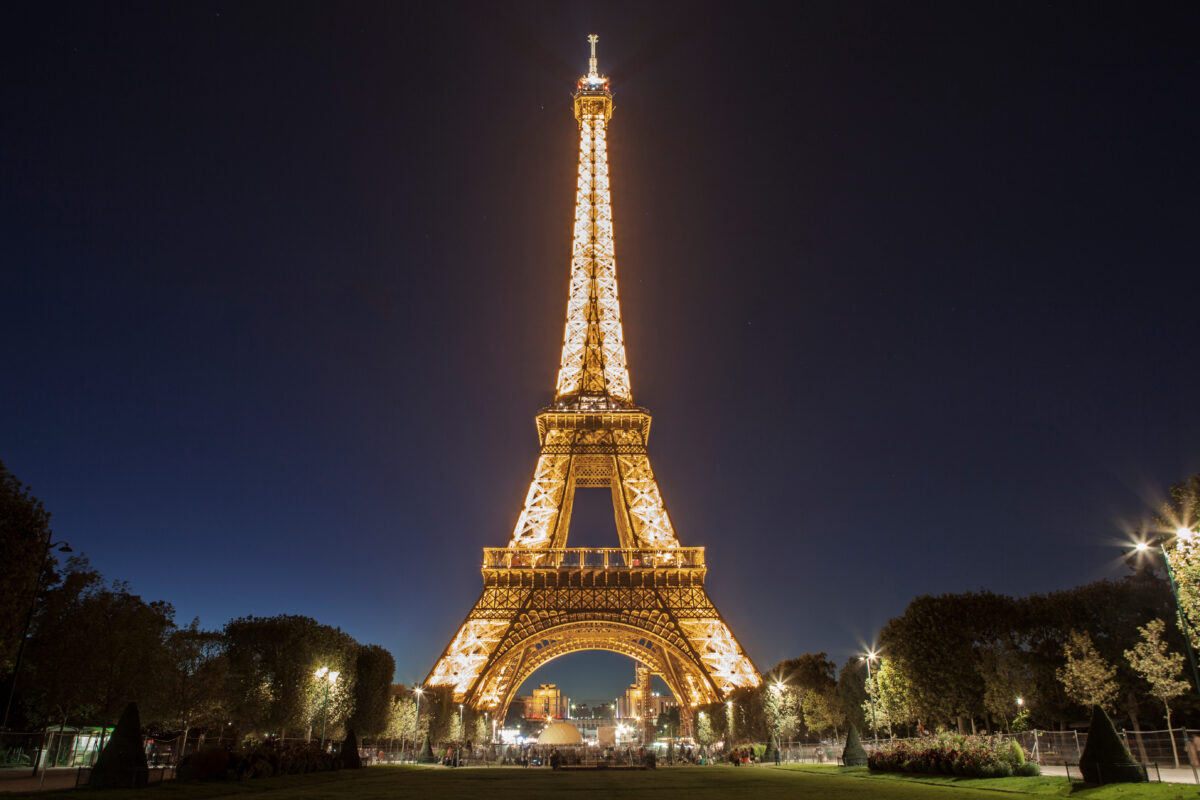
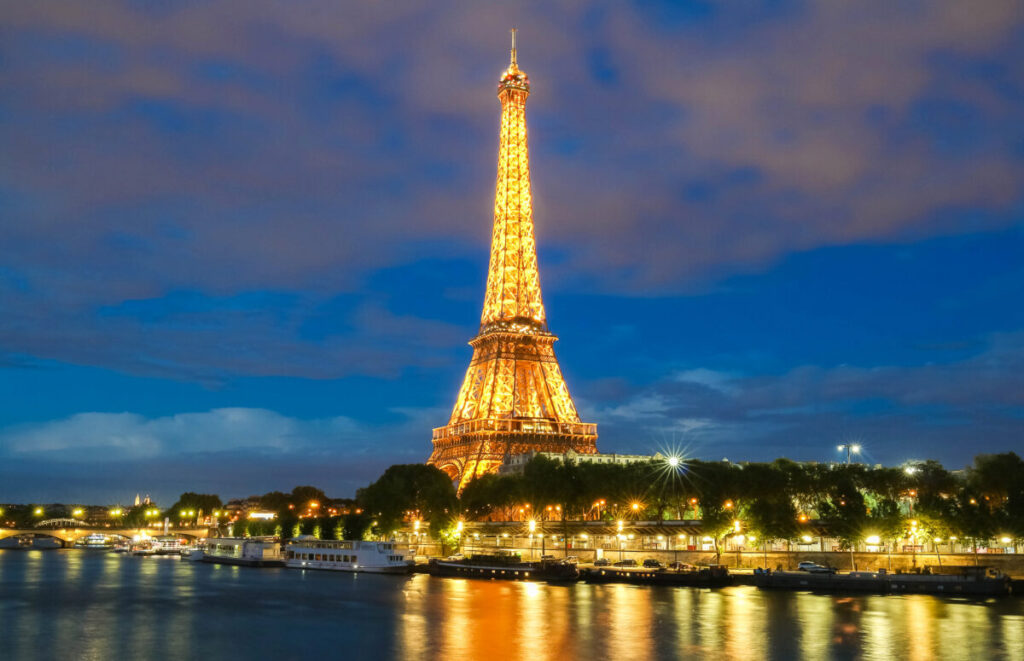
The Eiffel Tower sparkles for 5 minutes at the top of every hour after sunset, until 11:45 PM. The exact start time changes throughout the year depending on when the sun sets in Paris.
On standard closing nights, the lights switch off at midnight after the tower closes at 11:45 p.m.; during late summer hours, there can also be a final 1 a.m. sparkle. Before you go, check the official Eiffel Tower lighting page and the official opening-hours calendar.
If you are planning an evening visit, this guide covers the exact schedule, the best places to watch, how the light show works, photo tips, and what to know about nighttime image rights. For the bigger picture, start with our Eiffel Tower visitor guide and these Paris travel tips before you go.
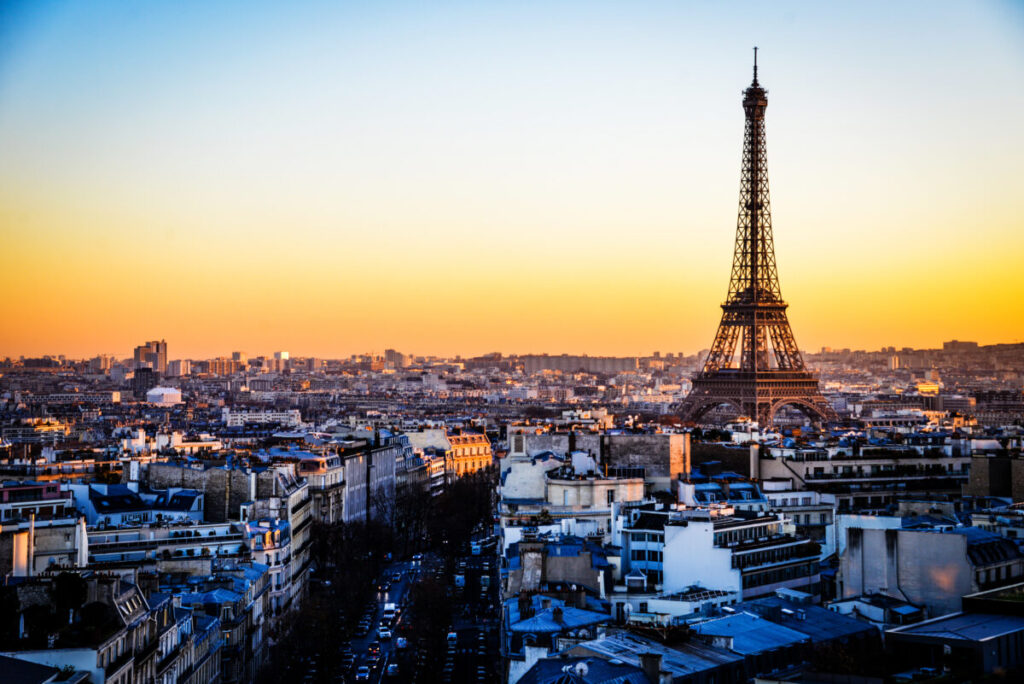
What Time Does the Eiffel Tower Sparkle Tonight?
Here is the short version most travelers need:
- The Eiffel Tower’s golden lights and beacon turn on automatically after nightfall.
- The first sparkle happens on the first full hour after dark. If night falls at 8:35 p.m., the first sparkle will be at 9:00 p.m.
- Each sparkle lasts five minutes.
- On standard closing nights, the last sparkle is usually around midnight. During late summer hours, there can also be a 1 a.m. sparkle.
- The most reliable last-minute check is the official opening-hours page or the official Eiffel Tower ticket office.
If you are building your evening around the light show, it is worth combining it with other things to do near the Eiffel Tower so you are already in the area when the hour turns.
How the Eiffel Tower Light Show Works
The Eiffel Tower at night is really three experiences layered together: the golden lighting, the rotating beacon, and the hourly sparkle effect. That combination is why the monument looks different from a simple floodlit landmark. It feels alive, especially when the sparkles begin and the tower flashes across its full frame.
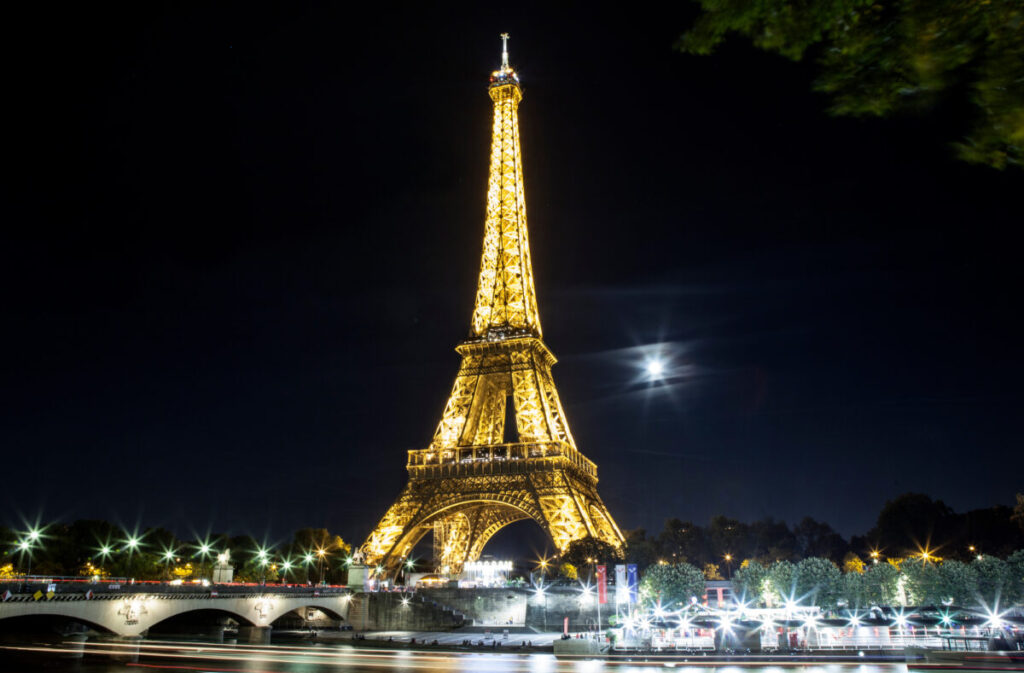
Golden lighting
The golden lighting system dates to 1985 and was designed by Pierre Bideau. It uses 336 spotlights aimed from inside the structure, which is why the tower glows with a warmer, more sculptural look than many other monuments. If you enjoy seeing Paris after dark, our guide to Paris at night and this roundup of the best things to do in Paris will help you build the rest of your evening.
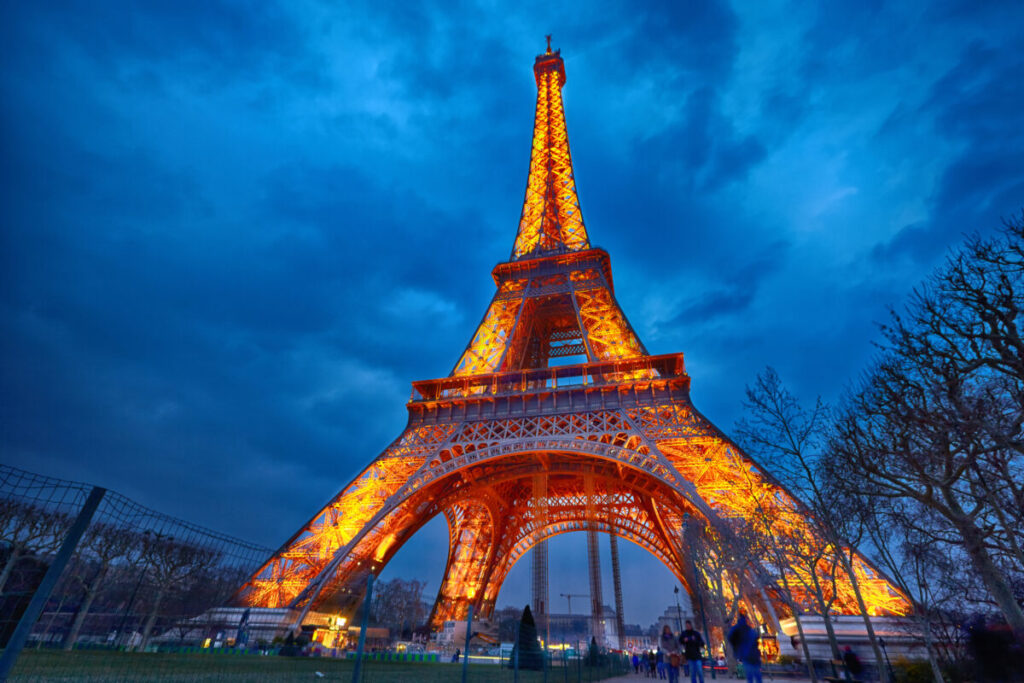
Beacon and sparkles
The beacon at the top sweeps over Paris and, on a clear night, can be seen from far beyond the center. The sparkle effect comes from 20,000 small bulbs that flash in short bursts for five minutes on the hour. The official guide to the Eiffel Tower illuminations is the best source if you want the technical breakdown, while the official history of the tower’s lighting is worth reading if you are curious about how the current system evolved.
The key travel takeaway is simple: the golden lighting comes on soon after dark, but the sparkle only starts on the next full hour. That one detail is the reason so many visitors arrive a little too early or a little too late.
Best Places to Watch the Eiffel Tower Sparkle
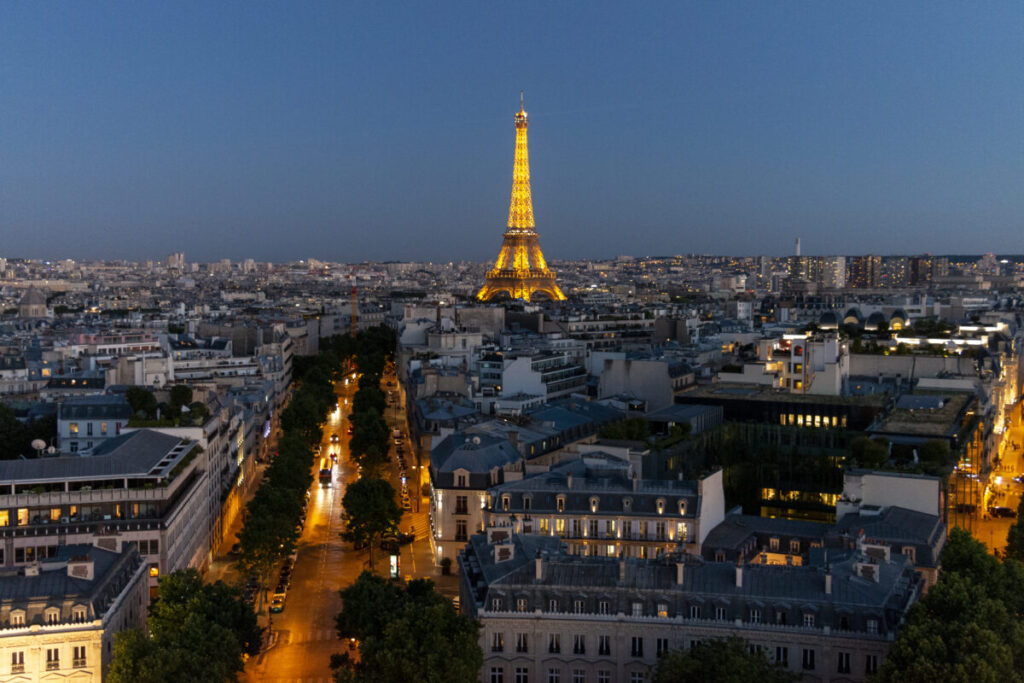
If you are inside the Eiffel Tower itself, the official recommendation is to be on or near the second floor just before the hour and look up as the sparkles begin. If you are staying on the ground, the best viewpoint depends on the kind of photo or experience you want.
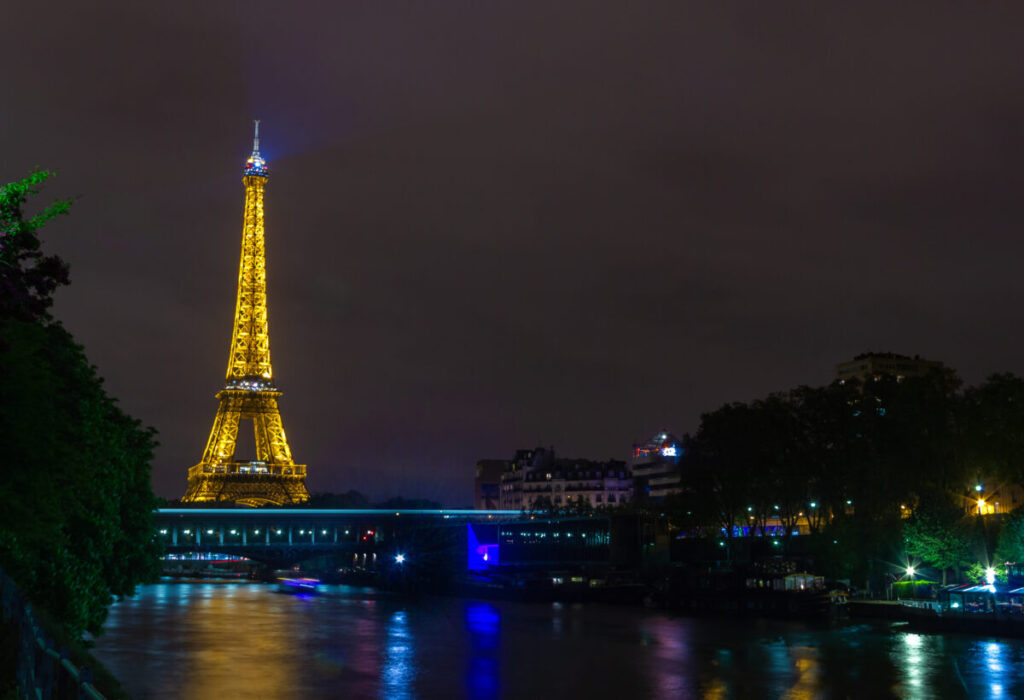
- Trocadéro: The classic front-on view. This is the best choice for the postcard angle and the easiest answer for most first-time visitors.
- Champ de Mars: Best if you want to feel close to the structure and look up as it flashes over you. It is also one of the easiest places to pair with a picnic or stroll through one of the city’s best parks in Paris.
- Bir-Hakeim and nearby bridges: Great for framing the tower with the Seine and traffic trails. For more angles, see our guide to the best bridges in Paris.
- Seine cruises: Best for movement, reflections, and seeing the tower appear gradually as the boat turns.
- Montparnasse Tower: Best if you want the Eiffel Tower inside the skyline instead of standing directly under it.
If you want a structured evening, this Eiffel Tower, Seine cruise, and Montmartre small-group tour gives you several viewpoints in one go. For a classic river option, our Bateaux Parisiens sightseeing cruise guide is a good starting point.
Ticketed views and tour options
- Book a 1-hour Seine illuminations cruise for a low-effort way to catch the sparkle from the water.
- Reserve Montparnasse Tower rooftop tickets if you want the Eiffel Tower in the skyline.
- Choose a dinner-and-cruise Eiffel Tower experience if the light show is part of a bigger night out.
- Browse Paris Seine River boat tours if you want more cruise formats and departure times.
- Compare Paris dinner cruises with Eiffel Tower views for a more polished evening.
- Browse Paris walking tours at night if you would rather stay on foot and time the sparkle from street level.
Traveling solo? This solo Paris itinerary can help you pair the sparkle with dinner, a cruise, or a late museum visit without backtracking across the city.
How to Photograph the Eiffel Tower Sparkle
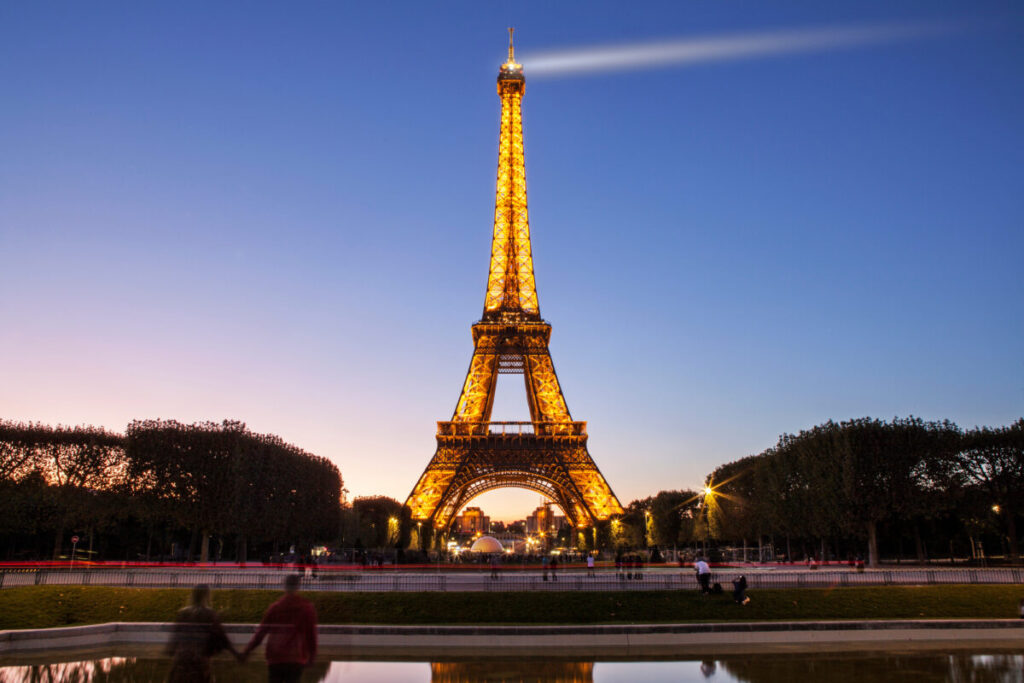
The biggest mistake photographers make is arriving exactly on the hour. Get there at least 15 to 20 minutes early so you can frame the shot before the sparkle starts. The light show only lasts five minutes, which disappears fast once crowds move in and the tower begins flashing.
- Best timing: Aim for blue hour if you want color in the sky and cleaner contrast.
- Best viewpoints: Trocadéro for symmetry, Champ de Mars for scale, and nearby bridges for reflections and leading lines.
- Best gear: A tripod helps, but even a railing or bench can steady your camera for slower shutter speeds.
- Best lifestyle angle: Use one of these restaurants with Eiffel Tower views if you want food, people, and skyline in the same frame.
If the photos are for portraits, proposals, or family travel content, this Eiffel Tower area photo shoot is a cleaner option than trying to direct people in a crowded public square.
Can You Post Photos or Videos of the Eiffel Tower at Night?
Yes for personal use, with one important caveat. The Eiffel Tower itself is in the public domain by day, but the nighttime illuminations are treated separately. According to the official Eiffel Tower image-rights rules, private individuals taking nighttime photos or videos for personal use do not need prior permission. Professional or commercial use of the illuminated tower, however, requires authorization.
That distinction matters for brands, sponsored posts, print sales, ad creative, commercial reels, and other monetized uses. If you want the legal text itself, see the French Intellectual Property Code. For most travelers posting to Instagram, sending photos to friends, or keeping trip memories, this is not an issue. For publishers and creators making money from the content, it absolutely is.
A Short History of the Eiffel Tower Lights
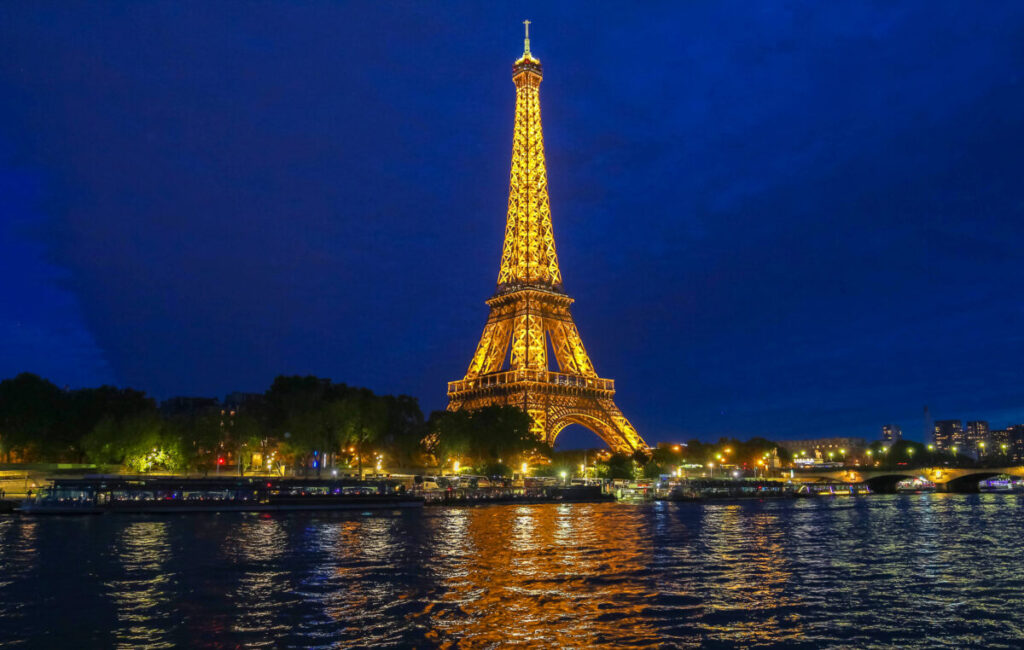
The story starts in 1889, when the Eiffel Tower debuted with gaslights. The golden lighting visitors recognize today arrived in 1985, when Pierre Bideau’s redesign changed the tower from a brightly lit structure into a true nighttime landmark. The sparkle effect came later, first installed for the millennium celebrations and then kept because Paris quickly adopted it as part of the city’s nightly rhythm.
The schedule has changed over time. Originally, the sparkles lasted longer. Later, they were reduced to five minutes per hour to save energy and extend the lifespan of the installation. More recent energy-saving measures also changed how late the tower stays lit outside the summer late-closing period.
If you happen to be in Paris during a major national or civic event, the tower can look very different. On Bastille Day, for example, it becomes the visual center of a huge fireworks display. That is one reason the monument remains one of the city’s defining monuments, not just another viewpoint.
For a deeper cultural angle before your trip, these best books about the Eiffel Tower give useful context on the monument’s design, symbolism, and long afterlife in Paris travel culture.
The Best Time of Year to See the Eiffel Tower Sparkle
The best season depends on what you care about most.
- Winter: Best if you want an earlier sparkle without staying out late. This is the easiest time for families, early dinners, and packed sightseeing days.
- Spring and fall: Usually the best balance of manageable crowds, comfortable temperatures, and reasonable sparkle times.
- Summer: Best for warm weather, riverside evenings, and the possibility of a later final sparkle. The tradeoff is that the first sparkle can be much later because darkness arrives later too.
If your only goal is catching the earliest possible sparkle, colder months usually work better. If you care more about lingering outside with drinks, dinner, or a cruise, summer is more forgiving. Use these Paris travel tips to plan the rest of your trip, and this solo Paris itinerary if you are traveling independently.
Frequently Asked Questions
Does the Eiffel Tower sparkle every night?
Yes, the Eiffel Tower generally sparkles every night after nightfall. The exact start time changes with sunset, and special events or operational changes can occasionally affect the usual pattern.
What time does the Eiffel Tower sparkle today?
It sparkles for five minutes at the start of each hour after nightfall. The first sparkle is the first full hour after dark, and the final sparkle depends on the monument’s closing time that day.
What is the earliest time the Eiffel Tower can sparkle?
That depends on sunset. In winter, the first sparkle happens earlier because darkness arrives earlier. In summer, the first sparkle can be much later in the evening.
How long does the Eiffel Tower sparkle?
Each sparkle lasts five minutes.
Is it free to watch the Eiffel Tower sparkle?
Yes. You can watch it for free from public viewpoints such as Trocadéro, Champ de Mars, and several bridges along the Seine.
Can you take photos of the Eiffel Tower at night?
Yes for personal use. For professional or commercial use of the illuminated tower, authorization is required.
Where is the best place to see the Eiffel Tower sparkle?
Trocadéro is the best all-around answer for first-time visitors. Champ de Mars is best if you want to be close to the structure, while cruises and Montparnasse Tower offer very different angles.
Related Resources
- Must-Visit Locations in Paris: An Insider’s Guide
- The Best Things to Buy in Paris: A Complete Guide
- Best Streets in Paris: A Guide to Iconic Avenues
Find Things to Do in Paris
Find Accommodation

Continue Planning Your Paris Trip

What Makes Paris Look Like Paris? 10 Hidden Elements of the City’s Visual DNA
Beyond the Eiffel Tower, ten subtle elements, from Haussmann facades to the quality of light, that make Paris…
Read Guide →
Scandal at Notre-Dame: The Controversial Appointment of the Young Organist
A look at the Lizzy Seeberg case at the University of Notre Dame and the hard questions it…
Read Guide →
Île de la Cité: Heart of Historic Paris
Walk the historic heart of Paris on Ile de la Cite, where the Seine wraps around Notre-Dame's Gothic…
Read Guide →